ABU DHABI,— The United Arab Emirates’ ruling Al Nahyan family received more than €71 million (($84m) in European Union farm subsidies over six years through companies linked to farmland operations in Romania, Spain and Italy, according to a cross border investigation by DeSmog shared with The Guardian.
The investigation found that subsidiaries connected to the Emirati royal family and the Abu Dhabi sovereign wealth fund ADQ collected payments through the EU’s Common Agricultural Policy, known as CAP.
The subsidy system distributes about €54 billion each year to support farmers and rural areas across the bloc and accounts for about one third of the EU budget.
DeSmog, working with Spanish outlet El Diario and Romanian publication G4Media, examined records covering thousands of CAP beneficiaries between 2019 and 2024.
The review identified 110 subsidy payments linked to a network of companies controlled by the Al Nahyan family and ADQ.
The Al Nahyan family is considered the world’s second richest royal family, with an estimated fortune exceeding $320 billion, much of it connected to the UAE’s oil wealth.
The largest payments identified in the investigation were linked to Agricost, a Romanian agricultural company operating what is described as the European Union’s largest farm.
The property covers 57,000 hectares, or about 141,000 acres, making it roughly five times larger than Paris.
In 2024 alone, Agricost received €10.5 million in direct EU farm payments. A previous Guardian investigation published in 2024 reported that 17 billionaires together received more than €3 billion in CAP subsidies between 2018 and 2021.
Agricost’s yearly payout was more than 1,600 times larger than the amount collected by the average EU farm.
Campaign groups said the findings raised concerns because the UAE has faced criticism over its human rights record, including allegations involving torture, imprisonment of activists and laws criminalizing homosexuality.
The UAE has repeatedly denied the allegations.
The Al Nahyan family and the companies named in the report did not respond to repeated requests for comment, according to the investigation. ADQ declined to comment.
The findings come as EU officials discuss reforms to the CAP subsidy program. In July 2025, the European Commission released a proposal for the next funding cycle covering 2028 through 2034.
The proposal includes a plan to cap land based subsidy payments at €100,000 per farmer annually.
A spokesperson for the European Commission said income support under CAP “should be better targeted including by reducing and capping payments for the bigger farms.” The spokesperson said the Commission was urging the European Parliament and EU member states to support the proposed changes.
Faustine Bas Defossez, director for nature, health and environment at the European Environment Bureau, said the current subsidy structure continues to favor major landowners instead of smaller farmers.
She also said public funding should not end up supporting authoritarian governments.
The UAE consists of seven emirates led by separate ruling families, with the Al Nahyans holding the strongest political influence in the country.
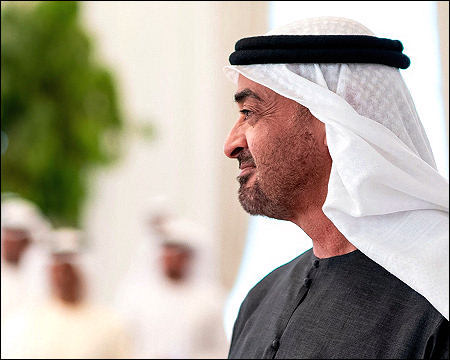
Sheikh Mohamed bin Zayed Al Nahyan is the ruler of Abu Dhabi and also serves as president of the UAE.
During the last 15 years, the Al Nahyan family has increased its investments in agriculture worldwide through purchases of farmland and agribusiness operations in Europe, Africa and South America. The UAE currently controls nearly 960,000 hectares of farmland globally.
The expansion is tied to the UAE’s food security strategy. Harsh temperatures, limited water supplies and sandy soil have made domestic farming difficult, forcing the country to import as much as 90% of its food.
According to the investigation, the family’s European agricultural operations are mainly managed through companies in Romania, Spain and Italy.
Agricost was purchased in 2018 through the UAE agribusiness company Al Dahra in a deal estimated at €230 million.
Al Dahra was founded by Sheikh Hamdan bin Zayed Al Nahyan, the brother of the UAE president. In 2020, ADQ bought a 50% stake in the company.
No public information is available on Al Dahra’s current ownership structure.
However, DeSmog reported that the company remains connected to members of its board, chaired by Sheikh Hamdan bin Zayed and his son Sheikh Zayed bin Hamdan Al Nahyan, who is married to the UAE president’s daughter.
The investigation said Al Dahra also acquired several farming businesses in Spain beginning in 2012. Those farms cover more than 8,000 hectares and received more than €5 million in CAP subsidies between 2015 and 2024.
Romanian and Spanish farms linked to the UAE mainly produce alfalfa and other animal feed crops. Most of the production is intended for export, including shipments to Gulf countries.
Al Dahra has a long term agreement with the UAE government to provide animal feed, partly for the country’s growing dairy industry.
ADQ also expanded its European agricultural holdings in 2022 when it acquired fruit producer Unifrutti in a deal estimated at $830 million.
DeSmog reported that Italian farms linked to Unifrutti received at least €186,000 in CAP subsidies during the following three years.
Thomas Waitz, an Austrian Green party lawmaker and agriculture committee coordinator in the European Parliament, called the subsidy payments “a scandal hiding in plain sight.”
Waitz said nearly all farmers across Europe receive less than €100,000 in subsidy support, adding that the funding was intended to assist local agricultural producers rather than wealthy oil linked ruling families.
The report said the identified subsidies may represent only part of the EU funding connected to Gulf royal interests because public records are incomplete and ownership structures are difficult to trace.
EU countries publish information on subsidy recipients, but records often list only the direct beneficiary rather than the final owners or investors.
DeSmog said no subsidy information could be located for some Unifrutti farms in Sicily and Spain’s Almeria region.
(With files from The Guardian UK)
Copyright © 2026 Dubai Diplomacy. All rights reserved.
 Your support matters! Consider buying us a coffee — every bit helps keep independent news alive.
Related posts:
 Abu Dhabi royals robbed of £600,000 in jewellery in London
 Al Nahyans – Trillionaire Family That Built UAE | 2026 Documentary Video
 British man Ryan Pepper “tortured” in Dubai jail, family says
 Abu Dhabi crown prince Sheikh Khaled readies for UAE power
 $24 million Dubai property network linked to Sudan’s RSF: report
 UAE president and Qatar’s Emir discuss ties in Abu Dhabi
 Dubai shows signs of life but tourism struggles run deep
 Dubai’s billionaire ruler fights to save his luxury UK mansion