DUBAI,—Abu Dhabi’s Crown Prince Sheikh Khaled bin Mohamed bin Zayed al-Nahyan has recently increased his global and domestic profile, engaging in high-level diplomacy and major financial initiatives, the Financial Times reported.
In April 2026, he traveled to Beijing to meet President Xi Jinping, hosted international bank executives, and authorized billions of dollars in global investments.
Amid these activities, Sheikh Khaled also reviewed Abu Dhabi’s emergency medical preparedness and examined contingency plans at state oil company Adnoc in the context of regional conflicts.
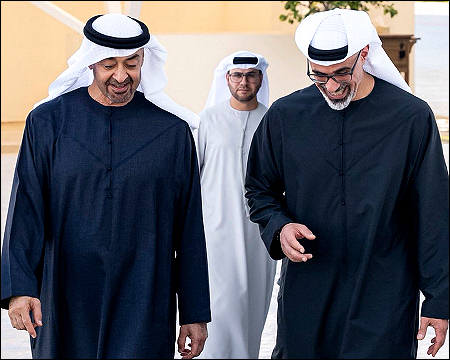
Analysts say these steps reflect his growing role within Abu Dhabi’s absolute monarchy, as he moves toward a “chief executive” position under his father, UAE President Sheikh Mohamed bin Zayed al-Nahyan.
Three years after being named heir apparent, Sheikh Khaled is emerging as a significant figure in international finance and diplomacy.
Abdulkhaleq Abdulla, an Emirati academic, told the Financial Times that Sheikh Khaled is managing “many heavy duties and responsibilities” and has earned his father’s trust.
For investors seeking access to Abu Dhabi’s $1.8 trillion sovereign wealth, Sheikh Khaled is now a key contact.
He chairs L’Imad, a $300 billion fund that gained attention for supporting Paramount’s $108 billion bid for Warner Bros Discovery.
A finance executive said that his influence over sovereign wealth fund activity has expanded considerably in recent months.
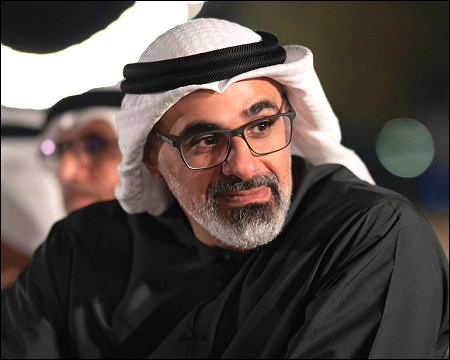
L’Imad recently announced partnerships with BlackRock’s Global Infrastructure Partners, Singapore’s Temasek, and Adnoc, where Sheikh Khaled chairs the executive committee, to invest $30 billion across Central Asia and the Middle East.
Bankers anticipate further high-profile deals in the near future.
A senior banker familiar with Sheikh Khaled said that the fund’s creation allows Abu Dhabi to leverage its capital to attract businesses to the region.
However, the crown prince faces the challenge of reassuring investors in the wake of the UAE’s involvement in the US-Israeli conflict with Iran.
David Roberts, associate professor at King’s College London, told the Financial Times that the immediate financial environment will appear stable, but a full return to pre-crisis conditions is unlikely.
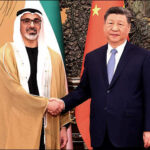
Sheikh Khaled, a Georgetown University graduate, is also gaining prominence internationally. His April visit to China highlighted UAE-China relations during a period of tension over the Gulf’s security.
While the UAE faced Iranian retaliation and sought support from Beijing to reopen the Strait of Hormuz, China vetoed a UN Security Council resolution backed by Abu Dhabi.
Sheikh Khaled concluded the visit with a statement emphasizing bilateral cooperation.
Observers note that Sheikh Khaled’s rise mirrors the path of his father, known as MBZ, who used the Mubadala sovereign fund to consolidate influence before assuming leadership.
MBZ transformed Abu Dhabi into a significant global player, leveraging both financial assets and soft power, while engaging in assertive foreign interventions.
In 2023, MBZ appointed Sheikh Khaled crown prince and chair of Abu Dhabi’s Executive Council, redistributing authority among his six full brothers.
Sheikh Tahnoon, previously seen as a potential heir, became deputy ruler and chair of the Abu Dhabi Investment Authority, while Sheikh Mansour was appointed UAE vice president and chair of Mubadala.
Analysts say these changes reflect both delegation of responsibilities and careful management of succession.
In January, ADQ’s $263 billion assets, formerly chaired by Sheikh Tahnoon, merged into L’Imad, further expanding Sheikh Khaled’s financial oversight.
Kristian Coates Ulrichsen, a Middle East fellow at the Baker Institute, told the Financial Times that the move strengthens Sheikh Khaled domestically while reducing potential rival power bases.
Sheikh Khaled’s experience with international negotiations began in 2010, when MBZ assigned him to handle a dispute with BlackBerry over encrypted data.
He joined Abu Dhabi’s Executive Council in 2019 and maintains close ties with influential non-royals Khaldoon al-Mubarak of Mubadala and Sultan al-Jaber of Adnoc. He is also promoting his own team, including Jassem al-Zaabi, CEO of L’Imad.
Nadim Koteich, a Lebanese-Emirati media commentator, told the Financial Times that Sheikh Khaled manages daily city operations while building alliances and mentoring a new generation of Emiratis. “It’s the nature of the system, how it evolves and moves forward,” Koteich said.
(With files from The Financial Times, ft.com)
Copyright © 2026 Dubai Diplomacy. All rights reserved.
 Your support matters! Consider buying us a coffee — every bit helps keep independent news alive.
Related posts:
 Abu Dhabi’s sovereign fund takes over ADQ in major wealth reshuffle
 Abu Dhabi Crown Prince meets Chinese President Xi in Beijing
 UAE president and Qatar’s Emir discuss ties in Abu Dhabi
 UAE speeds up oil pipeline project to bypass Hormuz
 UAE president receives France’s Macron in Abu Dhabi
 UAE’s Al Nahyans linked to €71m in EU farming subsidies, probe shows
 UAE president visits India, meets Prime Minister Narendra Modi
 Is a Gulf NATO Really Possible?