Why the Mecca Pact will fail
Halima Younis – Exclusive to Dubai Diplomacy
The recent signing of the Mecca Joint Defence Agreement by Saudi Arabia, Turkey, and Pakistan has sent shockwaves through geopolitical circles.
With a clause stating that an armed attack against one is an attack against all, many have rushed to label it an “Islamic NATO” or a “Muslim NATO.”
However, a closer look reveals that this much-hyped defense pact is less a formidable alliance and more a mirage.
While the agreement sounds powerful on paper, it is a classic case of political theater designed to mask deep-seated strategic vulnerabilities.
What Was Signed in Mecca?
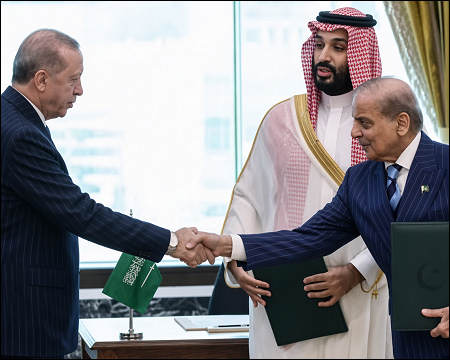
On August 7, 2026, the leaders of the three nations met in the Saudi holy city to sign a joint defense agreement. The core principle is collective security: any attack on Saudi Arabia, Turkey, or Pakistan will be treated as an attack on all three.
This appears to be a major step toward regional self-reliance. Saudi Arabia, in particular, is feeling the heat. The recent US-Israeli strikes on Iran and subsequent Houthi attacks on Saudi shipping have exposed the limitations of the American security umbrella. Riyadh seems to be looking for new partners to hedge its bets.
Why This is Not a New NATO
Comparing this pact to NATO is where the illusion begins. The North Atlantic Treaty Organization is a military behemoth built on decades of integrated command structures, joint military exercises, and standardized equipment. That is a level of deep military interoperability that simply does not exist between Ankara, Islamabad, and Riyadh.
“The agreement does not represent an effort to establish a military axis or a sectarian bloc,” insisted a Saudi deputy minister. This is crucial. NATO is based on a shared enemy and a unified command; the Mecca Pact is based on a vague desire for “security” and “deterrence.”
Three Countries, Three Different Agendas
The biggest flaw in the “Islamic NATO” theory is the lack of a common strategic goal. Each country has a fundamentally different threat perception:
– Saudi Arabia is focused on countering Iranian-backed proxies in Yemen and the Gulf.
– Turkey is obsessed with Kurdish militias in Syria and Iraq, as well as its role in the Eastern Mediterranean.
– Pakistan is primarily concerned with its rival, India, and the situation in Afghanistan.
What happens if Pakistan faces a crisis with India? Will Turkey and Saudi Arabia send troops to the Himalayas? Unlikely. Similarly, will Pakistan risk a war with Iran to defend Saudi oil fields? The experts are doubtful. Without a united enemy, this “alliance” is just a collection of “strategic interests” that happen to overlap temporarily.
The Muslim Brotherhood Fault Line
Perhaps the deepest crack in this alliance is the ideological divide between Saudi Arabia and Turkey over the Muslim Brotherhood.
Saudi Arabia, along with the UAE and Egypt, views the Muslim Brotherhood as a “terrorist” organization and a direct threat to its traditional monarchy.
Riyadh sees the Brotherhood’s brand of political Islam as revolutionary and dangerous to its rule. This is not a minor disagreement; it is a fundamental clash over what kind of Islam should hold power in the region.
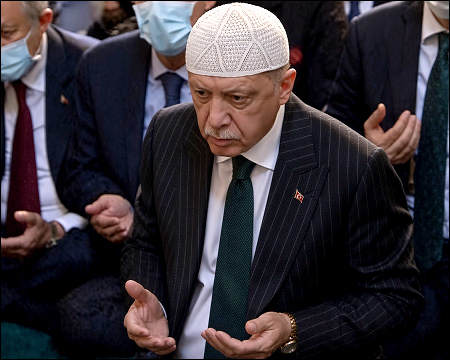
Turkey, under President Erdogan, has been one of the biggest supporters of the Muslim Brotherhood. Ankara has provided safe haven for Brotherhood-affiliated networks and backed them in Egypt, Syria, and elsewhere.
In Egypt, Turkey backed Mohamed Morsi, the Brotherhood-backed president who was toppled in 2013, a move that Saudi Arabia and the UAE actively supported.
This is not ancient history. The Saudi-Turkish rivalry over the Brotherhood has fueled proxy conflicts from Libya to Syria and was a major factor in the Qatar blockade.
When the HTS group took power in Syria, both Saudi Arabia and the UAE were deeply suspicious because of its ties to the Brotherhood and its links to Turkey and Qatar.
How can an alliance function when its two most powerful members are on opposite sides of one of the region’s most defining political battles? The answer is that it cannot. Saudi Arabia is fighting against the very political Islam that Turkey champions. This is a partnership of convenience at best, and a ticking time bomb at worst.
The American Elephant in the Room
The pact is often spun as a move to sideline the United States. The reality is far more complex. All three nations maintain deep and vital security ties with Washington. Turkey is a NATO member. Pakistan and Saudi Arabia rely heavily on US arms and intelligence.
The pact does not represent a break with the US. Instead, it is a form of “hedging” against an unpredictable Washington. They are trying to build a “safety net,” not replace their primary security guarantor.
As one analysis put it, the US faces a “strategic embarrassment” because it cannot control the conflict, but it is not being kicked out of the region. The US is simply being forced to accept a more chaotic situation.
The UAE’s Smarter Path
While Saudi Arabia ties itself to an unstable alliance with Turkey and Pakistan, the United Arab Emirates is taking a radically different and arguably more pragmatic approach.
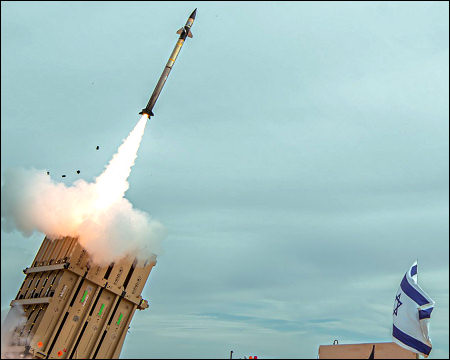
The UAE has openly embraced a partnership with Israel, and the results are tangible. During the recent US-Israeli-Iranian conflict, Israeli “Iron Dome” air defense systems were deployed to UAE territory to intercept Iranian missiles targeting Abu Dhabi.
This marked the first time Israel had deployed the system outside its own borders or those of the United States.
This is not just about buying weapons. The UAE and Israel have established a multi-billion-dollar joint defense fund to co-develop advanced air defense and counter-drone systems.
The UAE is creating deep, long-term interdependence with a country that has one of the most advanced militaries in the world.
Meanwhile, the UAE has left OPEC and is charting its own course. It has positioned itself as a modern, open-minded hub for trade and finance. It hosts French and Egyptian military assets, showing it can work with a wide range of partners.
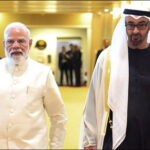
But the UAE’s strategic vision extends even further. Abu Dhabi has been rapidly deepening its defense ties with India, moving from periodic military exercises to a formal Strategic Defence Partnership signed in early 2026. This partnership covers maritime security, defense industry collaboration, cyber and counter-terrorism, training, and intelligence sharing.
The potential sale of India’s BrahMos supersonic cruise missile and Akashteer air defense system is currently under active discussion. This would be a game-changer, diversifying the UAE’s defense supply base and giving it greater strategic autonomy without antagonizing the United States, as both countries remain US allies.
Analysts note that a diversified supplier base offers Abu Dhabi more strategic independence. The UAE is also part of the I2U2 grouping alongside India, Israel, and the United States, a minilateral forum focused on technology, trade, and maritime security. This four-way partnership creates a powerful network of shared interests.
The contrast is striking. While the Mecca Pact is a paper shield full of internal contradictions, the UAE has built real-world defense partnerships with proven allies, the United States, Israel, and now India, that share its concerns about Iran and regional stability. The UAE is not trapped in ideological battles over the Muslim Brotherhood. It has moved on, building a modern, multi-aligned security architecture for the 21st century.
A Pact Without Teeth
The operational details of the agreement are conspicuously absent. There is no discussion of joint military maneuvers or patrols. In fact, experts suggest the signatories are deliberately avoiding actions that might provoke Iran.
Furthermore, the early signs of trouble are already visible. Reports indicate that Saudi Arabia blocked Egypt from joining the pact, revealing that internal rivalries and suspicion still plague the region. If the “alliance” cannot even agree on who gets a seat at the table, it is hardly a cohesive military bloc.
Conclusion
The Mecca Joint Defence Agreement is a significant diplomatic development. It signals a growing desire by regional powers to take their security into their own hands and is a clear symptom of waning trust in American guarantees.
However, to call it a “Middle East NATO” is a grave exaggeration. It lacks the institutional framework, unified command, and shared strategic vision that defines a real military alliance. The divide over the Muslim Brotherhood alone is a fault line that could shatter the entire arrangement.
Meanwhile, the UAE has shown a better path, one of openness, clear-eyed pragmatism, and real partnerships with the United States, Israel, and now India.
The Mecca Pact is an illusion of strength, a paper shield that offers political comfort but little practical military utility. In the harsh reality of Middle Eastern geopolitics, this pact is a house of cards, built on shaky foundations and likely to collapse under the weight of its members’ conflicting ambitions.
Halima Younis, political analyst.
All views expressed herein are solely those of the author and do not necessarily represent the opinions or policies of DubaiDiplomacy or its editors.
Copyright © 2026 Dubai Diplomacy. All rights reserved.
Is a Gulf NATO Really Possible?
Rich, Armed, and Alone: Why Gulf States Cannot Protect Each Other Halima Younis – Exclusive to Dubai Diplomacy The Gap Between Aspiration…
 Your support matters! Consider buying us a coffee — every bit helps keep independent news alive.
Related posts:
 Is a Gulf NATO Really Possible?
 Saudi-UAE rift widens as Emirates quits oil cartel
 In the Saudi Arabia–UAE Rivalry, the Saudis Are Wrong
 Saudi Arabia issues security warning as UAE told to exit Yemen
 Pakistan to repay UAE’s $3.5 billion loan, ending rollovers
 UAE welcomes US decision on Muslim brotherhood terror designation
 India and UAE sign defense, energy deals during Modi visit
 Emirati official calls for closer Israel ties, criticizes Arab states