Security risks of UAE getting US chips raised by career Commerce staff
DUBAI,— Career staff inside the U.S. Commerce Department raised red flags about giving the United Arab Emirates broad access to advanced U.S. semiconductors and other sensitive technology, but their concerns were set aside by the Trump administration, according to five people familiar with the situation.
On July 10, 2026, the department’s Bureau of Industry and Security said it would relax export limits on sensitive technology headed to the UAE, describing the nation as an important ally in the Middle East.
UAE officials committed last year to putting more than $1 trillion into the U.S. economy over the following ten years.
Two former officials and another person familiar with the matter said the announcement blindsided many within the bureau, whose job is to protect American technology from falling into the wrong hands, the politico reported.
The decision also contradicted guidance that staff had passed up the chain to senior department leaders the year before.
According to the five sources, bureau employees drafted a series of internal memos and reports last autumn detailing risks connected to G42, the UAE’s government-backed artificial intelligence firm, and companies tied to it.
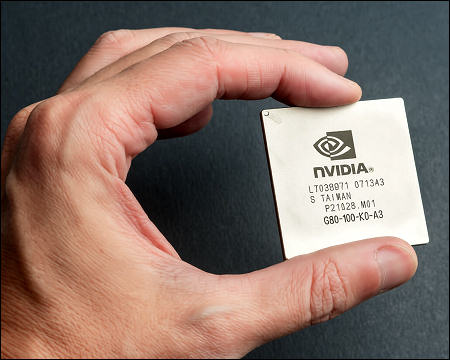
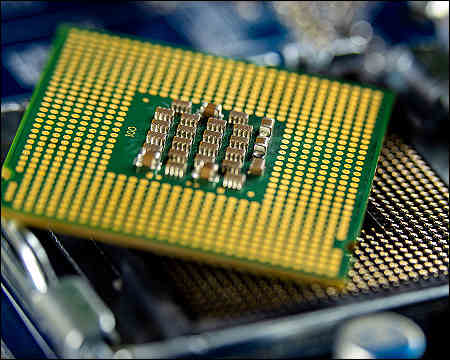
These previously unreported assessments warned that broadening access to U.S. technology, including high-performance chips from companies such as Nvidia and the AI models powered by them, increased the chances the technology would reach hostile actors.
Staff singled out concerns about Chinese influence inside the UAE.
“It is an open secret that the UAE is the primary diversion point for sensitive U.S. technologies in the Middle East, by orders of magnitude,” said one person with knowledge of the matter, who spoke on condition of anonymity to discuss internal government deliberations.
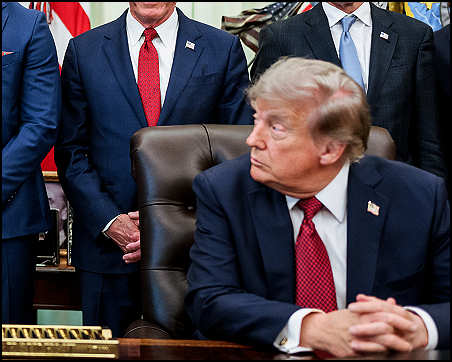
The reports reached senior bureau leadership, including Undersecretary Jeffrey Kessler, who oversees the agency, but the warnings were not heeded, according to those who described the internal process.
The bureau declined to answer detailed questions about the staff-prepared reports.
It also would not clarify whether Kessler or other senior figures, including Commerce Secretary Howard Lutnick, had been briefed on the warnings before the decision to broaden UAE and G42 access to American technology.
In a written statement, the bureau said U.S. technology policy should position America, not its rivals, as the partner of choice for global investment in cutting-edge fields.
It added that the administration is using diplomacy, negotiated agreements and regulatory changes to preserve American leadership in critical technologies.
The department disclosed in November that it had approved G42 to purchase up to 35,000 of Nvidia’s advanced Blackwell chips.
The July 10 announcement went well beyond that, offering vetted Emirati companies quicker access to those chips as well as military equipment, satellite components and materials used in civilian nuclear energy production. Nvidia declined to comment.
The policy change is considered one of the most significant steps in years toward deepening technology ties with Gulf allies.
Still, security-focused officials and lawmakers wary of China have said the shift makes it more likely that Beijing could obtain closely protected American technology during a critical period in the global race for artificial intelligence dominance.
A White House official, granted anonymity to discuss the matter, said the bureau’s updated rules reflect the UAE’s demonstrated commitment to U.S. security interests and technology systems.
The official did not address questions about the earlier staff reports that recommended against the changes.
Before this decision, companies looking to export controlled technology to the UAE had to apply for individual licenses, each reviewed separately by the Commerce Department, a process slowed for months by backlogs and internal turmoil within the export control agency.
The administration described the UAE’s new designation partly as recognition for years of close cooperation, including coordination on Iran, and said it helps carry out the artificial intelligence agreement signed by both countries during President Trump’s visit to the region in May 2025.
Despite that, Commerce officials warned in several reports last fall against immediately issuing these export licenses to G42 and affiliated firms such as Core42, according to two former bureau officials and a person familiar with their recommendations.
A similar warning appeared in a report on Mohamed bin Zayed University of Artificial Intelligence, an Abu Dhabi based, government funded institution that has partnered with G42 on AI development, according to one former official, a second former official and a person familiar with the matter.
(With files from politico.com)
Copyright © 2026 Dubai Diplomacy. All rights reserved.
 Your support matters! Consider buying us a coffee — every bit helps keep independent news alive.
Related posts:
 Microsoft to invest $15 bln in UAE, gets US OK for Nvidia chip exports
 US okays export of advanced chips to firms in UAE and Saudi Arabia
 Iran Now Sees the Strait of Hormuz as a Cash Cow
 Senate Democrats seek review of UAE $500 million investment in Trump crypto firm
 Bulgaria approves spy tech sales to UAE despite dissent crackdown: HRW
 UAE to build national-scale AI supercomputer in India
 U.S. imposes cyber sanctions on UAE, Russian individuals, entities
 Iran builds covert Iraqi networks to strike UAE, Gulf states: Reuters