Halima Younis – Exclusive to Dubai Diplomacy
The United Arab Emirates is building the world’s largest AI campus. It is integrating artificial intelligence into everything, healthcare, transportation, finance, and government services. On the surface, this looks like a shortcut to becoming a hyper-developed nation.
But there is a dangerous illusion here, deploying AI is not the same as developing a people. Technology can be purchased. Wisdom cannot. The UAE, and every nation watching it, must not confuse smart tools with a smart society.
The False Promise of Technological Shortcuts
The UAE’s AI ambitions are impressive. It has created the Mohamed Bin Zayed University of Artificial Intelligence. It ranks among the highest globally in AI adoption. These are real achievements. But they rest on a foundation built long before the first AI campus was announced, decades of investment in human capital, education, healthcare, and infrastructure.
The UAE’s high ranking on the UN Human Development Index did not come from AI. It came from years of schooling, improved life expectancy, and economic diversification.
The danger is that other nations, especially those struggling with real underdevelopment, will look at the UAE and see a shortcut. They will think, if we just buy the AI systems, we can skip the hard work of educating our people and building real institutions.
That is a catastrophic mistake. A nation that has neglected brain development, suppressed critical thinking, and avoided experience cannot simply plug in artificial intelligence and become smart.
The Unskilled User Problem
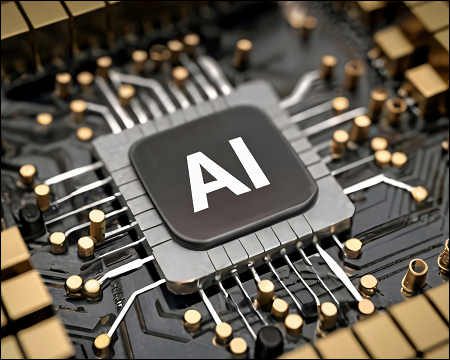
Consider this, giving a brilliant GPS to someone who refuses to read maps does not make them a navigator. Giving a supercomputer to someone who has never learned mathematics does not make them a scientist.
Using AI well requires skills that AI itself cannot provide, the ability to ask the right question, spot an error, understand context, and make a judgment when the tool gives conflicting answers.
These skills come only from education and experience, what we might call “brain development.” Without them, the most advanced AI becomes an expensive, incomprehensible black box. The user remains just as undeveloped as before, now with a shiny accessory. Garbage in, garbage out remains the law of intelligence, artificial or otherwise.
The Governance Trap
The UAE’s own experience reveals a deeper vulnerability. According to academic audits of Gulf AI strategies, the country is building technical capacity much faster than it is building governance systems.
Only a minority of AI initiatives reference binding risk-management protocols or algorithm-impact assessments. In plain language, the technology is outrunning the wisdom needed to control it.
This is the governance trap. When a nation deploys AI without deeply capable human institutions, trained judges, ethical regulators, an educated public, the technology does not liberate. It controls.
Decisions get made by algorithms without accountability. Citizens become subjects of systems they cannot understand or challenge. That is not development. That is technological authoritarianism with a polished interface.
What True Development Requires
The hard truth is that development must come from the human mind. There are no shortcuts. The countries that succeed will be those that do the unglamorous, decades-long work of:
-
Universal quality education that teaches critical thinking, not just obedience.
-
Scientific and ethical reasoning that allows people to question tools, not worship them.
-
Real-world experience that builds judgment, knowing what question to ask, when to trust a result, and when to override it.
AI can amplify these capacities once they exist. It can help a well-educated engineer design a bridge faster. It can help a trained doctor diagnose a rare disease. But AI cannot create the engineer or the doctor in the first place. It cannot replace the mind.
A Warning for All Nations
The UAE is not being singled out here, it deserves credit for recognizing that AI requires massive investment in human capital alongside hardware. The warning is for any nation that thinks it can skip the hard part. If a country has neglected its people’s minds, relied only on natural resources, and avoided genuine education, then AI will not save it. It will only make its weaknesses more visible and more dangerous.
Do not be fooled by the machine. Smart tools do not make a smart nation. Developed people make a developed nation, and there is no algorithm for that.
Halima Younis, political analyst.
All views expressed herein are solely those of the author and do not necessarily represent the opinions or policies of DubaiDiplomacy or its editors.
Copyright © 2026 Dubai Diplomacy. All rights reserved.
 Your support matters! Consider buying us a coffee — every bit helps keep independent news alive.
Related posts:
 Dubai ruler issues law on building quality and safety, UAE
 UAE to run half of government on autonomous AI within two years
 Why UAE Cannot Buy Loyalty It Refuses to Earn
 UAE to build national-scale AI supercomputer in India
 Dubai Between Lies and Propaganda: Both Sides Are Fooling You
 Fully autonomous driverless taxi launched in Dubai, UAE
 UAE human rights activist Ahmed Mansoor marks 9 years behind bars
 Dubai Real Estate Lost 34%, The Worst Could Still Be Ahead