Dubai crackdown sends Iran’s shadow economy into freefall
DUBAI,—Authorities in the United Arab Emirates have detained dozens of money changers connected to Iran’s Islamic Revolutionary Guard Corps (IRGC), closed affiliated companies, and shut down their offices, sources told Iran International.
The move represents a serious setback for Tehran’s system of sanctions evasion.
The crackdown follows growing regional tensions and comes after other measures against Iranian nationals, including visa cancellations and stricter travel rules through Dubai.
Dubai has long served as a major offshore financial hub for Iran, where oil earnings, petrochemical profits, and rial conversions were exchanged into dollars, dirhams, and euros outside the reach of Iran’s domestic banking system.
Jason Brodsky of United Against Nuclear Iran said the UAE actions could significantly disrupt Tehran’s financial operations.
He described Dubai as a central artery for the Iranian economy, suggesting that losing access to the city’s financial system could strain the country both economically and diplomatically.
Dubai’s Role in Sanctions Evasion
Miad Maleki, a former U.S. Treasury sanctions strategist and now a senior fellow at the Foundation for Defense of Democracies, called the UAE Iran’s most important location for avoiding international sanctions.
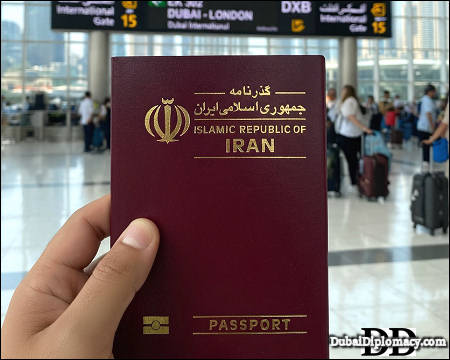
He said Dubai is far more than just one option among many; it is central to the Revolutionary Guards’ network for moving money abroad.
Exchange houses in Dubai have long provided the Guards and Quds Force with access to foreign currency, which they use to fund groups such as Hezbollah, Hamas, the Houthis, and militias in Iraq.
The recent arrests target long-standing networks built over years. Maleki said these systems of trusted money changers, bank accounts, and corporate setups cannot be quickly rebuilt.
Even companies not affected by the crackdown may now be reluctant to handle transactions connected to Iran, increasing both cost and risk.
Economic Pressure on Iran
Iran’s economy is already under strain. Foreign reserves, once around $120 billion in 2018, dropped below $9 billion by 2020, forcing Iran to rely heavily on offshore currency channels.
Mohammad Machine-Chian, a senior economic journalist at Iran International, said the UAE is Iran’s most important financial partner after China.
Dubai hosts hundreds of Iranian-linked shell companies that are used to mask oil and petrochemical sales, launder revenues, and transfer hard currency back to Tehran.
Trade between Iran and the UAE has ranged from $16 billion to $28 billion in recent years, with non-oil exports contributing roughly $6 billion to $7 billion annually.
Machine-Chian said continued enforcement could deprive Iran of billions of dollars while cutting off a vital source of foreign cash.
Dubai has also acted as a pathway for Iranian funds moving to North America, including the United States and Canada, via correspondent banking and informal hawala networks.
Maleki described Dubai as a “financial processing center” where Iranian oil revenue and currency conversions are turned into usable dollars and dirhams.
Regional and Political Consequences
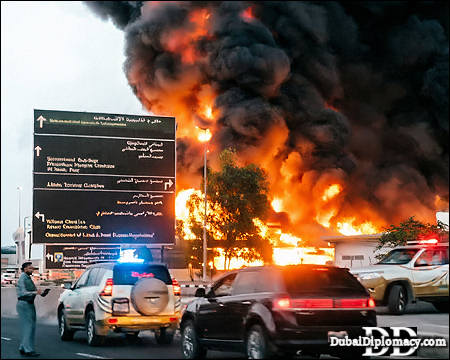
Analysts say the UAE crackdown reflects a widening political split between Tehran and Gulf states. Brodsky noted that Iran’s attacks on neighboring countries have changed the regional balance, reducing the possibility of diplomacy.
He added that the relationship between Iran and Gulf Cooperation Council nations has shifted dramatically and is unlikely to return to previous norms.
Previously, Iran aimed to surround Israel using regional proxies, but Brodsky said the country now faces increasing isolation.
Tehran’s actions have alienated neighboring states and strengthened security ties between Gulf nations, the United States, and Israel. He noted that missile and drone threats have become central to security planning in the region.
Signs of Domestic Economic Stress
The UAE arrests come amid growing economic challenges inside Iran. Sources previously told Iran International that President Masoud Pezeshkian warned officials the economy could collapse within weeks without a ceasefire.
Across major cities, ATMs have been low on cash, banking services have faced disruptions, and government workers report delayed salaries for several months. Inflation for essential goods already exceeded 100 percent before the conflict, and the loss of Dubai’s financial channels could deepen the crisis.
For Tehran, the UAE crackdown is more than a temporary financial disruption. It suggests one of Iran’s most reliable external economic outlets is beginning to close, putting further pressure on the country’s fragile economic system.
Iran Launches Daily Missile and Drone Strikes on UAE for Over a Month
Regional instability surged after the United States and Israel conducted joint airstrikes targeting Iran on February 28, 2026.
In response, Iran has launched daily missile and drone attacks across the Gulf for more than a month. Targets have included major airports, seaports, hotels, residential neighborhoods, and energy facilities in Dubai and Abu Dhabi, according to reports.
UAE and other Gulf defense forces continue to intercept tens of Iranian missiles and drones each day, as the ongoing assaults disrupt civilian life and commerce, underscoring the heightened tensions across the region.
(With files from Iran International | iranintl.com)
Copyright © 2026 Dubai Diplomacy. All rights reserved.
UAE weighs freezing Iranian assets over Tehran attacks: WSJ
ABU DHABI,— The United Arab Emirates is considering freezing billions of dollars in Iranian assets held in the Gulf country, a step…
 Your support matters! Consider buying us a coffee — every bit helps keep independent news alive.
Related posts:
 Emirati official calls for closer Israel ties, criticizes Arab states
 ADNOC group companies report $9.7 billion net profit in 2025
 Firms exit Dubai financial hub over rising Iran threats
 Travelers to Dubai risk arrest over social media posts and debt: advocates
 Saudi-UAE rift widens as Emirates quits oil cartel
 Banking assets reach AED 5.34 trillion in 2025: CBUAE
 Dubai ranked 7th in Global Financial Centres Index
 Is a Gulf NATO Really Possible?