ABU DHABI,— The United Arab Emirates announced Tuesday that it is withdrawing its remaining forces from Yemen following a demand from Saudi Arabia that UAE troops leave within 24 hours, marking a sharp escalation in tensions between the two Gulf powers.
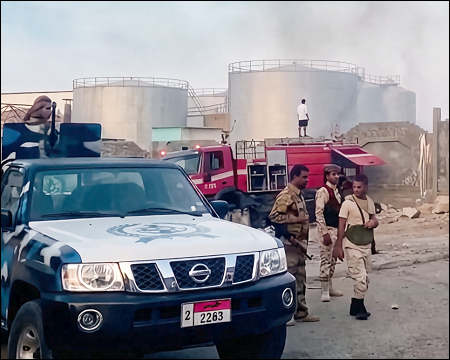
The announcement came hours after Saudi-led coalition forces carried out airstrikes on the southern Yemeni port of Mukalla, targeting what Riyadh described as a weapons shipment linked to the UAE.
The attack is the most serious confrontation between the neighboring Gulf oil producers in recent years.
Once united in promoting regional security, Saudi Arabia and the UAE have increasingly clashed over issues ranging from oil production quotas to political influence across the Middle East.
The UAE Defense Ministry said in a statement carried by the state news agency WAM that it had voluntarily concluded the mission of its counterterrorism units, the last forces remaining after Abu Dhabi largely ended its military presence in Yemen in 2019.
The ministry stated that the UAE’s remaining personnel were engaged solely in specialized counterterrorism duties, carried out in coordination with international partners.. It added that recent developments prompted a “comprehensive assessment” of its operations in Yemen.
Saudi officials have accused the UAE of encouraging the separatist Southern Transitional Council, or STC, to advance toward areas near Saudi borders, framing the issue as a matter of national security.
This represents the strongest language Riyadh has used in its ongoing dispute with the UAE, according to Yemeni state news agency reports.
Riyadh continues to support Yemen’s internationally recognized government, while the UAE has maintained ties with the STC, which seeks self-rule in southern Yemen.
The Saudi-led coalition has called on Abu Dhabi to cease all military and financial assistance to the separatists.
The coalition said its recent airstrike targeted a dock used to transfer foreign military support to the STC. Rashad al-Alimi, head of Yemen’s Saudi-backed Presidential Council, gave Emirati forces 24 hours to withdraw from the country.
The UAE said it was caught off guard by the strike and insisted that the shipments in question did not contain weapons and were intended for its forces. Abu Dhabi expressed a desire to resolve the situation through facts and coordination that prevent further escalation.
Alimi, in a televised statement, accused the UAE of directing the STC to rebel against the authority of Yemen’s government, according to the Yemeni state news agency.
Both Saudi Arabia and the UAE are major members of the OPEC oil-exporting group. Analysts warned that the dispute could complicate consensus on production levels.
OPEC+ members, including the two Gulf nations, are scheduled to meet virtually on Sunday to discuss first-quarter output policies. Following the tensions, major Gulf stock indexes fell.
The UAE had been a member of the Saudi-led coalition formed in 2015 to counter the Iran-aligned Houthis in Yemen. While Abu Dhabi began withdrawing most of its forces in 2019, it continued limited operations and maintained coordination with Riyadh.
The STC, however, launched an offensive this month against Saudi-backed Yemeni troops, breaking years of stalemate. It has asserted control over large portions of southern Yemen, including Hadramout province, defying repeated warnings from Saudi Arabia.
The coalition said the airstrike on Tuesday followed the arrival of two ships from the UAE port of Fujairah over the weekend without prior authorization.
Saudi state media released video footage of one vessel, identified as the Greenland, unloading what it described as combat equipment and vehicles. The ship is registered to the Salem Al Makrani Cargo Company, based in Dubai, with a branch in Fujairah.
(With files from Reuters | WAM)
Copyright © 2025 Dubai Diplomacy. All rights reserved.
 Your support matters! Consider buying us a coffee — every bit helps keep independent news alive.
Related posts:
 Saudi Arabia issues security warning as UAE told to exit Yemen
 Saudi jets target UAE-backed separatists in Yemen’s south
 Saudi Arabia says UAE helped Yemen separatist leader to flee
 Yemeni gov’t says UAE runs secret prisons, Abu Dhabi denies
 UAE hails Saudi push to improve Yemen security
 Is a Gulf NATO Really Possible?
 In the Saudi Arabia–UAE Rivalry, the Saudis Are Wrong
 Saudi-UAE rift widens as Emirates quits oil cartel