UAE pulls out of OPEC, rejecting Saudi oil dictates
The United Arab Emirates’ decision to leave OPEC OPEC and OPEC+ has brought long-standing tensions with Saudi Arabia into public view, signaling a major shift in Gulf oil coordination and a broader rebalancing of regional influence driven by geopolitical conflict and economic competition, Reuters reported.
Political analysts and regional experts said the announcement, made Tuesday, reflects more than disagreement over oil production quotas.
Gulf sources have long argued that Abu Dhabi viewed the quota system as structurally unfavorable and increasingly out of step with its production capacity and national interests.
The move is widely seen as part of a broader strategic divergence in which the UAE is prioritizing independent decision-making over alignment with Saudi-led oil policy frameworks.
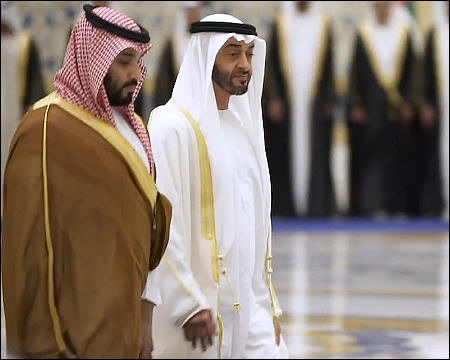
It also reflects deeper strains in the political relationship between UAE President Mohammed bin Zayed and Saudi Crown Prince Mohammed bin Salman, a partnership that has defined much of the Gulf’s recent security and economic coordination.
“There is something seriously happening in the Saudi-UAE relationship, a much more serious rift than we think,” said Fawaz Gerges of the London School of Economics. He described the situation as a breakdown between the two most powerful leaders in the Gulf region.
Break in oil governance alignment
Sources familiar with Gulf energy policy said the UAE’s exit represents the culmination of a gradual but steady shift away from Saudi-led coordination inside OPEC and OPEC+.
That shift has been shaped by disagreements over regional conflicts, particularly in Yemen and Sudan, as well as competing long-term economic strategies and differing visions for Gulf leadership.
Under the new approach, the UAE is expected to gain greater autonomy over how it uses its spare production capacity.
This removes long-standing assumptions that Gulf energy policy operates under Saudi leadership or within a unified regional framework.
Analysts said the decision effectively challenges the traditional structure of OPEC, which has historically relied on Saudi Arabia as the dominant producer setting output direction for the group.
UAE analyst Abdulkhaleq Abdulla said the shift reflects a more assertive foreign and energy policy posture emerging in Abu Dhabi in recent years. He said both regional instability and evolving national priorities have contributed to the change.
He also said OPEC today differs significantly from the organization the UAE joined decades ago.
“Saudi Arabia and Russia are dictating and manipulating decisions. They are doing everything to advance their own interests at the expense of others. They are not listening to anybody,” Abdulla said.
Regional conflict pressure and energy security concerns
The broader regional environment has added pressure on Gulf energy producers. The war involving the United States and Israel against Iran has intensified instability across the region, with Tehran launching strikes against Gulf states hosting U.S. military bases.
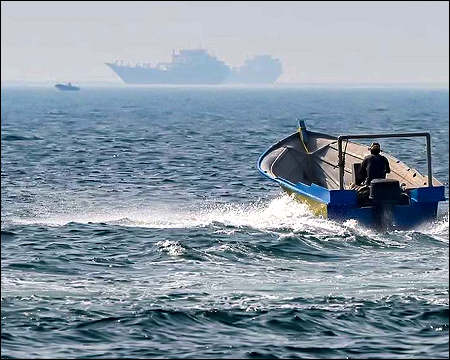
The Strait of Hormuz, a critical maritime route for global oil and gas shipments, has also been increasingly affected by security risks, raising concerns about supply disruptions.
Gulf sources said these developments have increased economic uncertainty and strengthened arguments within Abu Dhabi for greater flexibility in production policy.
Energy policy experts said rigid quota systems are increasingly difficult to reconcile with volatile regional conditions.
Ebtesam Al-Ketbi, president of the Emirates Policy Center, said current OPEC+ structures no longer reflect the realities of regional instability and energy security risks.
She said the UAE’s position signals a shift away from dependence on collective decision-making dominated by Saudi Arabia.
“It will not mortgage its production to Saudi Arabia and decisions. It will not be beholden to its rules,” she said.
Al-Ketbi added that the UAE is repositioning itself within global energy governance structures.
She said the country is “exiting a complete model of oil market management” and seeking to become “one of the architects of that system, not merely one of its members.”
UAE response and official position
The UAE foreign ministry said the assertions raised in questions about the withdrawal did not reflect factual accuracy.
The Energy Ministry previously stated that the decision followed a comprehensive review of production policy and long-term capacity planning. It said the move was carefully considered and based on national interest, as well as a commitment to supporting global energy market stability.
A UAE official also commented on a recent Gulf summit held in Saudi Arabia aimed at addressing regional tensions. The official described it as “a first good step in the right direction,” while noting that significant challenges remain.
“There is still much to be done against a precarious backdrop,” the official said.
On broader regional institutions, the official said the UAE is reviewing the relevance and effectiveness of its participation in international and multilateral organizations.
However, he denied that withdrawal from additional bodies was under consideration, including reports suggesting possible exits from organizations such as the Arab League.
Security concerns reshape Gulf relations
Security concerns have become increasingly central to UAE policy calculations since the escalation of regional conflict.
UAE presidential adviser Anwar Gargash criticized the response of some Gulf allies to Iranian missile and drone attacks following U.S. and Israeli strikes. He described regional defense responses as inadequate.
He said Gulf states’ overall posture was “the weakest in history,” reflecting growing frustration within Abu Dhabi over collective security arrangements.
Former U.S. negotiator Aaron David Miller said the UAE has increasingly relied on security partnerships with the United States and Israel.
He said Abu Dhabi has concluded that its long-term security is tied to close cooperation with those two actors, particularly following recent regional crises.
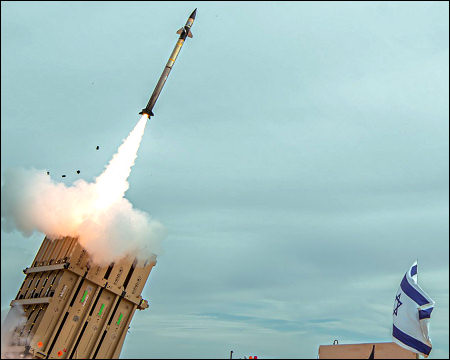
Israel has supplied interception systems “Iron Dome” and previously installed air defense technology in the UAE, reinforcing defense ties that have expanded in recent years.
This security alignment reflects broader shifts in UAE foreign policy strategy, including deeper engagement with Washington and expanding defense ties with Israel.
Diverging Gulf strategic models
The UAE and Saudi Arabia have historically worked closely on regional security issues, particularly after the 2011 Arab uprisings, when both countries sought to counter political Islam and stabilize regional governance structures.
However, analysts say underlying differences in economic and political strategy have become more visible over time.
Saudi Arabia has pursued a centralized model of regional leadership anchored in state-led transformation plans, while the UAE has developed a more decentralized strategy based on trade, logistics, financial services, and regional influence networks.
These differences have become more pronounced in regional conflicts.
In Yemen, a joint military intervention eventually split into competing strategies. Saudi Arabia supported a unified government aligned with its interests, while the UAE backed southern forces focused on securing maritime and territorial influence.
A similar divergence has emerged in Sudan, where both countries have supported different factions in the ongoing civil conflict.
Economic competition and regional alignment
Beyond security and energy policy, economic competition between the two countries has intensified.
Saudi Arabia’s Vision 2030 plan to diversify its economy away from oil has increased competition with the UAE in sectors including logistics, investment, and regional trade hubs.
The UAE was among the first Gulf states to normalize relations with Israel under the Abraham Accords, expanding trade, investment, and security cooperation.
Saudi Arabia has taken a more cautious approach to normalization due to domestic, religious, and geopolitical considerations, making formal ties more complex.
Analysts say these developments reflect a gradual but sustained divergence in how the two Gulf powers define regional leadership and economic strategy.
The UAE’s exit from OPEC and OPEC+ is now seen as part of this wider shift in Gulf power dynamics, with implications that extend beyond oil policy into the core structure of regional alliances.
(With files from Reuters)
Copyright © 2026 Dubai Diplomacy. All rights reserved.
 Your support matters! Consider buying us a coffee — every bit helps keep independent news alive.
Related posts:
 UAE exits OPEC in major blow to oil producers’ group
 UAE vows unrestricted oil output after OPEC exit: minister
 Saudi Arabia issues security warning as UAE told to exit Yemen
 UAE pulls remaining forces from Yemen after Saudi Arabia call: ministry
 Some UAE companies pull out of Saudi defense show over Gulf rift: Reuters
 Is a Gulf NATO Really Possible?
 Saudi jets target UAE-backed separatists in Yemen’s south
 TotalEnergies shuts down offshore oil production in UAE