
Don’t Die in the UAE Without a Will: New Law Sends Heirless Expat Assets to Charity
Abdullah Hamad – Exclusive to Dubai Diplomacy
Residents face frozen accounts, lost guardianship, and forced asset distribution under sweeping 2026 civil law reforms.
DUBAI,— Legal experts are issuing an urgent warning to the 8.8 million expatriates living in the UAE: if you die without a registered will, your family could lose access to bank accounts for months, and your children could be placed under the guardianship of relatives you never chose.
And starting this year, there is a new risk.
Under Federal Decree-Law No. 51 of 2024, which took effect on January 1, 2026, if a foreign resident dies without a valid will and leaves no identifiable legal heirs, their UAE-based assets will be transferred to a charitable endowment known as a Waqf, rather than remaining frozen or unclaimed indefinitely.
According to legal analysis cited by The Economic Times, this change resolves a longstanding practical problem where estates without heirs could linger in legal limbo for years. However, the same source notes that the rule particularly affects expatriates who mistakenly believe their overseas relatives will automatically inherit their UAE assets without a registered local will.
What Happens When You Die Without a Will
Legal specialists advise that while inheritance outcomes vary between Muslim and non-Muslim residents under UAE law, one conclusion is unanimous: relying on the default system rarely produces a favorable result for any family.
For Non-Muslims

Under the Civil Personal Status Law (Federal Decree No. 41 of 2022), a non-Muslim who dies without a registered will has their estate divided according to a government-mandated formula:
- 50 percent goes to the surviving spouse
- The remaining 50 percent is split equally among all children, with sons and daughters receiving identical shares
- If there are no children, assets pass to both parents equally, then to siblings
This framework may appear reasonable on paper, but legal experts warn it frequently contradicts what expatriates actually want for their families.
Mohammad Marria, CEO of Just Wills Consultant, told Khaleej Times that many foreign residents assume their spouse will inherit everything automatically. In reality, the standard civil framework does not grant the surviving spouse full inheritance rights.
The spouse receives only half, while children, even minors, receive the other half immediately, which can create complications for guardianship and financial management.
For Muslims
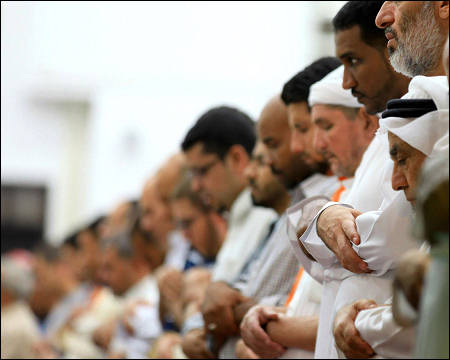
For Muslim residents who do not register a separate will, Sharia inheritance rules take effect automatically. These rules assign specific fractions to immediate family members based on Quranic principles. (Source: UAE Federal Law No. 41 of 2024 and established Sharia jurisprudence)
A surviving husband receives one-half of the estate when his wife leaves no children, but this share drops to one-quarter if children are present.
For a surviving wife, the portion is one-quarter when there are no children, reducing to one-eighth if the deceased husband has offspring.
Male children are allocated twice the share given to female children. Beyond these forced heirship rules, a Muslim resident may only direct up to one-third of their total estate to non-relatives or charity through a written will.
The New 2026 Rule: Assets to Charity

The most significant legal change in 2026 applies to expatriates who die without a will AND without any legally identifiable heirs.
The new decree establishes three conditions that must all be met simultaneously:
- The deceased is a foreign national
- The deceased has no will recognized by UAE courts
- The deceased leaves no heirs that can be legally identified
When all three conditions are satisfied, courts are required to direct the entire estate toward a Waqf (charitable endowment). Rather than leaving assets frozen indefinitely due to procedural uncertainty, the 2026 legislation removes previous legal ambiguity by establishing a clear and predictable resolution for unclaimed estates.
This risk extends beyond individuals who genuinely lack living relatives. Foreign residents who presume that their family members abroad will be automatically acknowledged as legal heirs, without providing the UAE courts with verified documentation, could discover too late that those relatives cannot be identified or located within the required legal timeframe.
Frozen Accounts and Lost Guardianship
Even without the new Waqf rule, dying without a will creates immediate financial hardship for surviving family members.
Saim Khan, an associate at BSA Law, explained that in the absence of a local will, UAE bank accounts, including joint accounts, are typically frozen upon death until a court order is issued. This legal process can take weeks or months, leaving families without access to funds for rent, school fees, and daily expenses.
For parents, the stakes are even higher.
Marria emphasized to Khaleej Times that a will not only protects immovable property but also covers bank accounts, vehicles, investments, and jewelry. In his view, the most critical function of a will is the appointment of a legal guardian for minor children.
Without a registered will naming a guardian, UAE courts assume the responsibility of deciding who will care for minor children. Importantly, the surviving mother does not automatically receive legal guardianship under this default scenario.
New Age of Majority: 18-Year-Olds Can Now Write Wills

In another 2026 reform, the age of majority in the UAE has been lowered from 21 lunar years to 18 Gregorian years under amendments to the Civil Transactions Law.
The DIFC Courts formally adopted this change effective March 2, 2026. Individuals aged 18 and above can now register wills through the DIFC Wills Service Centre without needing parental consent or court approval.
A legal analysis from James Berry & Associates noted that this legislative reform represents a meaningful recalibration of civil capacity within the UAE, aligning the jurisdiction with widely accepted international standards.
For individuals who already registered wills before this change, no amendments are necessary simply due to the age adjustment. Guardianship provisions now apply only to children under 18 years of age.
How to Register a Will in the UAE
Expatriates have three main options for registering a will, according to legal practitioners in the region.
| Registry | Best For | Language | Key Feature |
|---|---|---|---|
| DIFC Wills Service Centre | Non-Muslims preferring common-law process | English | Streamlined probate, covers Dubai and Ras Al Khaimah |
| Abu Dhabi Judicial Department (ADJD) | UAE-wide validity, fully digital process | Arabic and English | Open to non-Muslims and some foreign Muslims |
| Dubai Courts Notary | Lower-cost option | Arabic or bilingual | Limited to onshore Dubai coverage |
Non-Muslims may choose to have either their home country’s inheritance laws or the UAE civil personal status regime govern the distribution of their estate. However, legal experts stress that this election must be stated explicitly in the will document itself, particularly when UAE real estate is involved.
Will registration fees in the UAE generally fall between 2,500 and 7,500 dirhams, varying according to the complexity of the estate plan and the specific registry selected. (Estimated range based on publicly available fee schedules from DIFC, ADJD, and Dubai Courts as of 2026.)
The Bottom Line
Legal experts across the UAE are unified in their advice: register a will. Do not rely on foreign wills drafted in your home country, as these typically require legalization, Arabic translation, and full court review in the UAE, a process that often results in significant delays or only partial application of local inheritance law.
Marria offered a straightforward conclusion: a will serves as the voice of the deceased person, providing clear instructions that make an already difficult time less burdensome for grieving family members.
With the new 2026 Waqf rule now in effect and frozen accounts remaining a real threat for unprepared families, the cost of doing nothing has never been higher.
Source citations: UAE Federal Decree-Law No. 51 of 2024; Federal Decree-Law No. 41 of 2022 (Civil Personal Status Law); DIFC Wills Service Centre public guidelines; ADJD Civil Wills registry information; statements to The Economic Times and Khaleej Times as attributed in this article.
Additional reporting by staff writers
Sources
- Federal Decree-Law No. 51 of 2024 (UAE Waqf and inheritance provisions for foreign residents)
Official source: UAE Ministry of Justice – [link to be inserted from official government portal] - Federal Decree-Law No. 41 of 2022 (Civil Personal Status Law for non-Muslims)
Official source: UAE Ministry of Justice – [link to be inserted from official government portal] - DIFC Wills Service Centre – Official registry for non-Muslim wills covering Dubai and Ras Al Khaimah https://www.difc.ae/business/wills-and-probate/
- Abu Dhabi Judicial Department (ADJD) – Civil Wills Registry
https://www.adjd.gov.ae/EN/CivilWills/Pages/CivilWills.aspx - Dubai Courts – Notary Services for Wills
https://www.dc.gov.ae/notary - The Economic Times – Legal analysis on Federal Decree-Law No. 51 of 2024 and its impact on expatriate estates
https://economictimes.indiatimes.com/ (search for “UAE inheritance law 2026 expats”) - Khaleej Times – Quotes and analysis from Mohammad Marria (Just Wills Consultant) and Saim Khan (BSA Law)
https://www.khaleejtimes.com/ (search for “UAE will inheritance expats”) - James Berry & Associates – Legal analysis on the lowering of the age of majority to 18 Gregorian years and DIFC adoption effective March 2, 2026
https://www.jamesberrylaw.com/ (search for “UAE age of majority 2026 DIFC”) - Gulf News: UAE civil law update– New rules for expats’ assets with no heirs, wills January 2, 2026.
Note on official government links: UAE federal laws (Decree-Law No. 51 of 2024 and No. 41 of 2022) are published on the official UAE Ministry of Justice website and the UAE Legislation Portal. Direct permanent URLs may require navigation through the portal. Readers can access these at:
https://www.moj.gov.ae/ | https://uaelegislation.gov.ae/en/home
Disclaimer: This article is for informational purposes only and does not constitute legal advice. Laws and procedures in the UAE are subject to change. Readers should consult a qualified lawyer or law firm for advice on their specific situation. The author and publisher assume no responsibility for any actions taken based on this content.
Copyright © 2026 Dubai Diplomacy. All rights reserved.
 Your support matters! Consider buying us a coffee — every bit helps keep independent news alive.
Related posts:
 UAE issues new federal law on child digital safety
 Dubai ruler issues law on building quality and safety, UAE
 Travelers to Dubai risk arrest over social media posts and debt: advocates
 Ex-wife of Dubai prince loses custody, alleges police coercion, UAE
 Some wealthy Asians move assets from Dubai amid Iran war fears
 Indian teacher wins $1 million Global Teacher Prize 2026 in UAE
 UAE human rights activist Ahmed Mansoor marks 9 years behind bars
 Will Syria’s Sharaa hand over Jasem al-Shamsi to UAE in tit-for-tat move?