Halima Younis – Exclusive to Dubai Diplomacy
As diplomatic and economic ties between Damascus and Abu Dhabi rapidly deepen, human rights advocates are sounding the alarm over the fate of a prominent Emirati political dissident who has been forcibly disappeared in Syria since November 2025.
The case of Jasem Al-Shamsi, a former high-ranking UAE official turned activist, is emerging as a potential bargaining chip in the growing rapprochement between the two countries.
Who is Jasem Rashed al-Shamsi?
Jasem Rashid Al-Shamsi is a former Assistant Undersecretary at the UAE Ministry of Finance who resigned to pursue political activism. In March 2011, he was among 133 Emirati academics, judges, and professionals who signed a petition calling for democratic reforms and an elected parliament with full powers.
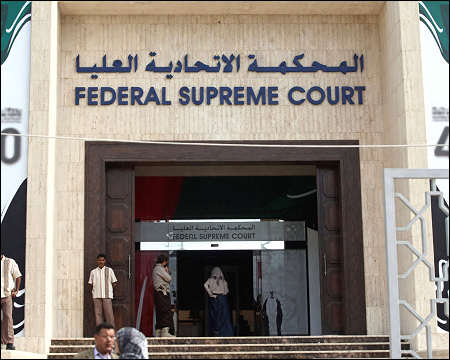
The UAE government responded with a crackdown. In January 2013, Al-Shamsi was tried in absentia as part of the notorious “UAE94“ mass trial, the largest political trial in the country’s history. He was sentenced to 15 years in prison on charges of attempting to overthrow the government, a trial widely criticized by human rights groups and UN experts as grossly unfair.
The persecution did not stop there. In December 2023, UAE authorities filed new counter-terrorism charges against 84 prisoners of conscience in what became known as the “UAE84” case. Al-Shamsi was again tried in absentia and sentenced to life imprisonment in July 2024. In January 2025, he was officially added to the UAE’s domestic terrorist list.
After spending nearly a decade in exile in Turkey, Al-Shamsi relocated to Syria with his Syrian wife, Raghda Kiwan, and their five children. He entered the country legally and had ceased all political activity.
Arrest and enforced disappearance
On November 6, 2025, Syrian security forces arrested Al-Shamsi at a checkpoint in the Damascus countryside. According to his wife, armed men in plain clothes stopped their car, demanded identification, and took him away without a judicial warrant or explanation. He was transferred to an undisclosed location.
Since that day, Al-Shamsi has effectively been forcibly disappeared. His wife received only one brief phone call from him in mid-December 2025. Since then, all contact has been severed, and Syrian authorities have refused to disclose his whereabouts or legal status. Human Rights Watch, the Emirates Detainees Advocacy Center (EDAC), and other organizations have warned that Al-Shamsi faces a serious risk of extradition to the UAE, where he would face torture, enforced disappearance, and arbitrary detention.
A striking pattern: Sharaa visits UAE, Abu Dhabi releases Syrian rebel leader
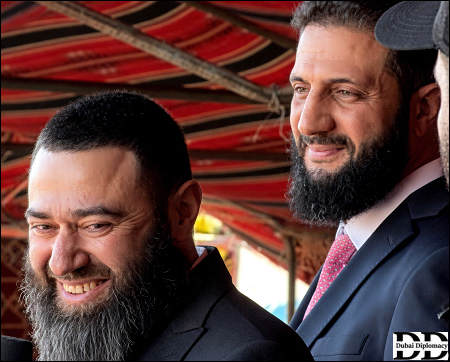
On April 22, 2026, Syrian President Ahmed al-Sharaa visited the United Arab Emirates and met with UAE President Sheikh Mohamed bin Zayed Al Nahyan in Abu Dhabi. The visit signaled a major warming of ties between the two countries.
Just one day later, on April 23, 2026, the UAE released Issam Buwaydani, a former Syrian rebel leader who had led the Jaish al-Islam faction against the ousted Bashar al-Assad regime.
Buwaydani had been detained at Dubai airport in April 2025 after entering the UAE on a Turkish passport. No official reason for his detention or release was ever made public. He returned to Damascus on the same day that Sharaa returned from his UAE visit.
The timing of Buwaydani’s release, immediately following Sharaa’s high-level meeting in Abu Dhabi, has raised questions about whether it was part of a broader political exchange.
Deepening UAE-Syria ties: The investment forum
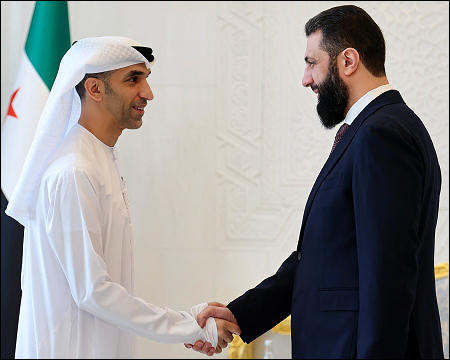
The warming relationship between Damascus and Abu Dhabi has moved beyond diplomacy into significant economic cooperation. In May 2026, the first Syrian-Emirati Investment Forum was held at the Presidential Palace in Damascus, attended by President al-Sharaa himself along with ministers and senior officials from both countries.
UAE Minister of State for Foreign Trade Thani Al Zeyoudi announced that non-oil trade between the UAE and Syria reached a record $1.4 billion in 2025, a staggering 132% increase from the previous year. Preliminary agreements were reached covering dozens of investment projects in tourism, construction, infrastructure, agriculture, aviation, and logistics.
The forum took place at the Presidential Palace, underscoring the new level of trust and cooperation between the two governments.
Will Sharaa hand over Al-Shamsi as a tit-for-tat gesture?
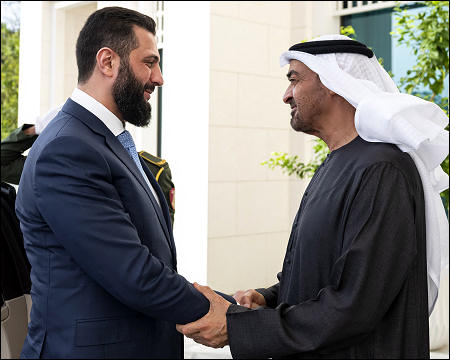
Against this backdrop of rapidly strengthening UAE-Syria relations, human rights organizations are increasingly fearful that President Sharaa may use Jasem Al-Shamsi as a bargaining chip to further cement ties with Abu Dhabi.
The precedent is already there. The UAE released Issam Buwaydani, a man who had fought against the previous Syrian regime, immediately after Sharaa’s visit. If Abu Dhabi can make such a gesture to Damascus, what might it expect in return?
Al-Shamsi is a high-value target for the UAE. He has been sentenced to life in prison in absentia and placed on the country’s terrorist list.
His extradition would allow the UAE to silence a prominent critic who once held a senior position in its own government. For Syria, handing him over would be a relatively low-cost way to further curry favor with a wealthy and powerful Gulf state that is now investing heavily in its reconstruction.
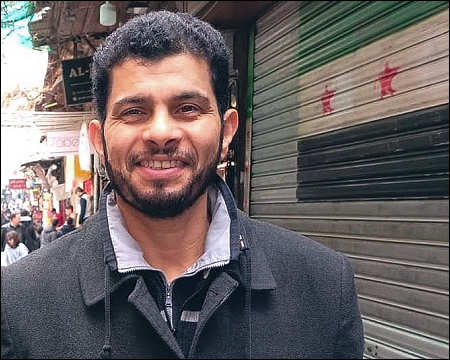
Moreover, Syria itself is obligated under international law, including the Convention Against Torture, to respect the principle of non-refoulement, which prohibits transferring any person to a country where they face a real risk of torture or persecution. However, as the Buwaydani release shows, political considerations often override legal obligations in times of rapprochement.
Raghda Kiwan, Al-Shamsi’s wife, has repeatedly appealed to Syrian authorities and the international community. “You know the reality of the justice system and prisons in the UAE,” she said. “If Jasem is extradited, he will be a victim.”
So far, Syrian authorities have not publicly acknowledged Al-Shamsi’s detention or disclosed his whereabouts. But as trade deals are signed and investment agreements are sealed in Damascus, the silence from the Presidential Palace grows increasingly ominous. Many fear that Jasem Al-Shamsi has become a quiet currency in a much larger political transaction, and that his fate may already have been decided behind closed doors.
A test of Western credibility
At the same time, Syria’s new leadership is increasingly reliant on Western financial support, particularly from the European Union. The EU has pledged a €620 million financial package for 2026 and 2027, restored a major cooperation agreement, and held its first high-level political dialogue with Damascus, all conditional on tangible progress in human rights and democratic reforms.
For President Sharaa, who is courting Western legitimacy and investment, extraditing a dissident like Al-Shamsi, who faces certain torture in the UAE, would be a direct betrayal of the very principles the West is paying to promote. Such a move could jeopardize crucial European aid and diplomatic backing. The question remains: will Sharaa prioritize Gulf allegiances and risk turning his back on the West, or will he protect Al-Shamsi to preserve his standing as a partner for a new, democratic Syria?
This article is based on reporting from Human Rights Watch, the Emirates Detainees Advocacy Center (EDAC), the Arab Organisation for Human Rights in the UK (AOHR UK), Syrian Observer, Noon Post, and The New Arab, as well as statements from Syrian and UAE officials.
Halima Younis, political analyst.
All views expressed herein are solely those of the author and do not necessarily represent the opinions or policies of DubaiDiplomacy or its editors.
Copyright © 2026 Dubai Diplomacy. All rights reserved.
 Your support matters! Consider buying us a coffee — every bit helps keep independent news alive.
Related posts:
 UAE releases Issam Buwaydani after Syrian president’s visit
 UAE-Syria trade doubles in 2025, poised for growth: minister
 UAE human rights activist Ahmed Mansoor marks 9 years behind bars
 Rifaat al-Assad, brother of Syria’s ex-president, dies at 88 in UAE
 Syria’s Rifaat al-Assad flew to Dubai, officials say
 UAE slams “vandalism” at its embassy in Damascus: mofa
 Dubai Takes Your Money, Then Your Freedom: British family case
 UAE arrests 25 foreigners for posting videos of Iran strikes: attorney-general