PARIS,— The United Arab Emirates ranks 158th out of 180 countries in the 2026 World Press Freedom Index published by Reporters Without Borders, placing it among the lowest-performing nations globally and within the Middle East and North Africa (MENA) region, where press freedom conditions remain highly restricted.
Across the region, press freedom remains severely constrained, with most countries classified as having a “difficult” or “very serious” situation for journalists.
Within this context, the UAE ranks significantly lower than regional peers such as Qatar, which is the highest-ranked Arab country in the index, though it still faces notable media restrictions.
According to RSF, Emirati authorities continue to block the development of independent journalism, preventing both local and foreign media outlets from operating freely.
The government is described as actively tracking down and persecuting dissenting voices, while Emirati journalists living abroad risk harassment, arrest, or extradition.
The situation worsened in 2026 amid regional instability linked to the Iran conflict 2026.
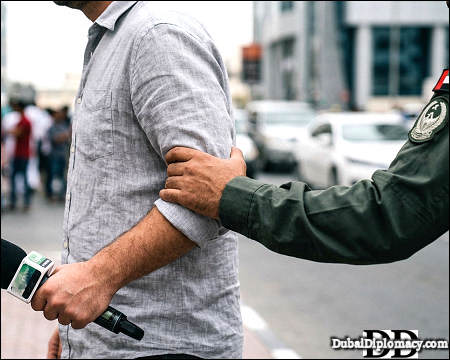
In the aftermath of Iranian strikes against the UAE, journalists covering the developments faced intimidation, interrogation and increased pressure, highlighting an intensified crackdown.
The country’s media landscape remains heavily influenced by the state. Most outlets are owned by press groups with close government ties, limiting editorial independence.
Major publications include Al-Khaleej, the leading daily by circulation, and Al-Ittihad, the country’s oldest newspaper funded by Abu Dhabi Media. English-language outlets such as Gulf News and The National also play a significant role, though genuine editorial independence is largely absent.
Media content is tightly regulated by the National Media Council, which monitors domestic and international reporting.
It can censor or sanction material deemed critical of government decisions or harmful to “social cohesion”, a vague standard that effectively allows broad suppression of dissenting views.
The council also reviews foreign media content to ensure compliance with national guidelines.
Despite constitutional guarantees of free expression, the legal framework imposes sweeping limits.
A 1980 federal law permits censorship of reporting critical of state policies, the ruling families, religion or the economy.
Journalists are also prosecuted under the 2012 cybercrime law, updated in 2021, while spreading “rumours” can result in prison sentences and fines, further deterring independent reporting.
Economically, the UAE has invested heavily in media infrastructure, with Dubai serving as a major regional hub for international news organizations and broadcasters.
However, RSF emphasizes that economic development has not translated into greater media freedom, as ownership and regulatory structures remain closely aligned with the state.
Cultural factors also play a role. A strong tradition of loyalty to the House of Nahyan discourages criticism of the leadership, contributing to widespread self-censorship. Public criticism of ruling figures is often seen as a breach of loyalty.
Journalists and bloggers who cross these boundaries face serious risks. The UAE authorities are described as highly advanced in digital surveillance, quickly targeting critical voices.
Those accused of defamation, insulting the state or spreading false information risk lengthy prison sentences and potential mistreatment.
The 2026 index also reflects a broader global trend, with press freedom declining to one of its lowest levels in decades.
Within this context, the UAE’s position underscores ongoing concerns about transparency, accountability and the lack of independent journalism, issues that remain unlikely to improve without significant legal and political reforms, according to watchdogs.
(With files from Reporters Without Borders, rsf.org)
Copyright © 2026 Dubai Diplomacy. All rights reserved.
 Your support matters! Consider buying us a coffee — every bit helps keep independent news alive.
Related posts:
 Dubai Real Estate Lost 34%, The Worst Could Still Be Ahead
 $24 million Dubai property network linked to Sudan’s RSF: report
 UAE passport ranks 5th worldwide in 2026: Henley Passport Index
 UAE, Qatar arrest hundreds over Iran attack footage: NY Times
 UAE-backed Colombian mercenaries aided Sudan’s RSF: CIG report – BBC
 Sky News to end ties with UAE’s Sky News Arabia over Sudan war reporting
 UAE trained Colombians linked to Sudan war crimes: HRW
 Don’t Die in UAE Without a Will: New Law Sends Heirless Expat Assets to Charity