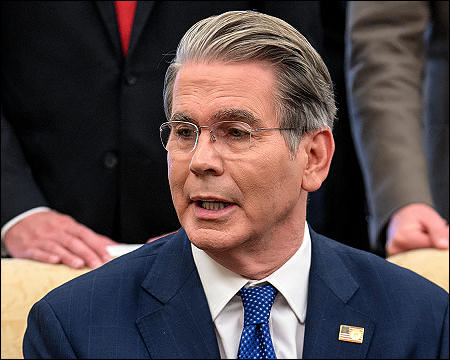
Gulf, Asian allies request swap lines, Scott Bessent says
WASHINGTON,— U.S. Treasury Secretary Scott Bessent said Wednesday that several allies in the Gulf and Asia have asked the United States for currency swap lines to manage economic pressure linked to energy shocks and the Middle East war.
He made the remarks during testimony before a Senate Appropriations subcommittee.
Bessent said both the United States and the United Arab Emirates would benefit from a proposed swap arrangement that President Donald Trump said on Tuesday he was considering.
He did not identify the countries that made the requests but said multiple partners had approached Washington.
He told lawmakers that such financial tools are designed to steady markets during periods of stress tied to the Iran conflict.
Swap lines from the Federal Reserve or the Treasury help maintain stability in dollar funding markets and reduce the risk of disorderly selling of U.S. assets, Bessent said.
He added that the proposed line would support both the UAE and the United States, and noted that other countries, including some in Asia, had made similar requests for support.
Bessent pointed to a prior example in October 2025 when the Treasury extended a $20 billion currency swap line to Argentina.
That step was taken to stabilize the peso during a volatile election period that strengthened President Javier Milei’s political position.
The Argentina facility was backed by the Treasury’s 219 billion dollar Exchange Stabilization Fund.
It gave Argentina’s central bank access to dollars to support its currency and prevent a sharp devaluation before the vote. The swap has since been repaid, Bessent said.
On energy markets, Bessent said he approved a 30 day extension of sanctions relief for Russian seaborne oil after requests from countries facing supply risks linked to the closure of the Strait of Hormuz.
He said those appeals were made during last week’s meetings of the International Monetary Fund and World Bank.
The move reversed his earlier statement that expiring waivers would not be renewed. A separate waiver that allowed purchases of Iranian oil stranded at sea expired on April 19.
Bessent rejected estimates that Iran earned more than 14 billion dollars from the relief, calling the figure inaccurate, but he did not offer another estimate.
He said the waivers allowed the Treasury to release about 250 million barrels of oil stored in tankers, helping ease prices.
Asian economies have struggled with limited oil supply since early March following U.S. and Israeli strikes, he said.
(With files from Reuters)
Copyright © 2026 Dubai Diplomacy. All rights reserved.
 Your support matters! Consider buying us a coffee — every bit helps keep independent news alive.
Related posts:
 U.S. weighs currency swap with UAE, Trump says
 ADNOC group companies report $9.7 billion net profit in 2025
 Banking assets reach AED 5.34 trillion in 2025: CBUAE
 UAE seeks U.S. financial lifeline as Iran war drags on, WSJ reports
 Crypto avoids UAE disruption amid Iran conflict concern
 Abu Dhabi’s IHC reports AED 34.7 billion net profit in 2025
 Gulf states press Trump to continue war until Iran is fully weakened
 US urges citizens to leave UAE and Middle East immediately