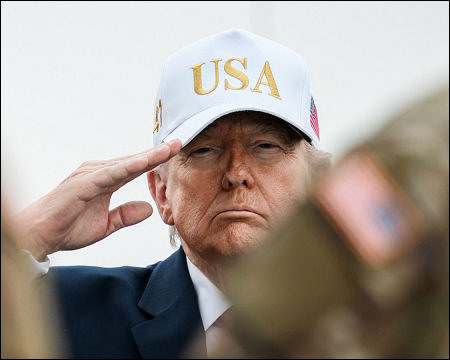
Trump looks at Arab countries to share cost of Iran war, White House says
WASHINGTON,— Gulf allies of the United States are privately urging U.S. President Donald Trump to continue military operations against Iran, saying the current campaign has not weakened Tehran enough, according to U.S., Gulf and Israeli officials, AP reported.
Saudi Arabia and the United Arab Emirates are leading the push, telling the White House that the ongoing conflict presents a rare chance to significantly weaken Iran’s clerical leadership.
At the start of the war, some Gulf countries complained they were not given enough warning before the U.S. and Israel launched attacks. They also cautioned that the conflict could destabilize the region.
Now, officials from Saudi Arabia, the UAE, Kuwait and Bahrain have shifted their tone. In private discussions, they have said the war should not end until there are major changes in Iran’s leadership or a clear shift in its behavior.
The officials spoke on condition of anonymity because they were not authorized to speak publicly.
Their position comes as Trump sends mixed signals about the conflict. He has said Iran’s leadership may be ready to negotiate while also warning of further escalation if an agreement is not reached quickly.
The conflict has killed more than 3,000 people across the Middle East and has disrupted the global economy.
Trump has faced difficulty building public support in the United States. However, he has recently emphasized that key regional allies support his approach.
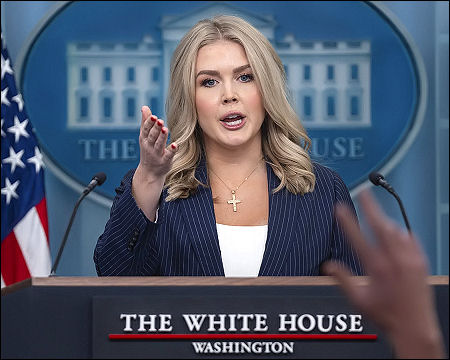
Trump is considering asking Arab nations to help cover the financial cost of the war with Iran, White House press secretary Karoline Leavitt said Monday, adding that diplomatic contacts with Tehran are moving forward.
Speaking at a briefing, Leavitt said the idea has been discussed by Trump when asked whether Arab countries could contribute to funding the conflict. She declined to provide details, saying she did not want to speak ahead of the president.
She said it is an option Trump is interested in and suggested he may address it publicly in the future.
Speaking to reporters aboard Air Force One on Sunday, Trump said Gulf countries were actively responding to Iran. He listed Saudi Arabia, Qatar, the UAE, Kuwait and Bahrain as countries pushing back.
These nations host U.S. military bases that have been used to launch strikes on Iran. Despite this, they have not taken part in direct offensive operations.
Support among Gulf countries varies. A Gulf diplomat said Saudi Arabia and the UAE are at the forefront of calls for increased pressure on Iran.
The UAE has taken a particularly strong stance and is encouraging consideration of a ground invasion. Kuwait and Bahrain also support that option.
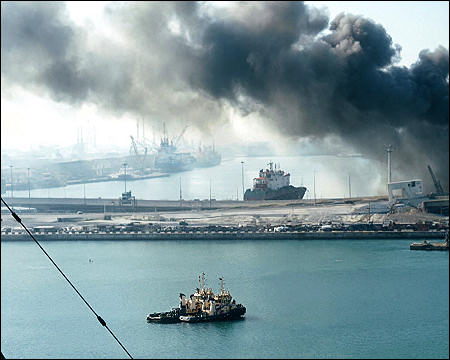
The UAE has been targeted by more than 2,300 Iranian missile and drone attacks during the conflict. The continued strikes have raised concerns about its status as a regional center for trade and tourism.
In contrast, Oman and Qatar have supported diplomatic efforts. Both countries have historically acted as intermediaries between Iran and Western nations.
Saudi Arabia has told U.S. officials that ending the war now would not result in a satisfactory agreement. Saudi officials have outlined conditions for a future settlement.
These include eliminating Iran’s nuclear program, destroying its ballistic missile capabilities, ending support for proxy groups and ensuring the Strait of Hormuz cannot be closed by Iran.
Before the conflict, about 20 percent of global oil shipments passed through the Strait of Hormuz. Saudi officials say achieving these goals would require either major changes in Iran’s leadership or its removal.
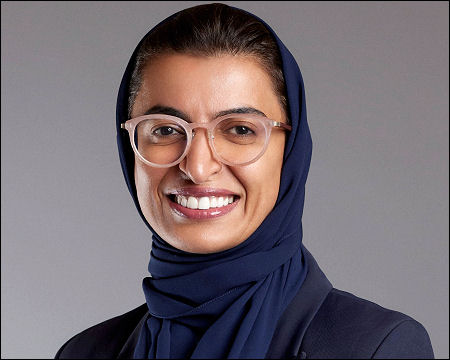
Senior officials in the UAE have also taken a stronger public stance. Noura Al Kaabi, a minister of state at the UAE Foreign Ministry, wrote in a column published by The National that Iran’s actions are unacceptable.
She said the UAE wants guarantees that such actions will not happen again.
The White House declined to comment on discussions with Gulf allies. Secretary of State Marco Rubio said on ABC’s Good Morning America that the United States and its regional partners share concerns about Iran.
He described Iran’s leadership as a threat that must not obtain nuclear weapons and said neighboring countries understand this risk.
Saudi Crown Prince Mohammed bin Salman has told U.S. officials that further weakening Iran’s military and leadership would benefit the region over the long term, according to a person familiar with the talks.
At the same time, Saudi Arabia remains concerned about the risk of attacks on its energy infrastructure. A Saudi official said the country ultimately wants a political solution but is currently focused on protecting its population and key facilities.
Iran’s foreign minister Abbas Araghchi said early Tuesday that Iranian strikes in Gulf countries are aimed only at U.S. forces.
His comments came after some attacks hit civilian targets. In a message posted on X, he said Iran respects Saudi Arabia and described it as a brotherly nation.
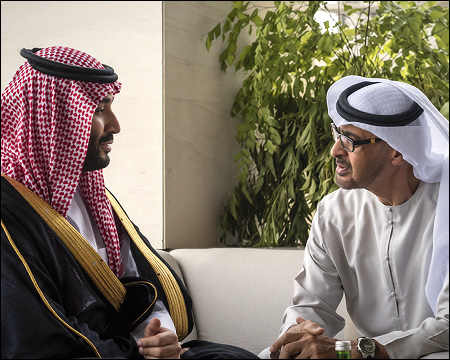
Trump has highlighted support from Gulf countries as he criticizes NATO allies for not joining the conflict. He praised Bahrain, Kuwait, Qatar, Saudi Arabia and the UAE for their actions during the war.
At an event in Miami backed by Saudi Arabia’s sovereign wealth fund, Trump praised the Saudi crown prince and noted that Gulf countries initially had doubts about the conflict but later aligned with the United States.
Trump has not asked Gulf countries to participate in direct military strikes. One reason may be the complexity of coordinating multiple forces in the same airspace.
Early in the conflict, Kuwaiti forces mistakenly shot down three U.S. fighter jets during an Iranian attack. All crew members survived.
In another incident, six U.S. service members were killed on March 12 when a refueling aircraft crashed in western Iraq.
Only the UAE and Bahrain among Gulf states have formal diplomatic relations with Israel. Analysts say this adds complexity to any decision to join direct operations.
Iran has warned it could target critical infrastructure in neighboring countries, including water desalination plants, if the United States attacks its power facilities. Trump has threatened such strikes if Iran does not reopen the Strait of Hormuz by April 6.
Yasmine Farouk of the International Crisis Group said uncertainty about U.S. objectives and commitment has made some Gulf countries cautious. She said a major attack in the region could change their position.
Separately, White House press secretary Karoline Leavitt said Trump is considering asking Arab countries to help cover the cost of the war. She said it is an idea the president has discussed and may address publicly in the future.
Leavitt also said talks with Iran are continuing and described them as progressing well. She said Iran’s public statements differ from its private communications with U.S. officials and that Tehran has agreed to some U.S. positions behind closed doors.
Earlier Monday, Trump warned that Iran’s energy infrastructure would be destroyed if it does not reopen the Strait of Hormuz. Iran has called U.S. peace proposals unrealistic while continuing missile attacks on Israel.
(With files from AP, Reuters)
Copyright © 2026 Dubai Diplomacy. All rights reserved.
 Your support matters! Consider buying us a coffee — every bit helps keep independent news alive.
Related posts:
 Is a Gulf NATO Really Possible?
 Gulf states say ending Iran war not enough, degrade its capabilities
 Saudi Arabia issues security warning as UAE told to exit Yemen
 In the Saudi Arabia–UAE Rivalry, the Saudis Are Wrong
 Saudi jets target UAE-backed separatists in Yemen’s south
 Senate Democrats seek review of UAE $500 million investment in Trump crypto firm
 UAE pulls remaining forces from Yemen after Saudi Arabia call: ministry
 UAE accepts invitation to join Trump’s “Board of Peace”