DUBAI,— Luxury hotels in Dubai that once catered mainly to international visitors are increasingly filling rooms with local residents, as war-related disruptions reduce tourist arrivals and push resorts toward staycation demand, AFP reported.
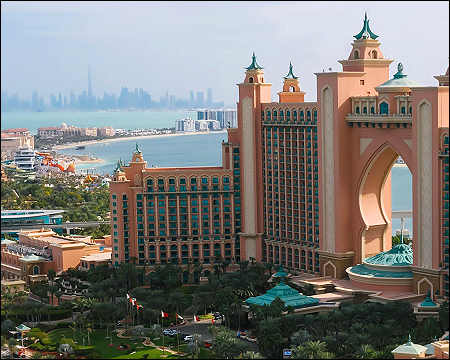
Five-star properties on the Palm, an artificial island associated with luxury in Dubai, are seeing weekend activity return even as many tourist bookings have declined.
Hotels report that resident-focused pricing has become essential to maintaining operations in the current environment.
Fadi Iskandarani, a Lebanese doctor in his sixties who has lived in Dubai for five years, told AFP he had avoided Palm resorts due to high costs.
He said he only recently chose a staycation after noticing a hotel cut prices by about four times.
Some floors of the hotel were closed because of low occupancy, although pool areas were active with residents.
Visitors said they were able to access luxury experiences that were previously out of reach for many residents.
Luxury in the city has become more accessible for residents, who say it used to be reserved for the very wealthy.
Dubai attracts about 19.5 million tourists annually and remains a major regional destination known for luxury travel.
It has 827 hotels, including 173 five-star properties, and maintains average occupancy rates above 80 percent in normal conditions.
The conflict, triggered by US-Israeli strikes on Iran on Feb. 28, damaged perceptions of stability in the Gulf region.
Iranian missiles and drones struck the United Arab Emirates, hitting locations including hotels on the Palm and Burj Al Arab.
Since a ceasefire began on April 8, some visitors have returned but hotels still depend heavily on local guests, said Michael Robinson of Anantara The Palm Dubai Resort.
At Anantara The Palm Dubai Resort, overwater villas, lagoons, and Thai-inspired design attract mainly local guests using discounts of up to 50 percent.
Weekend occupancy ranges from 70 to 90 percent, while weekday occupancy averages between 20 and 30 percent.
Staycation demand has helped the resort remain cash positive without layoffs.
However, managers say staycations cannot replace international tourism over the long term.
They note that staycations last only a few nights, while international visitors previously stayed about a week.
If tourism does not recover by July, when schools close and families travel, staycation demand is expected to weaken.
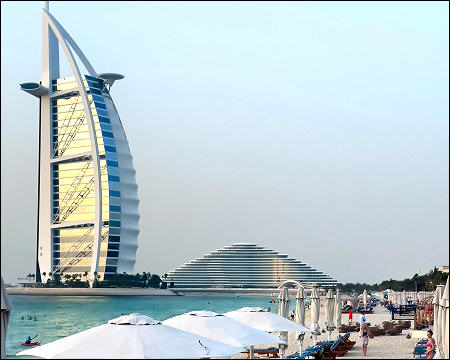
Some hotels, including Burj Al Arab, have temporarily shut for renovations as business activity slowed.
Other properties have reduced staff or salaries, particularly in downtown Dubai, which relies on business travel demand.
One hotel worker said his salary dropped by up to 40 percent during and after the war before recovering recently.
Another worker in Abu Dhabi said he was on unpaid leave for two months but is expected to return with pay restored.
Talks aimed at ending the war have continued for two months, with sporadic strikes still affecting tourism in the Gulf.
Robinson said he is hopeful that a resolution soon would bring tourists back more quickly than many expect.
Overall, Dubai’s hotel sector is increasingly reliant on local residents as staycation offers replace lost international tourism amid war-related disruption.
On the Palm, weekend demand has improved through discounted resident deals, while weekday occupancy remains much lower, allowing some properties to stay cash positive.
However, managers note that staycations are typically short, lasting only a couple of nights compared with the week-long stays of international visitors.
With summer approaching in July, demand is expected to weaken as schools close and families travel.
Some hotels, including Burj Al Arab, have closed for renovations, while others have reduced staff or salaries, with employees reporting pay cuts or unpaid leave in nearby Abu Dhabi as ceasefire talks continue and hopes for recovery remain.
(With files from AFP)
Copyright © 2026 Dubai Diplomacy. All rights reserved.
 Your support matters! Consider buying us a coffee — every bit helps keep independent news alive.
Related posts:
 Dubai hotels close citing “renovations” amid falling tourism
 Dubai shows signs of life but tourism struggles run deep
 Luxury carmakers’ profits in UAE, Gulf threatened by Iran war
 Iran hits luxury Dubai hotel in retaliatory strikes across Arab region
 International tourism revenue in GCC tops $120.2 billion: Gulf Stat
 Dubai airport, Burj al Arab hotel hit in Iran missile strike
 Is Dubai tourist friendly in Ramadan?
 Luxury brands in UAE face profit squeeze amid Iran conflict