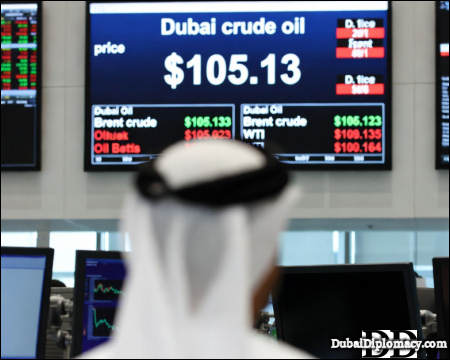
DUBAI,— The suspension of oil flows through the Strait of Hormuz has placed the Dubai crude benchmark, which helps price close to one-fifth of global supply, under pressure.
The benchmark is used to value about 18 million barrels per day, based on crude produced in the United Arab Emirates, Oman, and Qatar.
Most of these shipments are typically loaded from ports located within the strait, Reuters reported.
Since conflict with Iran began following U.S.-Israeli strikes on February 28, tanker movements through the route have largely stopped due to security risks and fears of attacks on shipping.
S&P Global Energy Platts, which oversees pricing for both Dubai and Brent crude, is now facing difficulty in assessing oil that cannot be physically loaded from Gulf ports.
Industry sources told Reuters the benchmark is no longer operating as intended. Some traders have reduced or halted activity in Dubai-linked cargoes and derivatives, while others are urging revisions to the pricing system.
The situation highlights the challenge of setting prices for oil scheduled for delivery in the coming months during a major supply shock.
It remains uncertain when buyers will be able to resume loading cargoes from ports inside the Strait of Hormuz, as tanker traffic has been minimal since the conflict began.
Crude prices in the Middle East have climbed to nearly $170 per barrel, exceeding Brent’s previous record of $147 set in 2008. The increase has sharply raised costs for Asian buyers who rely on the Dubai benchmark.
In response, some market participants are shifting to other pricing methods. Several Asian refiners have begun purchasing U.S. crude using pricing linked to Brent futures instead of Dubai.
On March 2, shortly after the disruption started, Platts removed crude loaded within the strait from its calculations.
This reduced the benchmark from five grades to two: Abu Dhabi Murban, shipped from the UAE’s Fujairah port, and Oman crude. The agency said this step lowered the amount of deliverable oil in the benchmark by about 40%.
Platts said it has been holding discussions with market participants as conditions evolve.
In a statement to Reuters, the agency said industry feedback pointed to the need for rapid adjustments so the Dubai benchmark can continue to reflect tradable spot values for Middle Eastern crude during extreme market conditions.
Market participants have proposed several options, including suspending the benchmark, restoring previously excluded grades, or adding crude from outside the region based on delivered prices into Asia, according to people familiar with the talks.
Sparta Commodities analyst June Goh said liquidity in the benchmark is under strain and changes to its methodology are likely to be considered.
Higher Dubai prices have increased costs for Asian refiners, raising expenses for crude purchases and, in turn, fuel prices for consumers, Goh said.
The March 2 decision by Platts also caught traders off guard. Market participants said such changes usually follow lengthy consultations, and the quick removal of May-loading cargoes during March trading made the benchmark less representative of regional supply.
Jorge Montepeque of Onyx Capital, who previously worked on the benchmark’s design at Platts, said the March pricing surge has cost consumers tens of billions of dollars because those prices are used to value many barrels in Asia and the Gulf.
Dubai prices are determined through Platts’ Market on Close process, where trades are conducted in partial cargoes of 25,000 barrels.
When 20 partials are traded, it results in the delivery of a full 500,000-barrel cargo from one of the benchmark grades.
Trading data shows TotalEnergies’ trading arm, Totsa, spent about $4 billion on Dubai partials in March.
This led to the delivery of 77 cargoes of Oman and Murban crude, totaling 38.5 million barrels out of 82 cargoes completed during the pricing process.
Data showed it led purchases throughout the month, while Mercuria and Equinor acquired five cargoes on the final trading day. The concentration of buying activity added upward pressure on prices.
Oil trader Adi Imsirovic described the scale of the activity as significant, saying it could represent one of the largest positions ever seen in the oil market.
Traders who were positioned against the price rise are estimated to have faced losses ranging from $60 to $100 per barrel, depending on when they closed their positions.
(With files from Reuters)
Copyright © 2026 Dubai Diplomacy. All rights reserved.
 Your support matters! Consider buying us a coffee — every bit helps keep independent news alive.
Related posts:
 Dubai crude premium drops as sellers flood TotalEnergies
 UAE’s Fujairah halts some oil loading after Iran drone attack
 UAE’s ADNOC shuts Ruwais oil refinery after Iran drone strike
 UAE’s Fujairah port sees bunkering slowdown after fire
 Some travelers paid $232,000 for flights to escape Gulf countries, amid Iran conflict
 Airlines suspend more flights to UAE, ME amid rising conflict
 UAE property market faces test after Iran attacks; foreign buyers crucial
 Gulf states say ending Iran war not enough, degrade its capabilities