DUBAI,— The UAE’s property sector is facing its first serious test after Iranian missile attacks targeted airports, ports, hotels, and residential areas in Dubai and Abu Dhabi.
The strikes have shaken the perception of safety in the Gulf and highlighted the heavy reliance of the UAE’s real estate market on foreign capital to sustain its rapid growth.
The attacks occurred at a time when analysts were already raising concerns about possible overheating in the property market.
Projects that previously sold out within hours are now encountering uncertainty over demand, particularly from international buyers.
Betterhomes reported that off-plan sales accounted for 65% of Dubai property transactions in 2025, meaning most purchases were for units that had not yet been constructed.
Analysts say foreign interest will now be a key factor in whether the market continues to expand or slows sharply.
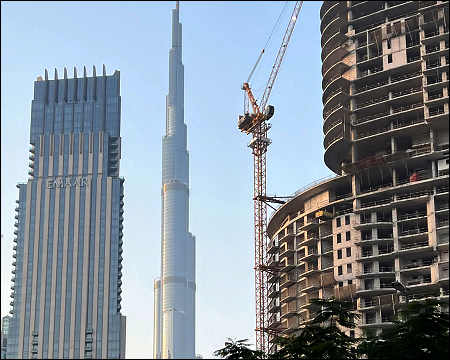
On Wednesday, shares of leading UAE developers fell sharply. Aldar Properties, Abu Dhabi’s largest listed developer, and Emaar Properties, the company behind Downtown Dubai and the Burj Khalifa, each dropped 5%.
Bonds issued by major developers also lost value, and the market for new bond issuance is largely frozen as spreads widened across the sector.
Some developers have tried to downplay the market reaction.
“Things in this region happen fast and resolve fast. The fundamentals across GCC countries are strong, so we will get through this,” said Ziad El Chaar, CEO of Dar Global, the luxury developer behind a string of Trump-branded projects in the Gulf.
He added that all ongoing projects remain on track.
However, other market participants reported immediate effects. A senior real estate banker told Reuters that his firm had postponed a planned UAE property capital raising this week.
“Investors are not considering investments in the region at this stage,” he said. He added that the risk premium for UAE property has risen, and international lenders may be forced to reduce new loans, which could compel developers to sell assets if the conflict continues.
Two Decades of Construction Growth
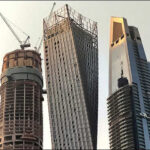
Dubai’s skyline has been dramatically reshaped over the past 20 years by large-scale development projects. Palm Jumeirah, a man-made island once seen as a controversial experiment, has become an established luxury residential area.
Palm Jebel Ali, a second and larger palm-shaped project, is now under development in the Gulf, with cranes tracing its outline. Abu Dhabi has also been expanding its coastline, though more quietly, pursuing a steady and determined building push.
The UAE’s property market accelerated after the COVID-19 pandemic. Tax-free policies, liberalized visas, and economic reforms attracted wealthy migrants, including Russians fleeing the Ukraine war, billionaires, family offices, and hedge funds.
Investors were drawn to zero income tax and a business environment designed to rival global financial centers.
By 2025, the UAE’s population had surpassed 11 million, with expatriates making up nearly 90%, one of the highest such proportions in the world, according to official statistics. Dubai real estate prices jumped 60% between 2022 and early 2025, according to Fitch Ratings.
Growth continued late last year, with residential prices rising nearly 13% year-on-year in the fourth quarter, according to property consultants CBRE. Abu Dhabi residential prices increased approximately 32% over the same period.
Mohammed Ali Yasin, CEO of Ghaf Benefits, a Lunate company in Abu Dhabi, said the full impact of the conflict would be measured in changes in demand. He added that listed developer stocks fell in line with a broader 5% drop in the market on Wednesday.
Foreign Buyers Remain Essential
Even before the U.S.–Israeli strikes on Iran, analysts warned that housing supply could outpace population growth. JPMorgan projected that Dubai’s demographic expansion would not be sufficient to absorb the 300,000–400,000 new units expected by 2028.
“Foreign interest in property following the conflict will be critical,” economists at Abu Dhabi Commercial Bank said in a note Wednesday.
They highlighted that expatriates and non-resident buyers remain central to supporting demand, particularly as new supply is expected to rise from the second half of this year and continue at high levels over the next two years.
The missile strikes occurred as this wave of new supply was gaining momentum.
“Real estate investment depends on stability, predictability, and investor confidence. All of these factors tend to weaken under prolonged geopolitical uncertainty,” said Ryan Lemand, co-founder and CEO of Neovision Wealth Management in Abu Dhabi.
The coming months will test the UAE property market’s reliance on foreign buyers and the ability of developers to maintain confidence in a region long regarded as a safe and stable investment hub.
(With files from Reuters)
Copyright © 2026 Dubai Diplomacy. All rights reserved.
 Your support matters! Consider buying us a coffee — every bit helps keep independent news alive.
Related posts:
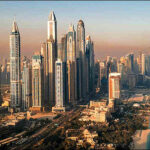 Dubai real estate hits record with transactions over AED 917 billion in 2025
 Dubai aviation hub’s market faces test amid Middle East conflict
 Binghatti, Mercedes-Benz launch first Mercedes-branded city in Dubai
 Some wealthy Asians move assets from Dubai amid Iran war fears
 Abu Dhabi’s IHC reports AED 34.7 billion net profit in 2025
 Dubai gold falls below London due to flight disruptions
 UAE summons Iran ambassador, protests attacks
 Dubai ruler issues law on building quality and safety, UAE