DUBAI,— Days after Iran launched strikes on targets throughout the United Arab Emirates in March, senior Dubai officials convened hundreds of business leaders to discuss limiting economic fallout for the Gulf tourism and financial center, Reuters reported.
The meeting, uncommon in both scale and timing and reported here for the first time, prompted steps that included a central bank liquidity package, according to five attendees who spoke to Reuters on condition of anonymity due to the private nature of the discussions.
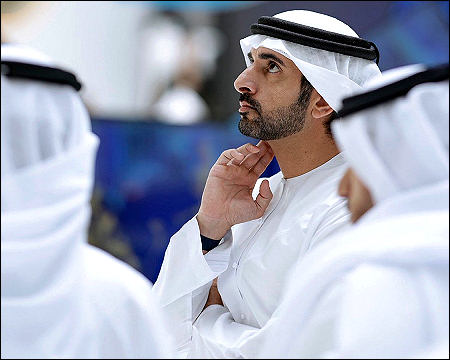
Participants were asked three main questions: how to bring tourists back, how to restore investor confidence, and how authorities could support businesses, two of the attendees said, adding that Dubai Crown Prince Sheikh Hamdan bin Mohammed bin Rashid Al Maktoum moved between tables seeking input.
Since then, the emirate has pledged 2.5 billion dirhams, about $681 million, in aid concentrated largely on tourism and retail, sectors most affected by the tensions.
Although a preliminary United States Iran peace deal has eased immediate pressure, rebuilding confidence in Dubai’s business environment is expected to take time and may require additional incentives, six executives and analysts told Reuters.
“Investors want signals on how authorities will respond if tensions return, not just how they managed the last shock,” said Neil Quilliam, associate fellow at Chatham House, nearly four months after the conflict began.
As shelter alerts locked down the UAE, the March 10 meeting was an early signal of authorities’ determination to prevent capital flight or an exodus of businesses and investors.
Hosted by Helal Saeed Al Marri, director general of Dubai’s Department of Economy and Tourism (DET), the meeting was also attended by Sheikh Hamdan bin Mohammed bin Rashid Al Maktoum.
Those present at the newly renovated Meydan hotel included real-estate magnate Hussein Sajwani, Emirates airline president Tim Clark and representatives of Rothschild and UBS. The UAE’s military and big family-owned companies were also represented.
Government officials told business leaders that fiscal and financial support would be provided and that teams were working to stabilize supply chains, the sources said.
Several investor calls arranged through banks including JPMorgan and Citi have followed, another three people said.
Rothschild, JPMorgan, Citi and UBS declined to comment. DAMAC and Emirates did not respond to requests for comment.
The Dubai Department of Economy and Tourism said in emailed comments that it maintains regular engagement with stakeholders as part of its public-private collaboration model.
It added that recent regional instability had highlighted the city’s resilient economic foundations and its ability to absorb challenges.
Dubai remains committed to its long-term strategic goals, the DET added.
Big billboards appeared along the city’s roads last week with just the words: ‘Dubai-it’, a new term coined by the government as a nod to Dubai’s history of rapid execution and a signal of what is to come.
With oil accounting for less than 2% of GDP, Dubai has positioned itself as a hub for international companies, Wall Street firms, Chinese banks, hedge funds and wealthy individuals.
Its time zone, proximity to Gulf sovereign wealth funds and favorable tax regime have attracted capital and jobs.
For Iran, this has made Dubai a strategic target that could disrupt international finance and increase pressure on Washington.
HSBC analysts have reduced their 2026 Gulf growth forecast by five percentage points since the conflict began and now expect the region to contract for the first time since the COVID-19 pandemic.
Non-oil growth in Dubai and Abu Dhabi could fall by eight percentage points or more year-on-year, they said.
A UAE investment firm chief executive, who declined to be identified due to sensitivity, said March and the second quarter were lost.
Robert Mogielnicki, founder of Polisphere Advisory, said recovery would likely be uneven, with some sectors rebounding faster than others.
While restaurants are filling again and flights have largely resumed, hotel occupancy has fallen sharply.
Trade flows are also shifting, with cargo increasingly routed through Oman and Saudi Arabia to avoid the Strait of Hormuz and bypass Dubai.
Neil Quilliam of Chatham House said targeted support may be needed for exposed sectors such as tourism, aviation and small and medium-sized enterprises.
A small business chief executive, speaking anonymously, said Dubai could encourage banks to increase lending to the sector and consider removing corporate tax or offering rebates.
Another business owner said authorities could partner with global private equity firms to invest in assets and companies, providing a price floor, reducing risk and improving credibility.
While the peace agreement has halted months of intermittent fighting, challenges remain.
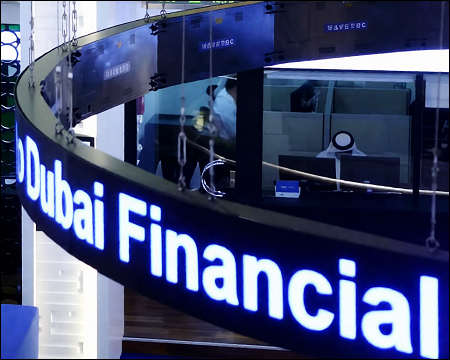
Foreign investor flows on the Dubai Financial Market swung from inflow of $890 million year to date February 26, two days before conflict began, to outflows of $853 million by June 12.
(With files from Reuters)
Copyright © 2026 Dubai Diplomacy. All rights reserved.
 Your support matters! Consider buying us a coffee — every bit helps keep independent news alive.
Related posts:
 Dubai’s billionaire ruler fights to save his luxury UK mansion
 Ex-wife of Dubai prince loses custody, alleges police coercion, UAE
 Dubai rolls out 1 billion dirham economic support amid Iran war
 UAE to run half of government on autonomous AI within two years
 Dubai ruler approves 4,631 residential plots worth AED 5.3 billion
 Ex-wife of Dubai ruler’s nephew arrested in UAE
 Dubai records 19.59 million foreign visitors in 2025
 UAE leaders order release of 4,700 prisoners for Ramadan