An unlicensed Dubai exchange quietly processed $4 billion through a network of 2,000 illegal gambling sites
DUBAI,— From a nondescript office above a budget hotel in a working-class Dubai neighborhood, a secret cryptocurrency exchange has allegedly become the financial backbone of one of the largest sanctions evasion networks ever discovered, helping Iran move billions past international restrictions.
The operation centers on Shelbit, an unlicensed crypto exchange run by Iranian expatriate Siavash Kayvanpour.
According to a Reuters investigation, the exchange has processed at least $4 billion since May 2024, connecting a vast illegal gambling network of over 2,000 websites to Iran’s central bank, the country’s powerful military, and global crypto markets.
A Ghost Exchange with Real Billions
Despite being nearly invisible to the public, with no accessible website or visible way for ordinary users to transact, Shelbit became a financial superhighway for sanctioned Iranian entities.
Blockchain records show the exchange moved hundreds of millions of dollars to major international platforms, including the world’s largest crypto exchange, Binance .
The operation reportedly involved Iran’s central bank directly, with at least $125 million flowing through Shelbit from state coffers.
Investigators also traced funds to wallets linked to the Islamic Revolutionary Guard Corps (IRGC) and from Iranian bitcoin mining operations, which mint new digital coins.
“It’s an IRGC operation, and that’s plain as day,” said Rich Sanders, an independent blockchain researcher who reviewed the data for Reuters.
The Influencers and the Gambling Empire

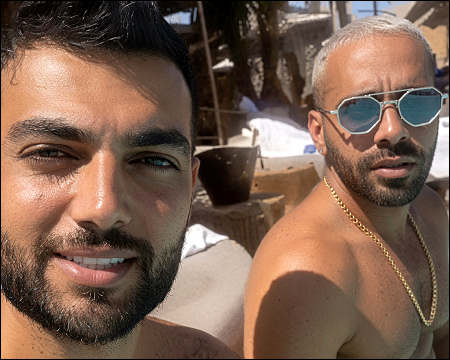
The scheme’s public face belongs to two flashy Iranian influencers with millions of followers: Sasha Sobhani and Pooyan Mokhtari.
They parade their lavish lifestyles online, luxury sports cars, yacht parties, and private jets, while promoting a network of Farsi-language gambling sites.
Sobhani, son of a former senior Iranian diplomat who publicly disavowed him, operates from a villa in Madrid.
Mokhtari, a singer and influencer, was arrested in Dubai earlier this year on accusations of financing Iranian terrorist groups and later expelled.
Both men deny any connection to state-backed money laundering, stating they were merely paid advertisers.
However, they were convicted in Iran in 2023 alongside Shelbit founder Kayvanpour for running illegal gambling sites. A court sentenced Kayvanpour to three months for assisting them.
Cybersecurity firm Infoblox helped map the network and found that though the gambling websites appeared separate, they shared software and technical characteristics linking them together.
How the Military Took Over the Black Market
Gambling is strictly outlawed in Iran, punishable by lashing and prison. Yet investigators say the IRGC, the military branch that safeguards the Islamic Revolution, took control of the largest gambling websites years ago. They saw the lucrative black market as a perfect tool to bypass sanctions.
“When it comes to gambling, the IRGC learned the Islamic Republic’s most lucrative lesson early: declare something illegal, then control both the prohibition and the black market,” said Miad Maleki, a former U.S. Treasury official who helped design Iran sanctions policy.
Former Iranian officials told Reuters that the IRGC co-opted famous performers and influencers to market the websites, using displays of wealth to appeal to Iranians struggling with a slumping economy.
The operation required collaboration with Iran’s central bank, which controls the country’s domestic electronic payments system .
John Wojcik, a former UN gambling investigator now at TRM Labs, called it “by far the biggest Iranian illegal gambling network ever discovered and one of the biggest in the world”.
Regulators and Consequences
Regulators have begun taking action. Dubai’s Virtual Assets Regulatory Authority (VARA) issued a cease-and-desist order against Shelbit on July 24, 2026, saying it violated money-laundering and anti-terrorism laws.
The agency said the exposure “extends beyond consumer protection to more egregious cross-border transactions” that could impact the UAE’s financial system.
The U.S. Treasury Department said it is aware of the allegations and “taking them very seriously,” with ongoing efforts to target Iranian regime-linked digital assets.
The investigation highlights how Iran has adapted to years of punishing sanctions, using cryptocurrency and online gambling to keep its economy afloat even during war.
The flows continued even after Iran repeatedly bombed the UAE, including a drone that hit less than a kilometer from Shelbit’s offices.
It is considered one of the largest Iranian sanctions evasion networks uncovered since the U.S. broke up a roughly $20 billion IRGC gold-for-oil operation in Turkey in 2016.
The full report from Reuters.
Copyright © 2026 Dubai Diplomacy. All rights reserved.
 Your support matters! Consider buying us a coffee — every bit helps keep independent news alive.
Related posts:
 UAE crackdown cripples Iran’s IRGC cash networks in Dubai financial hub
 UAE blocks 13,667 websites in first quarter of 2026: ministry
 Crypto avoids UAE disruption amid Iran conflict concern
 Iran builds covert Iraqi networks to strike UAE, Gulf states: Reuters
 UAE agrees to release $10 billion to Iran to halt attacks: report
 Emirates airline accepts bitcoin, crypto as new payment methods
 Kraken gets Dubai VARA license to offer UAE crypto trading
 Dubai Real Estate Lost 34%, The Worst Could Still Be Ahead