DUBAI,— Iran’s military has warned it may target desalination facilities and other infrastructure in Gulf countries if the United States proceeds with a plan to strike Iran’s fuel and energy sector after a possible closure of the Strait of Hormuz.
The statement has drawn attention to the Gulf region’s reliance on desalinated water, which provides most of the drinking supply in several countries, as outlined in data reported by Reuters.
In many Gulf states, desalination is the main source of potable water. The United Arab Emirates obtains more than 80 percent of its drinking water from desalination.
Bahrain has depended fully on desalinated water since 2016, while keeping its groundwater reserves for emergency use, officials said.
Qatar relies entirely on desalinated water. Kuwait uses desalination to meet roughly 90 percent of household water demand. Oman depends on it for 86 percent of its water supply.
Saudi Arabia, although it has more natural groundwater resources than other Gulf countries, still uses desalination for about half of its distributed water supply, according to figures from the General Authority for Statistics for 2023.
Together, Bahrain, Kuwait, Oman, Qatar, Saudi Arabia and the United Arab Emirates account for around one third of global desalinated water production.
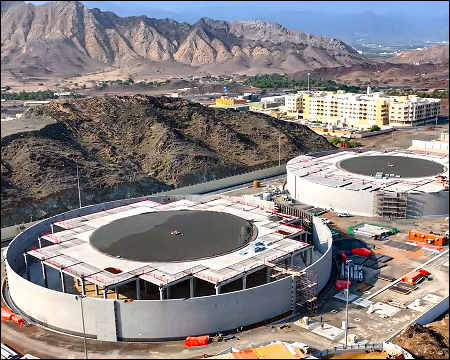
These countries, members of the Gulf Cooperation Council, host some of the world’s largest desalination facilities. The United Nations estimated their population surpassed 61 million in 2025.
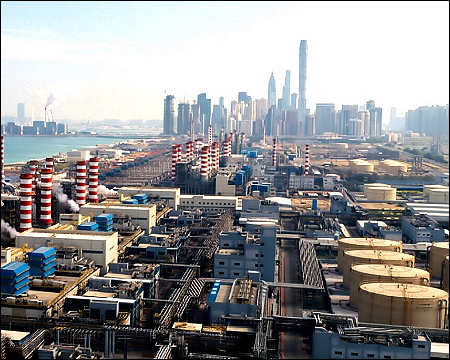
However, this dependence comes with risks. Desalination production in the Gulf is concentrated in a small number of large scale plants. Many of these are co generation facilities that also produce electricity for national power systems.
Analysts say such plants are exposed to potential missile and drone attacks. The Atlantic Council said strikes on desalination infrastructure could lead to severe humanitarian and economic consequences.
Disruptions could cut water supplies to homes, businesses, public institutions and hotels, and also cause power outages if electricity generation is affected.
The Atlantic Council said these impacts could expand into broader crises, including the evacuation of cities.
A U.S. diplomatic cable from 2008, later published by WikiLeaks, indicated that Riyadh could face evacuation within one week if the Jubail desalination plant or its related infrastructure were seriously damaged.
Countries in the region have taken measures to prepare for possible disruptions. Saudi Arabia has invested in the Riyadh Strategic Water Reservoir to secure supplies for its capital.
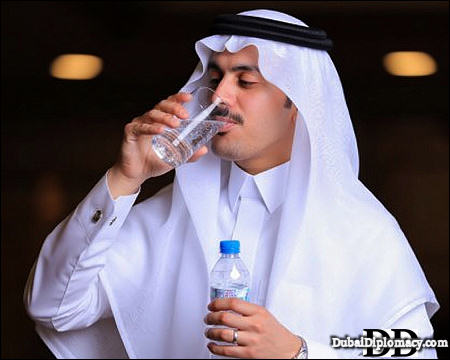
Guinness World Records confirmed in 2023 that it is the largest facility of its kind for storing drinking water.
Qatar has also evaluated its exposure to supply risks. The country’s prime minister said last year that Qatar could run out of potable water within three days if desalination supplies were interrupted.
To address this, Qatar completed a large infrastructure project in 2018 involving 15 major concrete reservoirs.
Each reservoir holds about 100 million imperial gallons of water, equivalent to around 180 Olympic sized swimming pools.
The project received Guinness World Records recognition for the largest individual storage tanks and the largest connected network, according to Kahramaa, the state utility company.
Saudi Arabia remains the leading country in desalination capacity worldwide, followed by the United Arab Emirates and Israel, based on data from consultancy Blackridge.
The Ras Al Khair facility in Saudi Arabia is the largest desalination plant, with a cost of 7.2 billion dollars and a daily processing capacity of 3 million cubic meters of water.
The Jubail plant ranks next, with an investment of about 1 billion dollars.
Water from Ras Al Khair is supplied to Riyadh, which had about 7 million residents in 2022, and to the city of Hafr Al Batin.
The United Arab Emirates operates four major desalination plants costing a combined 5.3 billion dollars. These are located in Jebel Ali in Dubai, Taweelah between Abu Dhabi and Dubai, and in Fujairah and Umm Al Quwain.
Israel’s Sorek desalination plant, valued at 500 million dollars, produces up to 640,000 cubic meters of water per day and accounts for about 20 percent of national demand. It is situated near Tel Aviv.
Most desalination plants in Saudi Arabia and the UAE have been developed without U.S. investment.
Saudi projects involved companies such as Siemens from Germany and Engie from France, while UAE developments included Spain’s Acciona Energia and Belgium’s BESIX Group.
(With files from Reuters)
Copyright © 2026 Dubai Diplomacy. All rights reserved.
 Your support matters! Consider buying us a coffee — every bit helps keep independent news alive.
Related posts:
 Dubai’s DEWA reports AED 9.09 billion net profit in 2025
 Is a Gulf NATO Really Possible?
 ADNOC group companies report $9.7 billion net profit in 2025
 Gulf states press Trump to continue war until Iran is fully weakened
 Banking assets reach AED 5.34 trillion in 2025: CBUAE
 UAE financial markets reopen after two-day halt following Iran attacks
 DP World reports $1.96 billion net profit in 2025
 International tourism revenue in GCC tops $120.2 billion: Gulf Stat