IAEA Chief Warns of Grave Nuclear Safety Risks After Drone Strike at UAE’s Barakah Plant
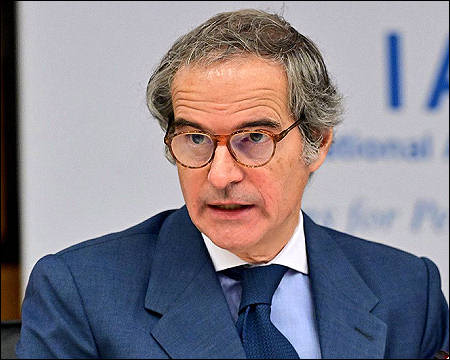
UNITED NATION, New York, — The Director General of the International Atomic Energy Agency (IAEA), Rafael Mariano Grossi, issued a stark warning to the United Nations Security Council on Wednesday, IAEA reported.
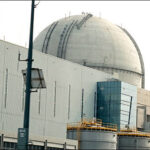
This followed a drone attack that struck the Barakah Nuclear Power Plant in the United Arab Emirates.
He described the incident as a “threat to nuclear safety” with potentially severe regional consequences.
Addressing ambassadors in New York, Grossi said the strike occurred on the morning of Sunday, May 17, when a drone attack triggered a fire in an electrical generator located outside the plant’s inner perimeter.
While radiation levels at the facility remained normal and no injuries were reported, he emphasized that the incident exposed the vulnerability of operating nuclear infrastructure in conflict environments.
According to the IAEA chief, emergency diesel generators were temporarily brought online to maintain power for Unit 3 after the attack disrupted external electricity supply. Offsite power has since been restored, a development Grossi called “an important step for nuclear safety.”
The plant, Barakah Nuclear Power Plant, is the UAE’s first nuclear energy facility and one of the most significant nuclear sites in the Middle East.
Grossi said he immediately spoke with senior Emirati officials, including Sheikh Abdullah bin Zayed Al Nahyan, the country’s foreign minister, offering the IAEA’s support.
He also noted ongoing contact with regional leaders amid what he described as growing “unease and great concern” across the Gulf.
In response to the incident, the agency has intensified coordination efforts with regional governments and emergency preparedness teams.
Grossi said the IAEA has spent the past year collecting data and assessing emergency response capabilities across the region and will soon deploy further technical engagement missions to the Gulf.
He confirmed that the IAEA’s Incident and Emergency Centre in Vienna remains on 24/7 alert, maintaining continuous communication with UAE authorities and monitoring developments in real time.
“The situation is of grave concern,” Grossi told the Council, warning that any direct strike on an operating nuclear power plant could lead to a significant release of radioactive material.
He stressed that the presence of thousands of kilograms of nuclear material in reactor cores, as well as fresh and spent fuel, makes such facilities particularly sensitive to military risk.
He outlined worst-case scenarios in which damage to power supply systems could lead to reactor core degradation or meltdown, potentially requiring evacuations, sheltering, iodine distribution, and radiation monitoring across hundreds of kilometers.
Grossi reiterated his longstanding position that “attacks on nuclear facilities devoted to peaceful purposes are unacceptable,” adding that such sites are protected under international humanitarian law.
He referenced other vulnerable plants in conflict zones, including Zaporizhzhia, Kursk, Bushehr, and Barakah, as examples of escalating global risk.
Calling for restraint, he urged all parties in ongoing conflicts to adhere to the “seven indispensable pillars” of nuclear safety and security previously outlined by the agency.
He also commended the UAE for its timely sharing of technical information with the IAEA following the incident.
Grossi concluded by reaffirming that diplomacy remains the only viable path forward. He said the IAEA stands ready to deploy experts on the ground where necessary and will continue providing technical guidance, training, and emergency preparedness support worldwide.
“There is a legitimate expectation of robust verification and sustained engagement,” he said, warning that agreements without independent oversight or timely international evaluation risk collapsing into broader crises.
“The IAEA will continue to do everything within its mandate,” Grossi told the Council, “to ensure the safety and security of nuclear facilities, especially those most at risk due to conflict, wherever it may take place.”
(With files from IAEA)
Copyright © 2026 Dubai Diplomacy. All rights reserved.
 Your support matters! Consider buying us a coffee — every bit helps keep independent news alive.
Related posts:
 Could UAE Face Dirty Bomb Risk If Iran Falls?
 Drone hits UAE nuclear power plant amid Iran tensions
 Drone that hit UAE nuclear plant was launched from Iraq: ministry
 Dubai ruler issues law on building quality and safety, UAE
 UAE’s Fujairah halts some oil loading after Iran drone attack
 UAE Is Not Ready: What Must Be Built Before the Next Attack
 How vulnerable are UAE, the Gulf to desalination plant attacks?
 UAE, Qatar arrest hundreds over Iran attack footage: NY Times