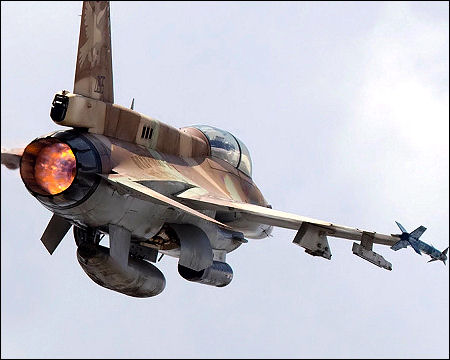
TEL AVIV,— Israel said on Monday that it carried out strikes on military targets in western and central Iran, even after reports that U.S. President Donald Trump urged Israeli Prime Minister Benjamin Netanyahu to avoid further attacks.
The statement came amid escalating exchanges between Israel and Iran that have intensified regional tensions.
The Israeli strike came as retaliation after Iran fired dozens of missiles at Israel on Sunday.
Earlier, Trump said that renewed strikes between Israel and Iran would not disrupt his administration’s ongoing peace negotiations with Tehran.
He also said Netanyahu “doesn’t call the shots,” insisting that diplomatic efforts would continue regardless of battlefield developments.
Trump has also pressed Israel to halt operations against pro-Iran Hezbollah in Lebanon to create space for a broader agreement with Iran, and he reportedly used obscene language in a recent phone call with Netanyahu last week.
On Sunday, Israel launched strikes in the Beirut area for the first time since the United States announced a truce plan for Lebanon.
Iran responded by firing a salvo of missiles at Israeli targets, raising concerns about the stability of U.S.-Iran talks.
Trump, however, said the situation would not derail negotiations, telling the Financial Times, “It’s not going to have any impact on the deal. I call the shots. I call all the shots. He Netanyahu doesn’t call the shots.”
Shortly after the latest escalation, Israel’s defense forces said they had struck Iranian military targets.
Iran’s Revolutionary Guards said Israel used air-launched ballistic missiles in the attacks, further increasing tensions between the two countries.
Israel’s ambassador to the United States, Yechiel Leiter, wrote on X that “everyone has had enough of this maniacal Iranian regime,” and said Iran had fired 11 ballistic missiles at Israel.
He added that no country would tolerate such an attack and said Israel was targeting missile launch sites and non-energy infrastructure linked to surface-to-surface weapons.
The renewed hostilities pushed oil prices higher, with global benchmarks rising more than 3 percent in early trading on Monday. Brent crude climbed back above 96 dollars per barrel as markets reacted to the escalation.
Iran’s Revolutionary Guards said they targeted the Ramat David air base near Nazareth.
The Israeli military said it detected incoming missiles from Iran and confirmed that its air defense systems intercepted them.
Air raid sirens were also heard in Tel Aviv, according to Reuters, as Israeli forces responded to missile launches.
The Israeli military also reported detecting a missile launched from Yemen toward its territory, activating air defense systems to intercept it. This marked the first attack from Yemen against Israel since the April 8 truce.
Trump spoke with Netanyahu by phone on Sunday for less than half an hour while at his golf club in Bedminster, New Jersey, according to an Israeli official.
The White House and Netanyahu’s office did not immediately comment. A U.S. official cited by Axios said Trump urged Netanyahu to avoid further strikes, saying the sides were close to a potential deal.
Israel has continued its military campaign in Lebanon alongside fighting with Hezbollah, which Israeli officials say should be treated separately from negotiations involving Iran.
Tehran has said any agreement with the United States depends on a ceasefire in Lebanon. Israel invaded Lebanon in March in pursuit of Iran-backed Hezbollah fighters who had launched rockets and drones across the border.
Iranian parliamentary speaker Mohammed Baqer Qalibaf said U.S. bases and Israeli assets could be considered legitimate targets due to hostile actions, including what he described as violations of agreements related to Lebanon.
Before Sunday, Iran had not launched attacks on Israel since the broader ceasefire began in April, although Hezbollah had continued hostilities.
Trump reiterated in an NBC News “Meet the Press” interview that Washington and Tehran were close to an agreement, warning of consequences if talks failed.
Iran and the United States have also traded accusations over maritime and sanctions issues, including disputes over frozen assets and shipping routes in the Strait of Hormuz, a key global energy corridor.
(With files from Reuters)
Copyright © 2026 Dubai Diplomacy. All rights reserved.
 Your support matters! Consider buying us a coffee — every bit helps keep independent news alive.
Related posts:
 Gulf states press Trump to continue war until Iran is fully weakened
 Iran says Strait of Hormuz is fully open during ceasefire
 Israel deployed “Iron Dome” in UAE during Iran war: reports
 Israel’s Netanyahu calls UAE president, condemns Iran attack: wam
 UAE used US, Israeli intelligence to hit Iran with dozens of strikes: WSJ
 Emirati official calls for closer Israel ties, criticizes Arab states
 Is a Gulf NATO Really Possible?
 UAE-Israel ties grow closer amid Middle East war: official