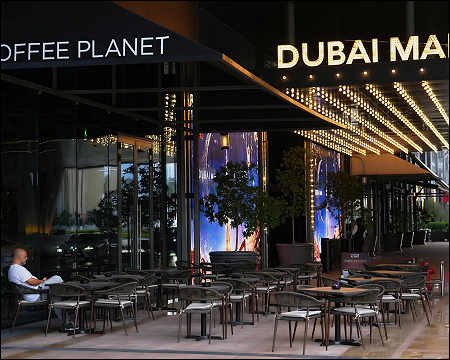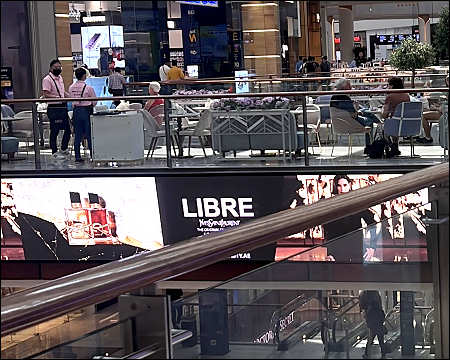
DUBAI,— The intensifying Middle East conflict has forced many luxury stores across Dubai and other regional shopping hubs to close or run with minimal staff, causing significant disruptions for businesses and travelers.
The conflict escalated Monday as U.S. and Israeli forces continued air operations against Iran. In response, Tehran launched missiles and drones at Gulf states.
The attacks follow a weekend bombing that killed Iran’s supreme leader and reportedly claimed the lives of dozens of civilians, including a girls’ primary school.
Chalhoub Group, operator of 900 stores featuring brands like Versace, Jimmy Choo, and Sephora, confirmed that its Bahrain stores were closed. Stores in the United Arab Emirates, Saudi Arabia, and Jordan remained open, but staff attendance was voluntary.
Vice President of Communications Lynn al Khatib told Reuters that only employees who volunteered and felt safe were working.
She added that the company’s management visited Dubai Mall and Mall of the Emirates Monday morning to support staff.
Amazon also scaled back its Middle East operations. Business Insider reported that the company temporarily closed its Abu Dhabi fulfillment center, suspended deliveries across the region, and instructed employees in Saudi Arabia and Jordan to stay indoors.
Luxury group Kering, which owns Gucci, temporarily closed stores in the UAE, Kuwait, Bahrain, and Qatar, and halted regional travel.
Luxury Market Faces Major Risk
Luxury stocks suffered Monday as investors reacted to the crisis. LVMH, Hermès, and Richemont shares dropped between 4% and 5.7%.
The Middle East represents only 5% to 10% of the global luxury market but had been one of the strongest growth regions last year, according to Bain & Company.
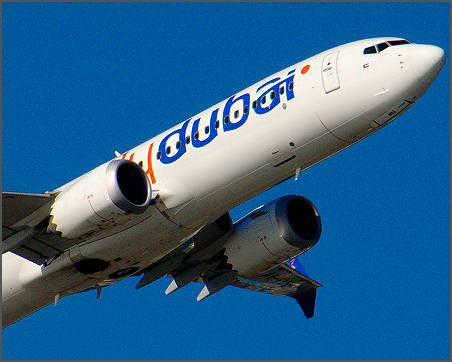
Travel disruptions caused by closed airports and missile strikes, including damage to Dubai’s Fairmont Palm Hotel, threaten tourism and retail revenue.
Victor Dijon, senior partner at Kearney, said that the region’s travel retail market, valued at $5 billion to $6 billion, could lose hundreds of millions if operations remain halted for a month.
Luxury brands have recently increased their investments in the Middle East. Cartier launched a high-jewelry exhibition in Dubai’s Keturah Park days before the conflict.
LVMH’s Louis Vuitton showcased an exhibition at the Jumeirah Marsa Al Arab hotel, and Sephora opened its first Saudi beauty brand.
Mass-market retailers are also affected. Primark, owned by Associated British Foods, plans three new Dubai stores between March and May, with additional locations in Bahrain and Qatar later in the year.
A company spokesperson told Reuters the situation is being monitored closely.
Apple stores in Dubai remain closed until Thursday, while H&M has closed locations in Bahrain and Israel.
Consumer goods company Reckitt has asked all Middle East staff to work from home, suspended business travel, and temporarily shut its Bahrain manufacturing site.
The current turmoil demonstrates how sensitive the Middle East retail sector is to regional conflict.
Analysts warn that continued instability could impact not only Middle Eastern markets but also luxury sales in Europe if shoppers are unable to travel to Paris or Milan.
(With files from Reuters)
Copyright © 2026 Dubai Diplomacy. All rights reserved.
 Your support matters! Consider buying us a coffee — every bit helps keep independent news alive.
Related posts:
 Luxury brands in UAE face profit squeeze amid Iran conflict
 Dubai high-end stores struggle amid Middle East war
 Luxury cars Ferrari, Maserati halt Middle East deliveries amid war
 Saudi-UAE rift widens as Emirates quits oil cartel
 Gulf states press Trump to continue war until Iran is fully weakened
 Dubai Real Estate Lost 34%, The Worst Could Still Be Ahead
 Luxury carmakers’ profits in UAE, Gulf threatened by Iran war
 Is a Gulf NATO Really Possible?