The British Douglas Family Built a Fortune in Dubai. Then the UAE Destroyed Them.
DUBAI/LONDON,— Albert Douglas kissed the floor when he landed at Heathrow airport. After years inside UAE prisons, years of beatings, broken bones, sleep deprivation and isolation, the 58-year-old businessman from Enfield, north London, was finally home. He had gone to Dubai chasing opportunity.
He came back with post-traumatic stress disorder, permanent physical scars and nothing left of the fortune he had spent decades building.
His story, investigated and reported by The Guardian on Sunday, is one of the starkest warnings yet about the reality facing British nationals who do business in the UAE, a country the British government has enthusiastically championed as a trading partner while quietly ignoring what happens to its own citizens once they fall into the emirate’s legal trap.
Douglas first arrived in Dubai in the late 1990s, when the city was still finding its feet. He ran a wooden flooring business and recognized early what many others soon would, that the Gulf market was enormous and growing fast.
By the mid-2000s, he and his son Wolfgang had relocated to the Palm Jumeirah, the famous tree-shaped island of luxury residences. Sheikh Mohammed bin Rashid al-Maktoum, Dubai’s ruler, gifted the family a pet tiger cub. They drove Ferraris and Aston Martins.
Wolfgang became a fixture in Dubai’s social scene, a living advertisement for what the emirate wanted the world to see. “I was the example of ‘This is what success looks like,'” he told The Guardian.
Then the money stopped coming.
Wolfgang’s company had supplied flooring and bespoke wood designs for major government-linked projects, the Burj Khalifa, La Mer beach, City Walk. Tens of millions of dollars in payments, he says, were never collected.
Pursuing them would have meant taking on the government itself. He knew better. Instead, debts piled up, creditors came knocking, and the legal system, one that treats unpaid debt as a criminal matter, began to close in.
In 2019, Wolfgang returned to the UK for medical treatment and was advised by a UAE law firm not to go back. People in the country, he was told, wanted him in prison.
Albert, who had always believed that honest men had nothing to fear, disagreed. He had secured a legal letter confirming he was not connected to his son’s company. He boarded a plane back to Dubai in August 2019. The moment he landed, he was arrested.
What followed was a legal process that bore little resemblance to justice. Hearings were conducted entirely in Arabic. Albert was warned he risked additional imprisonment simply for speaking English in court.
The case against him rested on an outdated trade license document from which his name had long since been removed. When a bounced check was produced as evidence, one Albert insists he never signed, a claim later supported by a forensic report, the court simply ignored it.
His appeals were rejected one by one, all the way to the supreme court. The legal advice he received was blunt: the case was rigged. He never stood a chance.
By early 2021, with his final appeal exhausted and a two-and-a-half year sentence confirmed, Albert made a desperate decision.
Wolfgang paid £20,000 to people smugglers who promised to guide his father through a hole cut in the barbed-wire fence along the UAE-Omani border.
In the early hours of February 17, Albert crept through the desert toward that fence. He almost made it. Soldiers closed in, laser sights dotting his body. A hood was pulled over his head.
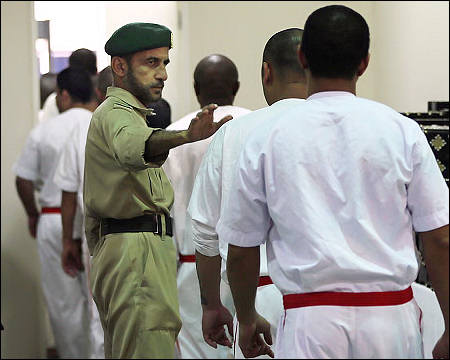
He still does not know where they took him. His family believes it was a military base. For several days, Albert says, he was stripped, slapped, denied sleep and interrogated over and over. “I wasn’t withholding information,” he told The Guardian. “I didn’t have the answer. So I was beaten and I was tortured.”
He was then transferred to Al Ain central prison in Abu Dhabi, where three guards entered his cell and beat him unconscious. His shoulder was shattered. It would take a full year before he received surgery, and even that, Albert believes, only happened because the British press had begun covering his case.
When he was finally hospitalized for the operation, a man arrived with a camera crew. Albert was told to record a television interview praising the Dubai police. He refused. They threatened to cancel his surgery. The operation went ahead the next morning anyway, but the message had been delivered.
Prison life was grinding and degrading. Cells built for a handful of men routinely held fifteen. There were three sets of bunks and torn foam mattresses.
The library had a three-month waiting list. Albert visited the gym twice in four years. He witnessed a fellow inmate raped by guards in an adjacent cell. He was attacked by another prisoner, who wrapped a phone cord around his neck.
Guards pressed him repeatedly to sign confession documents written in a language he could not read. A bone in his hand was broken. To survive mentally, he trained himself to fall asleep at 3 p.m. every day and not wake until 3 a.m. “I put myself in a coma,” he said.
In London, Wolfgang was fighting furiously, and found the British government almost as resistant as the UAE. When he reported to the Foreign Office that his father had been beaten, he was told, he says, “that wouldn’t have happened.” It took months before officials even acknowledged that Albert’s heart medication was being withheld.
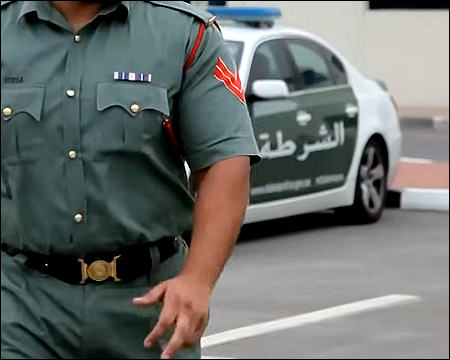
Consular visits were blocked repeatedly. When a video call was finally arranged between Albert and an embassy official, Albert had been warned beforehand and was flanked by guards. Asked if he was being treated well, he could only nod. Over the entire length of his detention, Foreign Office officials visited Albert only “a handful” of times.
The Guardian found that Albert’s experience reflects a broader pattern. Matthew Hedges, a British academic arrested in Dubai in 2018 on espionage charges, was found by a parliamentary ombudsman to have been failed by the Foreign Office, which also “missed signs of potential torture.”
When Hedges’ wife went public, officials reportedly contacted newspaper editors to suppress coverage. British businessman Ryan Cornelius has been held in the UAE since 2008, nearly seven years beyond completing his original sentence.
Anti-corruption campaigner Sir Bill Browder has called it “one of the most shocking cases I’ve ever seen,” and says Britain refuses to impose sanctions to pressure for his release. “If you’re British and you get into a scrape with a country that has money,” Browder told The Guardian, “you’re shit out of luck.”
The calculus behind all of this is not subtle. The UAE is Britain’s largest trading partner in the Middle East.
The two countries share a £23 billion trade relationship. More than 5,000 British businesses operate in the UAE. Sheikh Mohammed is one of Britain’s biggest private landowners.
Boris Johnson once joked that Britain is the “eighth emirate.” Against that backdrop, individual British citizens who disappear into UAE prisons are, by all appearances, an inconvenience.
In May 2025, without warning or explanation, guards handed Albert his belongings in a plastic bowl and released him into the night.
He was alone in the desert, outside Dubai’s central prison, with no phone and barely any money. It took two hours to find a taxi. He had no ID and could not leave the country for months. In December 2025, he was finally deported to Britain.
By then, the UN working group on arbitrary detention had formally declared his imprisonment unlawful and demanded compensation. The UAE never responded.
Albert has PTSD. He suffers blackouts and cannot be left alone in case he falls. He has the same nightmare on repeat, someone chasing him, beating him, and wakes up drenched in sweat.
His marriage has been damaged. His fortune is gone. The UAE has seized tens of millions in assets and property and returned nothing.
He spends his days now with his five grandchildren. When he last saw one of them, she was playing with dolls. Now she is talking about discos and preparing for her driving test. He eats chocolate tea cakes and crumpets and HP Sauce and marvels at the simple fact of choosing his own meals.
But he has not gone quiet. He wants the British government to update its travel advice to honestly reflect the dangers facing nationals in the UAE. He wants the Foreign Office’s correspondence on his case released. He is pursuing compensation claims. And before we parted, he pulled The Guardian aside with one more request.
“You will mention Ryan Cornelius, won’t you?” he said. He feels guilty to be free while others remain behind. “I think of them all the time. There’s so many people. Sometimes I’ve been locked up 24 hours a day for seven days a week, so you’re with them. And you know they shouldn’t be there.”
He kissed the floor at Heathrow. He is home. But the UAE has never admitted it did anything wrong, and for the men still inside, nothing has changed.
(With files from The Guardian)
Copyright © 2026 Dubai Diplomacy. All rights reserved.
 Your support matters! Consider buying us a coffee — every bit helps keep independent news alive.
Related posts:
 UAE human rights activist Ahmed Mansoor marks 9 years behind bars
 Travelers to Dubai risk arrest over social media posts and debt: advocates
 UAE holds 70 Brits for sharing drone strike videos, images
 Will Syria’s Sharaa hand over Jasem al-Shamsi to UAE in tit-for-tat move?
 Don’t Die in UAE Without a Will: New Law Sends Heirless Expat Assets to Charity
 30,000 Britons left UAE since Iran war: FT
 Dubai charges British tourist over filming Iran missile strikes
 UAE press freedom among world’s worst in 2026 RSF index