UAE legal system poses hidden risks for foreign visitors. Even years-old negative posts about Dubai or the UAE could put travelers at risk of arrest
DUBAI,— A British social media user said he was warned by a major platform that Dubai authorities had accused him of violating local laws over a post made while he was in the United Kingdom.
The advocacy group Detained in Dubai reported that the case raises concerns about the reach of foreign cybercrime regulations and their impact on international travel.
The individual, based in Manchester, England, said he received an email from the social media platform informing him that officials in Dubai had submitted a complaint alleging that his online comments broke laws in the United Arab Emirates.
According to him, the message also stated that his personal data would not be shared but that he should be aware of the complaint.
He said the post in question discussed tensions in the Middle East and included criticism of people relocating to Dubai. The message, he said, initially appeared suspicious, but he later confirmed it was legitimate.
Radha Stirling, chief executive of the advocacy group Detained in Dubai, said in an interview with Nick Buckley MBE’s YouTube channel that such cases are consistent with how UAE cybercrime laws are applied.
She added that individuals can face legal consequences for online activity conducted outside the country, including posts made years earlier.
“It appears highly likely that a person in this situation could face arrest upon entering Dubai,” Stirling said. She added that authorities may use such warnings as a deterrent to discourage criticism of the country.
Stirling said UAE cybercrime laws can apply retroactively for up to five years. She cited previous cases, including that of a British citizen who was arrested upon arrival in Dubai over a social media post written in the United Kingdom years earlier.
According to Stirling, enforcement is not limited to government complaints. Private individuals can file allegations under cybercrime laws, which may result in arrest when the accused person enters the country. She said complaints do not always require substantial evidence to proceed.
Business Disputes in UAE Can Lead to Jail for Foreign Nationals
“These laws can be used in personal disputes,” Stirling said. “People involved in business disagreements, former relationships, or other conflicts have filed complaints that led to arrests.”
The organization Detained in Dubai, founded in 2008, says it has assisted more than 25,000 individuals across the UAE and the wider Gulf region.
According to Stirling, a significant portion of cases involve cyber-related offenses, including negative online reviews, private messages, and social media posts.
She said tourists and expatriates are often unaware of the scope of these laws.
In one example, she described a traveler who was arrested after returning to Dubai months after posting a negative review online.
Stirling also said that legal risks extend beyond online activity. She described cases involving business disputes where individuals were detained or jailed for extended periods.
In one instance, she said a British national had been imprisoned for nearly two decades over a financial matter involving a bank. According to her, some individuals have had assets frozen or businesses taken over following legal complaints.
She said the system allows for influence by local actors and may favor Emirati nationals in disputes with foreign residents.
“Business owners may enter the country to build companies, but if a dispute arises, they can face serious legal consequences, including detention,” Stirling said.

The British social media user said the warning he received raised broader concerns about freedom of expression and travel risks.
He said individuals may unknowingly expose themselves to legal action simply by expressing opinions online.
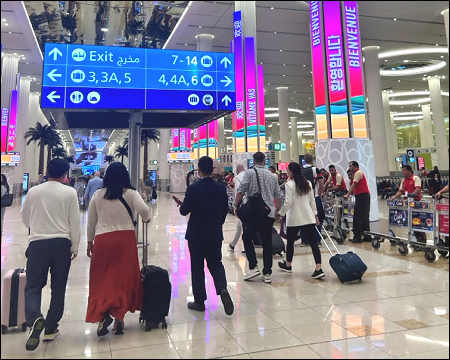
He also noted that Dubai is a major international transit hub, meaning travelers passing through the city could be affected even if they are not visiting the country as a destination.
Stirling said this creates a situation where individuals could face arrest while transiting through the airport.
“Many people travel through Dubai on connecting flights,” she said. “If there is a complaint on record, they could be detained even if they are only passing through.”
She also raised concerns about how governments communicate risks to citizens. According to her, some governments may avoid issuing strong warnings due to diplomatic and economic relationships with the UAE.
Expats in UAE Face Arrest, Asset Loss, and Travel Bans
Stirling said trade agreements, investment ties, and security cooperation can influence how travel advisories are presented.
She added that courts in the United Kingdom have previously recognized concerns about legal processes in the UAE, including issues related to fair trials and detention conditions.
Beyond cybercrime, Stirling pointed to financial liabilities as another major risk. She said individuals who lose employment or leave the country abruptly may still face legal consequences for unpaid debts.
According to her, unpaid rent or loans can result in travel bans, detention, or international legal action. In some cases, individuals have been placed on international notice systems, leading to arrests in other countries.
She described situations where individuals were unable to leave the UAE due to legal restrictions while also being unable to work, creating financial hardship.
In one example, she said a former serviceman was detained following an allegation that was later dismissed. However, during his detention, he fell behind on rent payments, which led to further legal restrictions preventing him from leaving the country.
Stirling said economic disruptions can intensify these issues. She noted that periods of instability, including regional tensions, have led to job losses, business closures, and departures from the country.
She said such conditions can trigger a chain reaction involving unpaid debts, legal cases, and travel restrictions.
Despite these challenges, Stirling said the UAE has historically recovered from economic downturns. However, she noted that individuals and smaller businesses often bear the impact.
“The country may recover, but the consequences for individuals can be severe,” she said.
Stirling said she has not traveled to Dubai due to concerns about potential legal risks related to her work. She said that after handling thousands of cases and publicly criticizing aspects of the legal system, traveling to the UAE would likely be unsafe for her.
She also noted that individuals with legal issues in the UAE may face risks when traveling to other countries in the Gulf region.
The British social media user said the situation has made him reconsider travel plans and raised awareness about the potential consequences of online speech.
He said the experience highlights the need for greater understanding of international laws and their implications for travelers.
(With files fromdetainedindubai.org | Nick Buckley MBE’s YouTube channel )
Copyright © 2026 Dubai Diplomacy. All rights reserved.
 Your support matters! Consider buying us a coffee — every bit helps keep independent news alive.
Related posts:
 UAE, Qatar arrest hundreds over Iran attack footage: NY Times
 Don’t Die in UAE Without a Will: New Law Sends Heirless Expat Assets to Charity
 Dubai charges British tourist over filming Iran missile strikes
 UAE arrests 25 foreigners for posting videos of Iran strikes: attorney-general
 UAE holds 70 Brits for sharing drone strike videos, images
 Emirates flight attendant arrested in Dubai over WhatsApp image: reports
 Abu Dhabi arrests 375 people over videos, images of drone strike
 UAE issues new federal law on child digital safety