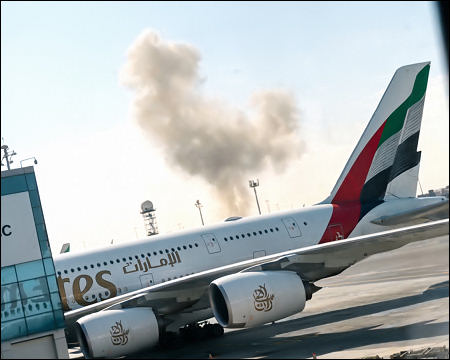
DUBAI,— Iran’s paramilitary Revolutionary Guard carried out drone and missile strikes on Sunday against Bahrain and Kuwait, responding to United States airstrikes on the Islamic Republic, and warned that negotiations to end the war could come to a complete halt if Washington continues its attacks.
Moves to reopen the Strait of Hormuz, the narrow entrance to the Persian Gulf that previously handled about one fifth of global oil and gas shipments, without direct Iranian supervision have triggered the current regional tensions.
A multinational maritime organization overseen by the United States Navy announced on Saturday that it would expand a shipping lane near Oman in the Strait of Hormuz to support inbound and outbound movement, creating a new flashpoint with Tehran.
Iran has been noted as avoiding strikes on the United Arab Emirates.
On June 13, the UAE reportedly agreed to release billions of dollars to Iran, four sources told Reuters, marking a significant policy shift after weeks of Iranian attacks on the wealthy Gulf state during the ongoing United States Israeli war with the Islamic Republic.
One source confirmed that an initial payment of $3 billion had already been released. Two other sources familiar with the arrangement placed the total at $20 billion, saying the transfer was agreed in exchange for Iran stopping attacks on the United Arab Emirates.
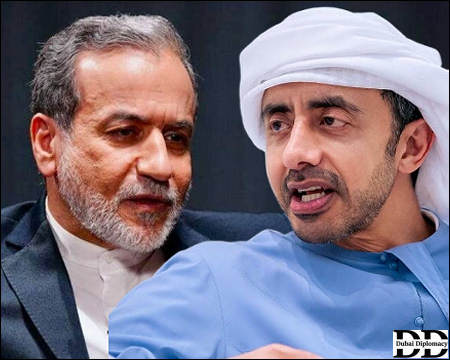
A rare call took place on Friday between UAE Foreign Minister Sheikh Abdullah bin Zayed Al Nahyan and Iranian Foreign Minister Abbas Araqchi, during which Sheikh Abdullah stressed the need to safeguard maritime corridors and ensure freedom of navigation through the Strait of Hormuz, according to state news agency WAM.
The exchange marked a rare public contact between Abu Dhabi and Tehran after tensions tied to the United States Israeli war on Iran.
It was the first announced conversation between the two ministers since the Iran war, which were followed by Iranian attacks across the Gulf, including in the United Arab Emirates.
Sheikh Abdullah emphasized the need for full compliance with a United States Iran memorandum of understanding to secure an immediate and comprehensive cessation of hostilities, WAM said.
He also highlighted respect for sovereignty, adherence to international law, and the uninterrupted flow of maritime traffic through Hormuz.
The call suggested efforts to move past strains in UAE Iran relations during the conflict, when Iranian attacks disrupted Dubai’s hotel sector, prompted some expatriates to leave, and affected perceptions of stability in business hub image.
Sheikh Abdullah said diplomacy remained the best way to resolve crises, expressing hope that ongoing efforts would lead to lasting security and stability in the region, WAM reported.
(With files from AP, Reuters)
Copyright © 2026 Dubai Diplomacy. All rights reserved.
 Your support matters! Consider buying us a coffee — every bit helps keep independent news alive.
Related posts:
 Gulf states press Trump to continue war until Iran is fully weakened
 Gulf states say ending Iran war not enough, degrade its capabilities
 Is a Gulf NATO Really Possible?
 Iran Now Sees the Strait of Hormuz as a Cash Cow
 The Strait of Hormuz will be closed as soon as the U.S. navy leaves
 UAE agrees to release $10 billion to Iran to halt attacks: report
 Saudi-UAE rift widens as Emirates quits oil cartel
 UAE considers joining US effort to secure Strait of Hormuz: official