DUBAI,— Hotels owned by Dubai property giant Emaar are now running at about 60% occupancy, the company’s founder and chairman said Monday, and he expects business to return to levels seen before the recent war within a year.
Mohamed Alabbar told Reuters in an interview that occupancy had once stood at 83% before dropping sharply to between 20% and 25% during the conflict.
He said the company is pleased with the rebound to 60%, adding that despite the earlier drop, its properties have remained open and running throughout.
The war involving Iran caused major disruptions to energy shipments, logistics, and travel across the Gulf region.
Consultancy firm Tourism Economics projects that international travel to the Middle East, North Africa, and South Asia will drop 14% this year, with Gulf nations seeing a steeper decline of more than 30%. The firm expects a rebound in 2027.
Alabbar admitted that Dubai’s tourism industry had grown accustomed to strong, steady expansion.
“The truth is that in Dubai we’ve been spoiled,” he said, noting the sector had typically grown 9% to 10% each year, which made the current slowdown feel especially sharp.
He added that customer demand is gradually returning as airlines restore more international routes.
Although Gulf-based airlines have steadily increased their flight capacity, several European carriers are not expected to resume service to the region until next month.
This comes after the EU’s aviation safety regulator previously cautioned carriers against flying through Gulf airspace, citing potential dangers.
Alabbar said he expects occupancy to climb close to normal, though not all the way to 80%, over the next 12 months.
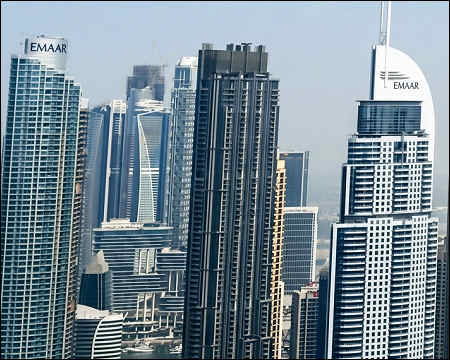
Emaar, the company behind the world’s tallest tower, Burj Khalifa, has been central to Dubai’s growth as a business and tourism destination, particularly during the property boom that followed the pandemic.
Alabbar said Emaar’s revenue backlog, money guaranteed from future projects, tops $50 billion, and that payment collection rates currently match those from 2025.
He expressed confidence in the market overall, though he acknowledged sales remain below pre-war figures, sitting roughly 50% lower than usual.
He also forecasts an average 5% drop in Dubai property prices this year because of the fallout from the Iran conflict.
Figures from the Dubai Land Department, released last month through the UAE’s official news agency, showed that finished property developments in the emirate rose 39% during the first six months of 2026.
These projects carried a combined investment value exceeding 111 billion dirhams, or about $30.22 billion, marking a 52% increase from the same period last year.
In June, Emaar unveiled plans for a massive $55 billion urban development in Dubai designed to house 150,000 people, a bet that the local property market can withstand the impact of regional tensions.
Alabbar indicated that once the situation between Iran and the US settles down, he plans to move forward with the project immediately.
(With files from Reuters)
Copyright © 2026 Dubai Diplomacy. All rights reserved.
 Your support matters! Consider buying us a coffee — every bit helps keep independent news alive.
Related posts:
 Dubai Real Estate Lost 34%, The Worst Could Still Be Ahead
 UAE property market faces test after Iran attacks; foreign buyers crucial
 Millionaire sellers dump Dubai luxury properties at half price: monitor
 Emaar plans $55 billion real estate project in Dubai: founder
 Dubai drops minimum property value requirement for 2-year visa: DLD
 Canada rejects UAE’s C$70 billion investment offer, for now: FT
 High-end Dubai hotels target residents as foreign tourists fall
 ADNOC group companies report $9.7 billion net profit in 2025