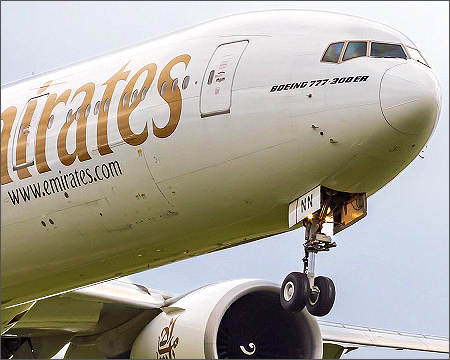
DUBAI – As tensions in the Middle East escalate, tens of thousands of travelers are stranded across the Gulf, struggling to leave a region suddenly caught in conflict.
Airspace in Qatar remains closed, leaving about 8,000 passengers who were in transit unable to continue their journeys after U.S. and Israeli strikes on Iran began.
In the United Arab Emirates, only a limited number of flights resumed on Monday, forcing tourists and some expatriates to seek alternate routes as Iran carried out attacks across the Gulf.
Dubai and nearby Doha are major international travel hubs, connecting Europe and Asia and handling tens of thousands of passengers every day.
Dubai resident Sara, who asked that her last name not be used, plans a roughly 33-hour journey to Germany on Wednesday to attend her brother’s wedding as the best woman. She said she could not risk missing the event if her scheduled flight next week were delayed.
Sara found a driver online to take her at 5 a.m. Wednesday from Dubai to the Omani border at Muscat. From there, she will fly to Jeddah, Saudi Arabia, spend the night, then continue to Amsterdam and on to Düsseldorf. She described the trip as long but necessary.
U.S. President Donald Trump initially said the conflict would last four to five weeks, but has since framed it as a potentially broader and longer war. Iran has launched missile and drone strikes on U.S. and Israeli forces, as well as other U.S.-allied countries across the region.
U.S. embassies in Kuwait and Saudi Arabia have been attacked, prompting the U.S. State Department to advise Americans to leave more than a dozen countries in the region immediately.
Several governments have begun evacuations. The United Kingdom, Spain, Italy, and Germany chartered flights, including one from Riyadh and another from Muscat, Oman, to bring home vulnerable citizens from the roughly 30,000 people stranded.
Slovenia organized four police-escorted buses from Dubai to Muscat airport, but it is unclear how travelers from other countries are reaching exit points.
In the UAE, a busy tourism and business hub, many stranded travelers are arranging shuttle buses and private car trips to cross into Oman. Oman has seen fewer attacks and kept its airspace open.
Flights to Gulf destinations have been cancelled in recent days, but international flights remain mostly unaffected.
Oman Air and budget airline SalamAir arranged shuttle buses from Sharjah to Muscat, operating Tuesday through Thursday.
The trip takes about eight hours. Social media platforms, including Facebook and Reddit, are filled with inquiries from expatriates seeking transport to Muscat’s airport.
A tour operator told Reuters he had received around 30 calls since Monday from people looking for private rides to the border in Hatta, a UAE mountain town about an hour from Dubai.
The operator noted that many of his clients were Ukrainian citizens trying to leave the UAE. Cars with UAE license plates cannot be driven in Oman unless fully owned by the driver, but taxis and private rides are available on the Omani side.
Saudi Arabia provides another option for travelers seeking flights out of the Gulf. A British citizen living in Riyadh told Reuters he was visiting Dubai when the strikes began.
He returned to Riyadh late Monday after an 11-hour trip, arranging a driver to the Al Ghuwaifat border and another on the Saudi side. WhatsApp groups are being used to coordinate ride-sharing for people traveling via Saudi Arabia or Oman.
The Dubai-Riyadh trip cost over $1,000, significantly higher than the usual economy-class one-way fare of around $200 between the Gulf hubs.
(With files from Reuters)
Copyright © 2026 Dubai Diplomacy. All rights reserved.
 Your support matters! Consider buying us a coffee — every bit helps keep independent news alive.
Related posts:
 Some travelers paid $232,000 for flights to escape Gulf countries, amid Iran conflict
 Saudi Arabia issues security warning as UAE told to exit Yemen
 Emirates, Etihad resume limited flights to major global cities
 UAE airports closed, thousands stranded across Middle East
 Saudi jets target UAE-backed separatists in Yemen’s south
 UAE pulls remaining forces from Yemen after Saudi Arabia call: ministry
 Saudi Arabia says UAE helped Yemen separatist leader to flee
 In the Saudi Arabia–UAE Rivalry, the Saudis Are Wrong