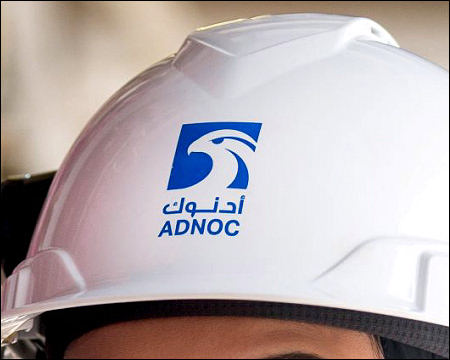
DUBAI,— A new crude oil pipeline that the United Arab Emirates is building to route exports away from the Strait of Hormuz is about half finished, the head of state oil company ADNOC said Wednesday, according to a Reuters report.
Global oil supply could take at least four months to reach 80% of pre-war levels once the Iran conflict ends, he warned.
Sultan Al Jaber, chief executive of ADNOC, made the remarks during a live-streamed Atlantic Council event, in some of his most detailed public comments since the fighting began.
Iran has kept the strait shut to all vessels except its own since U.S.-Israeli strikes on Feb. 28, pushing energy prices and inflation higher and raising concerns about a global economic slowdown.
“Today, it is already almost 50% complete, and we are accelerating its delivery toward 2027,” Al Jaber said. “Right now, too much of the world’s energy still moves through too few choke points.”
The existing Abu Dhabi Crude Oil Pipeline, known as ADCOP, moves up to 1.8 million barrels per day and has been vital as the UAE works to maximize exports through the Gulf of Oman, which sits outside the Strait.
Iran has expanded its definition of the waterway to cover part of the UAE’s Gulf of Oman coastline. The United States has imposed a blockade on Iranian ports and carried out an unsuccessful attempt to reopen the strait.
Gulf Arab nations, including those hosting U.S. military bases, have faced attacks during the conflict, even after a fragile ceasefire took hold on April 8.
Al Jaber said more than 3,000 missiles and drones were fired at UAE civilian targets, including ADNOC facilities.
He said damage assessments are ongoing and full operations could take weeks or months to restore in some locations.
“The UAE was attacked for its model of development,” Al Jaber said.
He warned that even if the war stopped immediately, oil flows through the Strait would not return to pre-conflict levels before the first or second quarter of 2027.
“Once you accept that a single country can hold the world’s most important waterway hostage, freedom of navigation as we know it is just finished,” he said.
The faster construction timeline follows the UAE’s withdrawal from OPEC, effective May 1, freeing the country from production quotas.
Al Jaber described the exit as a sovereign decision driven by the need for more global energy supply, saying it was not aimed at any particular country.
He said annual upstream investment of around $400 billion barely covers natural production decline and that global spare crude capacity of roughly 3 million barrels per day needs to rise to about 5 million.
Al Jaber also addressed the role of artificial intelligence, saying the world is underestimating how much energy the AI revolution will consume. “In many ways, the AI race is an electron race,” he said.
He added that ADNOC, its international arm XRG, and clean energy company Masdar already hold investments of $85 billion spread across 19 U.S. states.
“The UAE and the United States are not just trading partners. We are co-investors in the economy of the next century,” Al Jaber said.
(With files from Reuters)
Copyright © 2026 Dubai Diplomacy. All rights reserved.
 Your support matters! Consider buying us a coffee — every bit helps keep independent news alive.
Related posts:
 UAE speeds up oil pipeline project to bypass Hormuz
 UAE secretly slips oil tankers through Strait of Hormuz: Reuters
 Strait of Hormuz closed, must reopen, UAE’s ADNOC CEO says
 Dubai oil benchmark under stress amid Iran war
 UAE’s Adnoc says full Hormuz oil flows unlikely until 2027 first half
 ADNOC group companies report $9.7 billion net profit in 2025
 UAE’s ADNOC CEO calls Iran curbs on Hormuz “economic terrorism”
 UAE ports key to Gulf trade lifeline