DUBAI,— Thousands of British citizens have left the United Arab Emirates following Iranian military attacks in the region, data reviewed by the Financial Times showed on Tuesday, highlighting the effect of the conflict on the Gulf country.
Before the conflict began in February, about 240,000 British citizens, including tourists, were in the UAE.
The country has faced a higher level of missile and drone attacks from Iran compared with other United States allies in the Middle East.
Official figures cited by the Financial Times indicate that about 30,000 British residents are now outside the UAE.
This represents roughly 10 to 15 percent of the long term British population before the conflict. The change has raised concerns among education providers that depend on rising student enrollment.
Large numbers of British travelers and transit passengers were initially stranded after early strikes on Iran by the United States and Israel. Many have since returned to Britain.
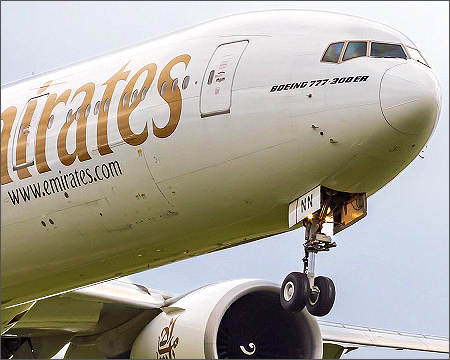
Dubai based airline Emirates resumed commercial flights quickly, while the UK government organized evacuation services.
Parents with children in British curriculum schools in the UAE said some students have not returned after the spring break.
Demand for such schools had grown rapidly in recent years as leading British institutions expanded into the region.
One parent at an international school said several British students in their child’s class are continuing lessons remotely from the United Kingdom.
The parent said they were considering leaving as well after losing employment before the conflict began. Another parent said of their child’s friends were no longer in the country.
Families cited concerns about security conditions as well as frustration over remote learning requirements, expected to remain in place until at least mid April.
Some parents said they did not expect in person classes to resume before the summer break in July.
Nigel Lea, a security consultant based in Dubai, said many British families had temporarily relocated to reduce stress and rely on support networks in the United Kingdom. He said most are expected to return once conditions stabilize.
Senior UAE official Anwar Gargash said the country is positioned to recover after the conflict ends. He said authorities expect a strong rebound but acknowledged that effort will be required.
Dubai, known for its low tax environment, has long attracted British residents. In recent years, the number increased, including wealthy individuals following changes to tax rules in the United Kingdom.
Analysts said the city’s reputation for safety could depend on how long the conflict continues and on future relations between the UAE and Iran. Authorities have already limited the return of some Iranian nationals.
Many expatriates said they remain confident in the country’s air defense systems, which have intercepted most incoming threats. These systems have been supported by French and British aircraft deployed to monitor and respond to attacks.
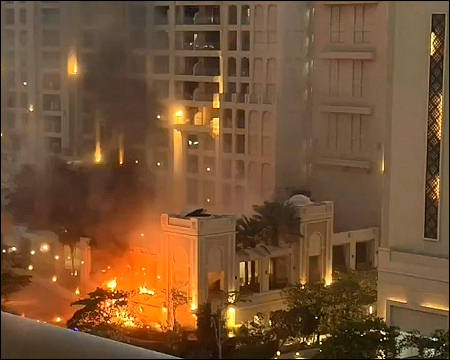
However, repeated alarms and strikes targeting civilian sites such as hotels and industrial areas have affected perceptions of safety. The situation has challenged the UAE’s image as a secure location during regional instability.
The departure of British residents, although smaller than some forecasts, has also raised concerns among investors in the education sector. Schools had expected annual growth in student numbers of up to 7 percent.
One investor said some families who left may not return, and new enrollments have slowed.
People familiar with the situation said some families remaining in Britain have already enrolled their children in private schools there.
In the UAE, some schools have asked regulators to allow in person classes for families willing to return, especially for students preparing for exams.
The Knowledge and Human Development Authority has indicated that reopening schools is unlikely under current conditions.
Despite the situation, expansion plans continue. A Dubai branch of Harrow school is set to open in August 2026 with fees exceeding 21,000 pounds per term.
Operator Taaleem said the project remains on schedule and reported limited withdrawals linked to the conflict.
Reports published in March 2026 by The Daily Mail UK said that up to 70 British nationals were detained in the United Arab Emirates for taking photos or sharing videos of drone and missile attacks.
(With files from The Financial Times)
Copyright © 2026 Dubai Diplomacy. All rights reserved.
 Your support matters! Consider buying us a coffee — every bit helps keep independent news alive.
Related posts:
 Some wealthy Asians move assets from Dubai amid Iran war fears
 UAE cancels residency visas for Iranians: UK-based media report
 Some travelers paid $232,000 for flights to escape Gulf countries, amid Iran conflict
 Gulf states press Trump to continue war until Iran is fully weakened
 UAE lets residents return home even if their visa expired
 Why UAE Cannot Buy Loyalty It Refuses to Earn
 Gulf states say ending Iran war not enough, degrade its capabilities
 Travelers to Dubai risk arrest over social media posts and debt: advocates