DUBAI,— Air travel across the globe remains heavily affected after fighting in Iran led to the closure of major aviation centers in the Middle East, including Dubai, Doha and Abu Dhabi.
The disruption has stranded tens of thousands of passengers and forced airlines to suspend or scale back operations.
Carriers in multiple regions have issued updates on cancellations and reduced services as they respond to restricted airspace and safety concerns.
Aegean Airlines of Greece said it cancelled flights to Tel Aviv, Beirut and Amman until April 22. Routes to Erbil and Baghdad are suspended until May 24. The airline also halted flights to Dubai until April 19 and Riyadh until April 18.
Latvia’s airBaltic announced cancellations of all Tel Aviv flights until April 5, and Dubai services until October 24.
Air Canada confirmed it cancelled Tel Aviv flights until May 2 and Dubai flights until March 28.
Air Europa of Spain said all flights to Tel Aviv are cancelled until April 10.
Air France stated that flights to Tel Aviv and Beirut are suspended until March 21. Services to Dubai and Riyadh are cancelled until March 20. KLM reported suspensions on routes to Riyadh, Dammam and Dubai until March 28, and to Tel Aviv until April 11.
Cathay Pacific said it had stopped all passenger flights to and from Dubai and Riyadh, as well as cargo flights to those destinations, until April 30.
Delta Air Lines reported cancellations of its New York to Tel Aviv flights until March 31, and return services until April 1.
The airline also delayed its Atlanta route to Tel Aviv, pausing outbound flights until August 4 and inbound flights until August 5.
El Al said its regular flight schedule is cancelled until March 21.
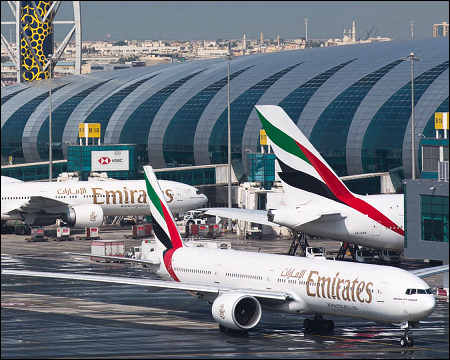
Emirates said it continues to operate fewer flights following a partial reopening of airspace. Etihad Airways also confirmed a limited schedule from Abu Dhabi to several destinations.
Finnair said it cancelled Dubai flights until March 29 and Doha flights until April 2. The airline continues to avoid airspace over Iraq, Iran, Syria and Israel.
Flynas extended its suspension of flights to multiple destinations including Dubai, Abu Dhabi, Sharjah, Doha, Bahrain, Kuwait, Iraq and Syria until March 31.
International Airlines Group said British Airways has extended cancellations to Amman, Bahrain, Dubai and Tel Aviv until May 31. Flights to Doha are suspended until April 30. The group added services to Bangkok and Singapore, while Abu Dhabi routes remain suspended until later this year.
IndiGo said it had suspended flights to Doha, Kuwait, Bahrain, Dammam, Fujairah, Ras Al Khaimah and Sharjah until March 28.
Japan Airlines reported it had stopped Tokyo to Doha flights until March 31 and return flights until April 1.
LOT Polish Airlines said Dubai flights are cancelled until March 28 and Tel Aviv flights until April 18. Riyadh services are suspended until March 24, and Beirut flights are cancelled from March 31 to April 30.
Lufthansa Group said it had suspended Tel Aviv flights until April 9. Flights to Beirut, Dubai, Amman, Erbil, Dammam and Abu Dhabi are cancelled until March 28. Tehran services are suspended until April 30 and Riyadh flights until April 5 due to operational reasons.
Malaysia Airlines confirmed it cancelled all flights to Doha until March 28.
Norwegian Air said it now plans to launch flights to Tel Aviv and Beirut on June 15, later than earlier plans in April.
Pegasus Airlines said it cancelled flights to Iran, Iraq, Amman, Beirut, Kuwait, Bahrain, Doha, Dammam, Dubai, Abu Dhabi and Sharjah until April 12. Riyadh flights are cancelled until March 23.
Qatar Airways stated it will run a limited number of flights between March 18 and March 28.
Turkey’s transport ministry said Turkish Airlines cancelled flights to Iraq, Syria, Lebanon, Jordan, Doha, Dubai, Abu Dhabi, Kuwait, Bahrain and Dammam until March 19. Flights to Iran are suspended until March 20.
Wizz Air said flights to Israel are suspended until March 29. Routes to Dubai, Abu Dhabi, Amman and Jeddah from mainland Europe are cancelled until mid September.
The Gulf region saw heightened tensions following joint U.S. and Israeli airstrikes on Iran on February 28, 2026.
Iran retaliated with hundreds of missile and drone strikes targeting Gulf countries, including major airports, seaports, hotels, residential neighborhoods, and oil facilities in Dubai and Abu Dhabi, according to official reports.
(With files from Reuters)
Copyright © 2026 Dubai Diplomacy. All rights reserved.
 Your support matters! Consider buying us a coffee — every bit helps keep independent news alive.
Related posts:
 Some travelers paid $232,000 for flights to escape Gulf countries, amid Iran conflict
 UAE airports closed, thousands stranded across Middle East
 Flydubai cancels flights between Dubai and Iranian cities
 Thousands struggle to leave Gulf countries amid Iran conflict
 Chaos in skies as Dubai Emirates flight turn back mid-air
 Emirates, Etihad resume limited flights to major global cities
 UAE, Philippines agree to increase flights
 Neolix suspends driverless deliveries in Abu Dhabi amid Iran conflict