“Flights to Nowhere”: War Chaos Hits Dubai Air Travel
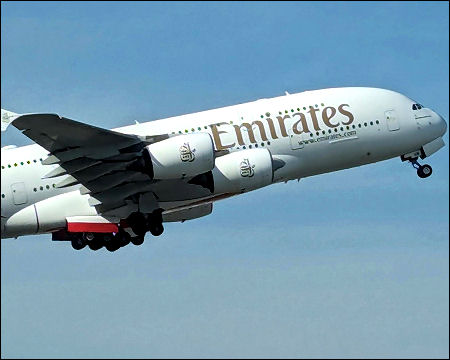
DUBAI,— An Emirates flight from London was forced to return to its departure point after a security incident near its destination, highlighting growing disruption to air travel linked to the Middle East conflict.
Emirates flight flight EK10 had been en route from London to Dubai on Monday when reports emerged of a drone strike in Dubai.
Flight tracking data show the aircraft turned back while flying over Saudi Arabia and returned to Gatwick, completing a round trip of about 9,100 km or 6,150 miles.
The incident was one of dozens of so called flights to nowhere recorded in recent days.
Around 30 Emirates flights bound for Dubai International Airport were either turned back or diverted after Iranian drone activity led to a temporary shutdown of the airport, which is usually the busiest in the world for international passengers.
Passengers expecting to land early in Dubai said they were caught off guard by the sudden changes.
One traveler wrote on social media that he had expected to wake up during descent into Dubai, but instead saw his flight EK164 turn around near Cairo and head back to Dublin.
Airlines have faced mounting challenges since the conflict involving the United States, Israel and Iran began on February 28, 2026.
The disruptions have added to rising fuel costs, stranded passengers and changes to flight routes.
Emirates said some aircraft returned to their original airports or diverted to hubs closer to departure points. The airline did not provide further details.
At the start of the conflict, large areas of Gulf airspace were closed, reducing air traffic in the region to very low levels.
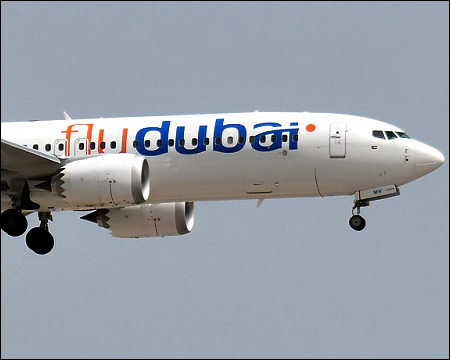
Airlines including Emirates, Etihad, Qatar Airways and flydubai have since resumed many operations, though alerts linked to drones and missiles continue to cause sudden diversions.
The United Arab Emirates briefly shut its airspace again on Tuesday.
Flight data from FlightRadar24 and AirNav Radar show that between 0140 and 0200 GMT on Monday, several Emirates flights from Europe and India turned back mid journey while over Saudi Arabia or the Arabian Sea.
One London flight that typically reaches Dubai in less than seven hours returned after about 11 and a half hours in the air. Other flights reversed course and landed in Madrid, Lisbon and Paris.
Aircraft nearing Dubai were redirected on longer routes. Flights from New York, Tokyo, Shanghai and Moscow were diverted to cities including Cairo, Karachi, Dhaka and Islamabad.
Two flights from Dallas and Toronto were sent to Italy, while others from Lusaka, Dhaka and Johannesburg stopped midway or returned home.
One Emirates flight from Shanghai reached Dubai only after traveling about 11,000 km over 20 hours with a stop in Bangladesh.
The airline has also shifted multiple services from Dubai International to other airports such as Dubai World Central, Al Ain, Abu Dhabi and Muscat, as well as regional hubs including Jeddah, Cairo and Medina.
Data from Cirium show Emirates has cancelled more than 2,000 flights since February 28, representing 54 percent of its schedule.
Qatar Airways cancelled 93 percent of its flights, while Etihad cancelled 79 percent.
Overall, about 30,000 flights to and from Middle East airports have been cancelled as of March 17, the data show.
(With files from Reuters)
Copyright © 2026 Dubai Diplomacy. All rights reserved.
 Your support matters! Consider buying us a coffee — every bit helps keep independent news alive.
Related posts:
 Airlines suspend more flights to UAE, ME amid rising conflict
 Some travelers paid $232,000 for flights to escape Gulf countries, amid Iran conflict
 UAE airports closed, thousands stranded across Middle East
 Emirates, Etihad resume limited flights to major global cities
 Flydubai cancels flights between Dubai and Iranian cities
 Dubai International Airport reports record 95.2 million passengers in 2025
 Flydubai reports $531 million net profit in 2025
 Thousands struggle to leave Gulf countries amid Iran conflict