Rich, Armed, and Alone: Why Gulf States Cannot Protect Each Other
Halima Younis – Exclusive to Dubai Diplomacy
The Gap Between Aspiration and Geopolitical Reality, and What Iran’s Missiles Are Now Proving
On February 28, 2026, the United States and Israel launched an airstrikes across Iran, killing Supreme Leader Khamenei and much of Iran’s senior leadership.
Iran responded within hours with hundreds of ballistic missiles and drones, not just at Israel and American bases, but at every single Gulf state simultaneously. Every capital. Every major military installation. Every energy facility. The Gulf NATO debate, long confined to think tanks and diplomatic lounges, was suddenly being answered in real time, by fire.
What Is Happening Right Now
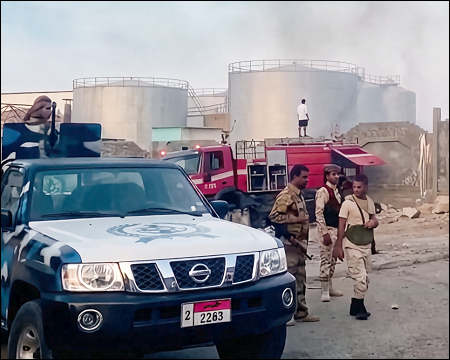
The scale of Iran’s retaliation against Gulf states has been staggering. Iran struck every capital and major military installation in the region. Targets included Manama, Kuwait International Airport, Abu Dhabi, Riyadh, Al Udeid Air Base in Qatar, and the U.S. Navy Fifth Fleet headquarters in Bahrain.
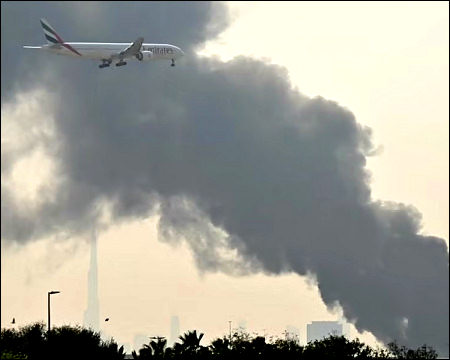
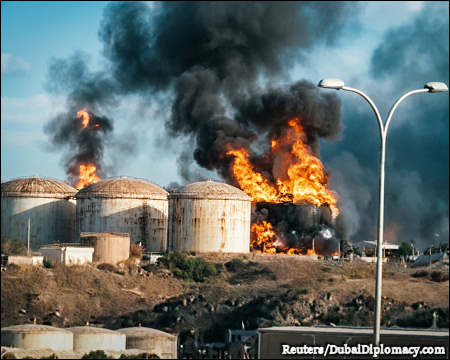
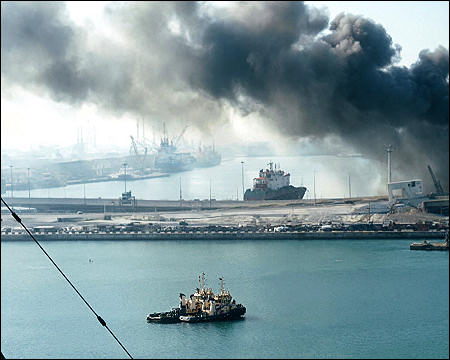
Saudi Arabia’s Ras Tanura refinery caught fire, Qatar halted LNG production, and drones struck Dubai International Airport, causing a fire and forcing the brief suspension of all flights at the world’s busiest airport. The White House was privately aware that Gulf allies were running critically short on missile interceptors, forced to choose, in real time, which incoming threats to stop and which to let through.
Iran did not distinguish between Gulf states that opposed it and those that had spent years cultivating dialogue with Tehran. Neutrality offered no protection. Diplomacy offered no shield. Every Gulf state was a target regardless of its posture toward Iran.
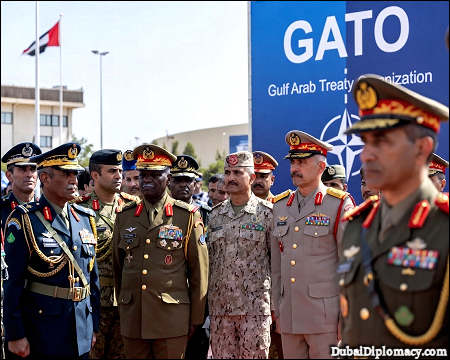
Six Nations, Zero Trust: The Impossible Math of a Gulf Alliance
The Foundation That NATO Has, and the Gulf Never Will
NATO was not built on weapons or treaties alone. It was constructed over decades of hard-won political trust among democratic allies who shared not just threats, but values, institutions, and a common vision of international order. The Gulf states have none of these prerequisites.
Saudi Arabia and Qatar were locked in a full diplomatic and economic blockade from 2017 to 2021, meaning GCC members literally cut off all ties with each other within living memory. That rupture wasn’t a diplomatic spat; it was a complete collapse of the alliance’s pretense of unity. The wounds have not fully healed. Saudi Arabia and the UAE, meanwhile, have developed sharply competing ambitions in Yemen, the Horn of Africa, Sudan, and Libya. These are not minor disagreements, they are active contests over who dominates the Arab world.
The GCC is fundamentally an alliance of ruling dynasties, not nation-states. Every decision is filtered through one question: does this protect the regime? Collective defense commitments that could drag a ruling family into someone else’s war are the last thing any of them want. Missiles falling on their cities has not changed that instinct, it has only sharpened it.
The Leadership Problem Nobody Will Ever Solve
NATO works because the U.S. is the unchallengeable leader. No one seriously disputes this. In a Gulf alliance, there is no equivalent, and the fight over who leads would poison the alliance before it was even formed.
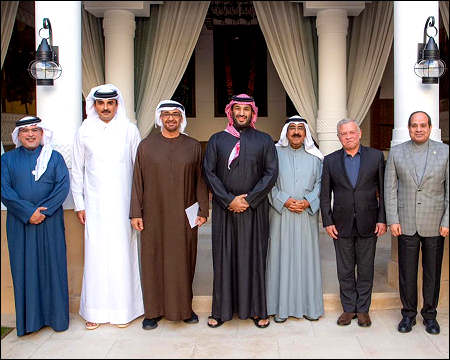
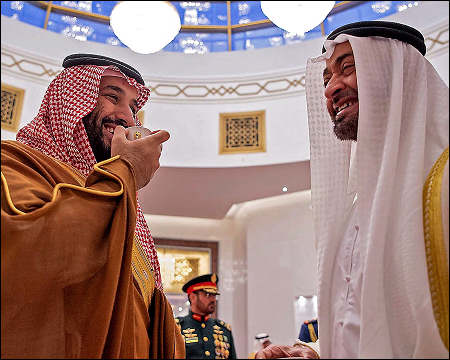
Saudi Arabia would demand leadership. It has the largest economy, the biggest population, the most oil, and considers itself the guardian of Sunni Islam. But the UAE would flatly reject Saudi dominance. Abu Dhabi has built the most professional, combat-tested military in the Arab world, demonstrated in Yemen and Libya, and considers itself the region’s truly capable power. The contempt between these two is barely concealed.
Then there are the smaller states. Kuwait, Bahrain, and Qatar would not accept being junior partners in a Saudi-led pact, knowing full well it means their foreign policy gets subordinated to Riyadh’s agenda. Kuwait was invaded by an Arab neighbor in 1990, it learned the hard way that Arab solidarity is worthless when regimes have conflicting interests. For Kuwait, neutrality and a direct U.S. security umbrella feel infinitely safer than any Arab collective defense framework.
No one will agree on who leads. That alone kills it.
The Iran Paradox, Now Brutally Exposed
A Gulf NATO only makes strategic sense as a counterweight to Iran. For years, the standard objection was that Gulf states couldn’t build an anti-Iran alliance because half of them were talking to Tehran. That calculation just changed violently.
Qatar hosts Al Udeid Air Base, the largest American military installation in the entire Middle East, and yet had maintained warm diplomatic and economic relations with Iran, sharing the world’s largest natural gas field with it. Qatar believed that relationship provided a degree of insulation. Iran bombed it anyway.
Oman had deliberately cultivated its role as the back-channel between Iran and the West for decades, serving as the secret venue for early U.S.-Iran nuclear talks. Right up until the missiles flew, Oman’s foreign minister was declaring that peace was within reach. Iran struck Oman too. That neutrality, carefully constructed over decades, was worth nothing the moment Tehran decided every American partner in the region was a legitimate target.
And then there is the most damaging pre-war development: in 2023, Saudi Arabia itself, Iran’s most vocal enemy, quietly normalized relations with Tehran in a deal brokered by China. It did not save Saudi Arabia from being targeted. Iran fired on Riyadh and the Eastern Province regardless.
The lesson is unambiguous: Iran does not care about Gulf neutrality. It never did. Every Gulf state that believed its relationship with Tehran was a shield has now learned otherwise, at the cost of its airports, refineries, and military bases.
What the Gulf States Actually Want, and Why That’s Not an Alliance
Gulf leaders want the benefits of a NATO-style alliance, guaranteed mutual defense, deterrence credibility, a great-power umbrella, without any of the costs: surrendering foreign policy autonomy, committing to defend neighbors they distrust, subordinating national decisions to collective votes, or inheriting each other’s conflicts and enemies.
That is not an alliance. That is a wish list.
NATO’s Article 5 only functions because member states have genuinely committed to treating an attack on one as an attack on all. No Gulf state is prepared to make that commitment. Even now, with missiles falling on their cities, the instinct in Riyadh, Doha, and Muscat is to reach for the phone, to seek dialogue, lobby Washington, find an off-ramp, rather than forge a unified military response.
Which is why, at every GCC summit, the communiqués speak of “enhanced security cooperation” and “deepened coordination” rather than binding mutual defense. The language is deliberately vague because genuine commitment is genuinely absent. Bombs have not changed the language. They have only made the vagueness more embarrassing.
This is not a security architecture. It is political branding, and right now, that branding is being shredded by Iranian drones.
What Is Actually Possible, If Anything
The current crisis is forcing some movement, but not toward a real alliance. What it is forcing is more modest and more real:
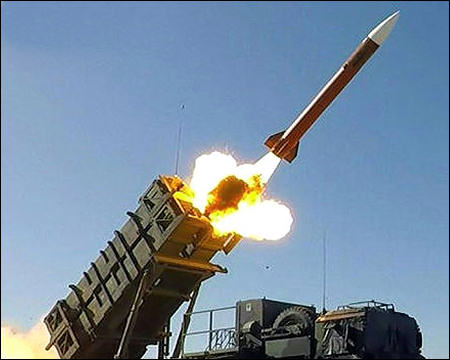
Integrated air and missile defense , Gulf interceptor stocks running dry is the starkest possible argument for a unified, integrated air defense network. This doesn’t require political trust between members, just technical coordination. It is now an urgent survival necessity, not a future aspiration.
Bilateral U.S. defense treaties , individual bilateral guarantees from Washington may ultimately prove more reliable than any intra-Gulf pact. Saudi Arabia was already negotiating a formal defense agreement with Washington before the war. That process will now accelerate.
Deeper coordination with Israel , quiet intelligence sharing and air defense cooperation between Gulf states and Israel, already developing under the Abraham Accords, is the most operationally meaningful security development in the region. It will deepen further, still out of public view.
A two-speed GCC , a tighter Saudi-UAE-Bahrain core pursuing closer military coordination, while Qatar and Oman maintain looser, more independent postures. Not a unified alliance, but a realistic acknowledgment of who actually trusts whom.
The Gulf’s Biggest Lie: Why an Arab Military Alliance Will Never Work
Conclusion: The Crisis Arrived, and the Answer Is Still No
Iran is striking every Gulf capital simultaneously. Interceptor stocks are running low. Airports are closed. Refineries are on fire. And the Gulf states are still not forming an alliance.
The structural barriers, dynastic rivalry, the Saudi-UAE power competition, the absence of agreed leadership, and the deep aversion to binding commitments, do not dissolve because bombs are falling. Each Gulf state’s first instinct is to protect its own regime, manage its own relationships, and preserve its own options, not to subordinate itself to a collective framework.
Iran’s calculation is that the Gulf will eventually lose its nerve under sustained economic and psychological pressure, and quietly lobby Washington to end the war. Tehran may be right.
A Gulf NATO remains out of reach. What this war may finally produce is something more modest but more honest, an integrated air defense network, deeper ties with Israel, and the hard-earned understanding that neutrality toward Iran was always an illusion.
Iran just proved it, with hundreds of missiles.
Halima Younis, political analyst.
All views expressed herein are solely those of the author and do not necessarily represent the opinions or policies of DubaiDiplomacy or its editors.
Copyright © 2026 Dubai Diplomacy. All rights reserved.
 Your support matters! Consider buying us a coffee — every bit helps keep independent news alive.
Related posts:
 Why the Middle East’s “Islamic NATO” is an Illusion
 Gulf states press Trump to continue war until Iran is fully weakened
 Saudi-UAE rift widens as Emirates quits oil cartel
 Saudi Arabia issues security warning as UAE told to exit Yemen
 Iran says it hit Ukraine anti-drone depot in UAE, Kyiv denies
 Iran threatens Gulf states with strikes if US launches new attacks
 UAE failed to rally Gulf states for Iran strike, Bloomberg says
 Could UAE Face Dirty Bomb Risk If Iran Falls?