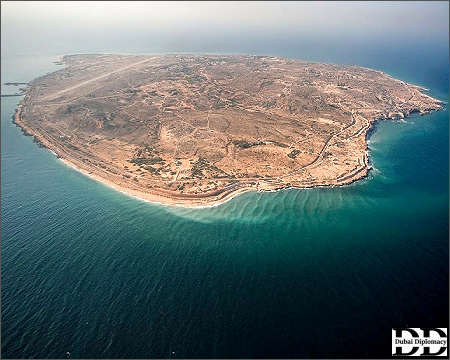
DUBAI — Iran’s Foreign Ministry sharply criticized Canada’s prime minister on Friday for backing the United Arab Emirates’ claim to three Iran-occupied islands in the Persian Gulf.
Ministry spokesperson Esmaeil Baghaei posted on X that Canada’s leader had chosen to “echo this absurd claim” regarding Abu Musa, Greater Tunb and Lesser Tunb.
He said the islands had belonged to Iran for “many millennia,” long before the UAE federation came into existence.
Baghaei pointed to Canada’s own history and to President Donald Trump’s repeated threats to annex Canada as the 51st U.S. state.
He asked whether territorial integrity and respect for historical and legal facts mattered to Canada only when its own sovereignty was threatened.
The spokesperson also cited the War of 1812 and the 1849 Montreal Annexation Manifesto as examples of Canada defending its own borders in the past. He called Canada’s support for the UAE position a form of “dangerous adventurism” tied to a “fabricated dispute.”
The UAE was formed in 1971. Baghaei said historical records, geography and documented evidence all point to Iranian ownership of the three islands, calling the Emirati claim baseless.
The dispute dates back to November 30, 1971, when Iran’s Imperial Navy occupied Abu Musa and the Greater and Lesser Tunbs shortly after British forces withdrew from the islands.
The territory sits in the Strait of Hormuz, the waterway linking the Persian Gulf and the Gulf of Oman.
Before the seizure, the Emirate of Ras al-Khaimah claimed the Greater and Lesser Tunbs, while the Emirate of Sharjah claimed Abu Musa. Imperial Iran claimed sovereignty over both island groups.
Sharjah joined the newly created UAE on December 2, 1971, and Ras al-Khaimah followed on February 10, 1972. Both emirates brought their island disputes with Iran into the new federation, making the islands a UAE-Iran issue that remains unresolved today.
Iran has held physical control of the islands since 1971. The UAE has pursued the matter through international channels but has not regained control.
Political analyst Halima Younis addressed the dispute in an April 2026 article published by DubaiDiplomacy, arguing that diplomatic efforts had reached their limits and that the UAE should consider using force to reclaim the islands.
Younis says that the islands are Emirati territory and have always been part of the UAE.
She argued that the Emirati people have the right to see their national flag flying over the islands once again, stressing that this should not be postponed to some distant future or left to the uncertainty of diplomatic negotiations, but pursued within the current generation.
Further Reading on This Topic
- Iran slams Canada’s PM for backing UAE claim to three Gulf islands - November 2, 2026
- UAE Should Reclaim Its Islands From Iran by Force: The Time for Diplomacy Is Over - April 15, 2026
- Why the UAE lets Iran keep its islands: Abu Musa and the Tonbs - March 13, 2026
Copyright © 2026 Dubai Diplomacy. All rights reserved.
 Your support matters! Consider buying us a coffee — every bit helps keep independent news alive.
Related posts:
 Why the UAE lets Iran keep its islands: Abu Musa and the Tonbs
 UAE Should Reclaim Its Islands From Iran by Force: The Time for Diplomacy Is Over
 Canada rejects UAE’s C$70 billion investment offer, for now: FT
 UAE, Canada sign trade deal
 Is a Gulf NATO Really Possible?
 Iran threatens Gulf states with strikes if US launches new attacks
 Gulf states press Trump to continue war until Iran is fully weakened
 Iran seeks UAE compensation over US strikes on its land: letter