Why the UAE Has Yet to Reclaim Its Islands from Iran
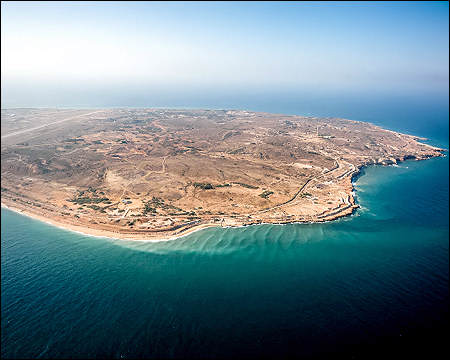
In late November 1971, as British forces were withdrawing from their military installations in the Persian Gulf and retreating toward the Suez, London attempted to hand over three strategically positioned islands, Abu Musa and the Greater and Lesser Tonbs, to the newly formed United Arab Emirates.
These islands sit at the entrance of the Strait of Hormuz, a critical chokepoint for global maritime trade.
Before the transfer could occur, Iran’s then-shah, Mohammad Reza Pahlavi, moved decisively. He instructed the Iranian Navy to take control of the islands, asserting Tehran’s longstanding view that they were part of Iranian territory. Over the decades, Iran had consistently justified its claims through historical, political, and even linguistic arguments.
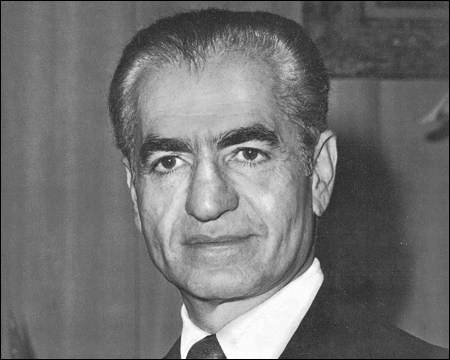
The shah’s ambitions went further than these three islands. He also laid claim to Bahrain, treating it as a province of Iran, a move overwhelmingly rejected by Bahrainis in a United Nations-supervised referendum.
Though Iran’s monarchy and the later Islamic Republic represent vastly different political systems, both have exhibited strong nationalist instincts. For example, during Bahrain’s early years of independence, the Islamic Republic attempted to foment internal unrest, even supporting a Bahraini cleric who pledged loyalty to Ayatollah Khomeini, alongside Revolutionary Guard-backed groups seeking to influence the island nation’s politics.
Tensions resurfaced in 2007 when Hossein Shariatmadari, editor of the Iranian newspaper Kayhan, published a piece advocating for Iran’s historical claims to Bahrain, reigniting a sensitive regional debate. The article claimed that Western powers had unjustly separated Bahrain from Iran and suggested that a majority of Bahrainis might prefer reunification.
While political divisions in the U.S. lead to criticism of American military presence abroad, the reality is that the Fifth Fleet remains in Bahrain largely because of Iran’s enduring regional influence and threats.
Without U.S. support replacing the departing British forces, historical scenarios suggest that either the shah or Khomeini might have attempted an incursion or supported insurrection to assert control.
After Iran’s 1979 Islamic Revolution, the UAE continued to assert its claims over Abu Musa and the Tonbs but did not actively pursue them through litigation. Nonetheless, the Emirates have left open the option of international arbitration, through bodies like the International Court of Justice or the United Nations.
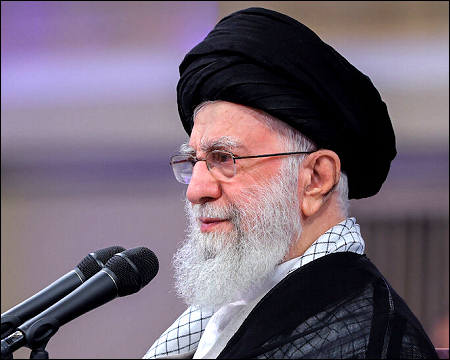
Iran, first under Khomeini and later under Khamenei, has consistently refused engagement while militarizing the islands. Today, Abu Musa hosts a military base and previously contained chemical weapons stockpiles, while the Tonbs are occupied by Revolutionary Guard units.
Given Iran’s recent aggressive posturing, attacks with drones and missiles on Dubai and Abu Dhabi, as well as threats to maritime trade by deploying mines and small craft in the Strait, questions arise: Why has the UAE not sought to assert control over these islands, using the same decisive tactics the shah employed more than fifty years ago?
Iranian arguments for historical ownership carry weight, and Tehran could easily take the UAE’s concerns to international forums if it chose. Yet, from a practical standpoint, placing these islands under Emirati control would enhance maritime security and safeguard global energy flows.
If the UAE continues to remain inactive, the message is clear: control is being ceded, and its claims, long asserted but never enforced, risk becoming little more than symbolic statements without real weight.
This piece draws on Michael Rubin’s op-ed “Has the United Arab Emirates Forfeited Its Claims to Abu Musa and the Tonbs?” (AEI, 2026) for historical context and analysis. The content here has been rewritten in original language and supplemented with independent commentary.
All views expressed herein are solely those of the author and do not necessarily represent the opinions or policies of DubaiDiplomacy or its editors.
Copyright © 2026 Dubai Diplomacy. All rights reserved.
 Your support matters! Consider buying us a coffee — every bit helps keep independent news alive.
Related posts:
 UAE Should Reclaim Its Islands From Iran by Force: The Time for Diplomacy Is Over
 Is a Gulf NATO Really Possible?
 Iran, Iraq plotting large-scale attacks on UAE, and Gulf states, Rajabi says
 Iran seeks UAE compensation over US strikes on its land: letter
 Could UAE Face Dirty Bomb Risk If Iran Falls?
 Gulf states press Trump to continue war until Iran is fully weakened
 UAE used US, Israeli intelligence to hit Iran with dozens of strikes: WSJ
 UAE agrees to release $10 billion to Iran to halt attacks: report