DUBAI,— U.S. President Donald Trump will eventually steer the conflict with Iran toward a diplomatic settlement, but Tehran must first stop attacking neighboring countries before mediation can begin, a senior United Arab Emirates diplomat said on Friday.
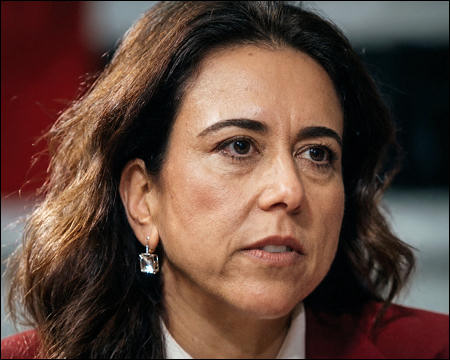
Lana Nusseibeh, a former UAE ambassador to the United Nations who now serves as minister of state in the country’s foreign ministry, said she believes the war will end through negotiations. She made the remarks during an interview.
Nusseibeh said the region was waiting for a decisive moment that could shift the situation toward talks.
“Ultimately, it will be a diplomatic solution, but there needs to be that tipping point moment, and I think that President Trump will lead us all to that moment in his time,” she said.
She said mediation efforts cannot begin while attacks continue. Iran must stop its strikes before any diplomatic channel can move forward.
“It is difficult to talk about mediation when under attack,” Nusseibeh said. “Mediation can only happen when the guns go silent.”
The minister said she had visited Tehran about two weeks before the crisis escalated into open conflict. The trip was intended to support diplomatic efforts to reduce tensions.
During that visit, Iranian officials gave no indication that the UAE could become a target, she said. Because of that, the attacks that later struck the UAE were unexpected.
That absence of warning made the strikes “so shocking and so egregious,” Nusseibeh said in the interview.
Iran has said its military actions are directed at the U.S. presence across the region. Several countries host American military facilities, including the UAE, other Gulf states, Iraq, Jordan and Turkey.
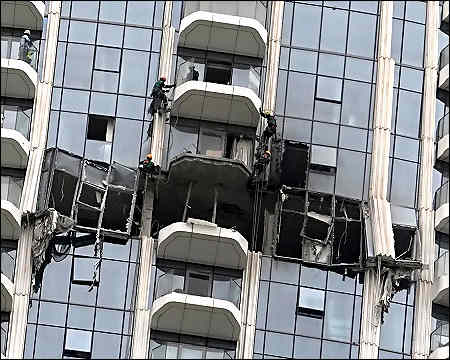
During the current conflict, drones or missiles have been launched toward civilian infrastructure in the UAE. Targets have included Dubai airport, well known hotels and the country’s financial district.
The fighting in the Middle East has entered its second week. The escalation followed large scale strikes on Iran by the United States and Israel on February 28, 2026. The attacks killed Iran’s supreme leader.
Iran has continued to respond with strikes against Israel and countries in the Gulf that are allied with Washington. Some of those attacks have reached sites that are not military installations.
Civilian locations and energy facilities have been among the targets.
Nusseibeh said the UAE remains in close communication with the Trump administration. She described the United States as a strong strategic partner for the Gulf nation.
She did not criticize the United States or Israel for launching attacks on Iran. Instead, she said their military campaign should be considered separately from what she described as Iran’s unlawful actions against Gulf countries and Jordan.
“It would be difficult to return to the situation that existed before the war,” she said, pointing to the destruction and disruption that has taken place across the region.
Nusseibeh also said Iran appeared to be trying to damage the UAE’s economic system. The country has attracted about 700,000 Iranian residents who live and work there.
Despite the strikes, she said the UAE economy remains stable.
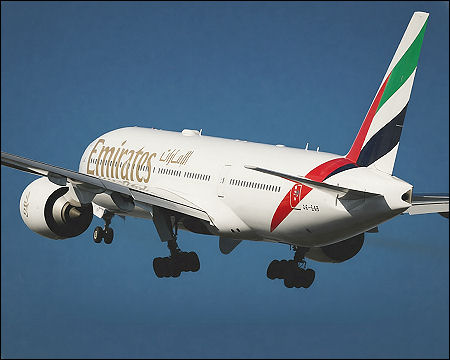
“People are back at work, our airports are open, flights are taking off,” she said.
She added that Iran’s economy, already under sanctions and financial pressure, is experiencing a sharp decline, including a fall in the value of its currency.
(With files from Reuters)
Copyright © 2026 Dubai Diplomacy. All rights reserved.
 Your support matters! Consider buying us a coffee — every bit helps keep independent news alive.
Related posts:
 Gulf states press Trump to continue war until Iran is fully weakened
 UAE-EU free trade talks progressing quickly, UAE minister says
 Dubai charges British tourist over filming Iran missile strikes
 Gulf states say ending Iran war not enough, degrade its capabilities
 The Strait of Hormuz will be closed as soon as the U.S. navy leaves
 Al Nahyan meets Putin during official visit to Russia
 Senate Democrats seek review of UAE $500 million investment in Trump crypto firm
 UAE will not allow use of its airspace for military action against Iran