Iran ready to give up nuclear program for Strait of Hormuz control, Rajabi says
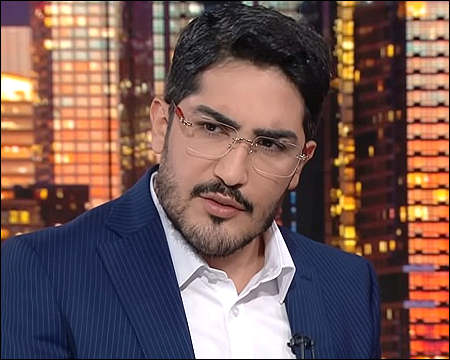
ABU DHABI,— A former official, advisor to ex-Iranian President Mahmoud Ahmadinejad, and member of Iran’s Quds Force, Sheikh Jaber Rajabi, made a series of claims about Iran’s leadership, internal power struggles, and regional activities in a televised interview with Sky News Arabia.
Rajabi said Iran’s decision-making system is increasingly centered around Mojtaba Khamenei, the son of Iran’s late Supreme Leader Ali Khamenei.
He claimed Mojtaba is effectively involved in major state decisions, including security and nuclear-related matters, and is playing a key role in internal and external negotiations.
One of Rajabi’s most significant claims was that Mojtaba Khamenei could be prepared to give up Iran’s nuclear program in exchange for control over the Strait of Hormuz, a vital global shipping route for oil and gas.
He said Iran views the strait as a strategic bargaining asset and suggested that parts of the leadership see maritime control as more valuable than maintaining nuclear capabilities.
“He is ready to give up everything,” Rajabi said, referring to Mojtaba Khamenei, while arguing that Tehran may be willing to exchange nuclear concessions for expanded regional influence.
Rajabi also described what he called deep divisions inside Iran’s political and security establishment. He said the system is split into competing factions, including groups aligned with Mojtaba Khamenei and others that oppose his direction.
He claimed that Iran’s leadership is not unified on negotiations with the United States, and that different internal actors are pushing conflicting strategies—some favoring talks with Washington and others resisting compromise.
The former Quds Force member said Mojtaba Khamenei has influence over parts of the Islamic Revolutionary Guard Corps (IRGC), but he also suggested that control is not absolute and that internal rivalries remain strong.
He described Iran’s system as fragmented, with shifting alliances between political, military, and security figures competing for influence over national policy.
Rajabi also made broader claims about Iran’s regional operations, particularly in Iraq. He accused figures linked to Iran of using religious and political authority to influence Iraqi armed factions and corruption networks.
He named Abbas al-Kaabi as a key figure, alleging he provides religious legitimacy for corruption in Iraq and maintains influence over Iraqi and Lebanese armed groups.
He further claimed Iraq has become a strategic platform in regional conflicts, saying Iranian-aligned networks operate through Iraqi territory in ways that affect neighboring countries, including Gulf states. These claims were not independently verified.
Rajabi warned of what he described as large-scale, coordinated operations being prepared from inside Iran and Iraqi territory targeting multiple Arab countries, including the United Arab Emirates, Kuwait, and Bahrain.
He said such plans would place Iraq at risk of becoming a battlefield for wider regional confrontation, though he did not provide evidence for these allegations.
During the interview, Rajabi also addressed long-standing questions about why Iran’s government has not collapsed despite years of internal and external pressure. He said change, if it happens, would come gradually and warned that a sudden collapse could lead to chaos.
He predicted that political and social developments inside Iran could begin around the tenth month of the year, citing growing internal distrust and weakening confidence in the system.
Jaber Rajabi is a former official in more than one Iran-backed Iraqi militia and also served as a coordinator between several Iraqi factions.
He was involved in training Shiite militia groups with support from the IRGC-Quds Force and worked to link different armed factions in Iraq
Copyright © 2026 Dubai Diplomacy. All rights reserved.
 Your support matters! Consider buying us a coffee — every bit helps keep independent news alive.
Related posts:
 Could UAE Face Dirty Bomb Risk If Iran Falls?
 UAE summons Iraq’s chargé d’affaires over attacks from Iraq
 Why the UAE lets Iran keep its islands: Abu Musa and the Tonbs
 Drone that hit UAE nuclear plant was launched from Iraq: ministry
 Gulf states press Trump to continue war until Iran is fully weakened
 UAE’s 2026 World Cup dream slips away following loss to Iraq
 UAE crackdown cripples Iran’s IRGC cash networks in Dubai financial hub
 IAEA warns UAE’s Barakah nuclear plant attack risks radioactive release