DUBAI,— The recent escalation of conflict in the Middle East has exposed how heavily global air travel relies on hubs led by Dubai, the world’s busiest international airport. The shutdown of Gulf airspace quickly affected airline networks around the world.
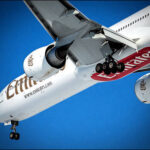
Dubai’s rise as an aviation center began over 40 years ago when the city used its strategic location to launch Emirates with two leased jets and two routes.
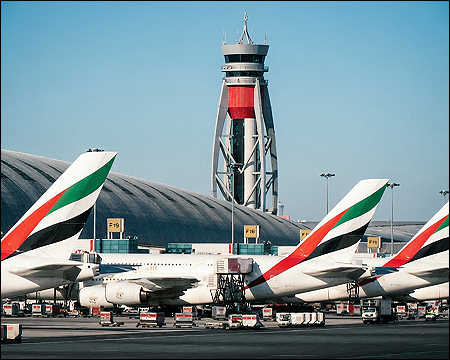
Today, the airport connects 110 countries and handles 454,000 flights each year.
Dubai Airports CEO Paul Griffiths told Reuters that the airport’s broad network and its balance between transit and visiting passengers make it resilient against geopolitical tensions.
“We have a very robust model and it will continue to survive any geopolitical tension, wherever it may be,” he said.
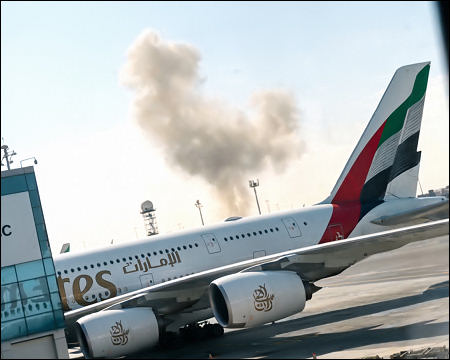
Tensions reached Dubai on Saturday after U.S. and Israeli strikes against Iran, including an attack on the airport itself.
Airport officials now face the task of handling tens of thousands of displaced passengers and restoring flight schedules while minimizing the impact on inbound traffic, which represents about half of operations.
Most analysts say Gulf hubs should recover unless a prolonged regional war occurs. The closure of Dubai, Abu Dhabi, and Doha airports coincides with rising competition from Turkey, Saudi Arabia, and India.
UK travel consultant Paul Charles said, “This is temporary. They have seen major incidents before and recovered quickly due to their role as global hubs. Even with short-term uncertainty, they will bounce back.”
Some experts are more cautious. The aviation industry recovered from COVID-19 because passenger demand exceeded supply.
This time, demand itself may be at risk. Independent aviation adviser Bertrand Grabowski said travelers may choose more direct flights instead of stopping in Dubai or Doha. “All this hub traffic is likely to take a hit,” he said.
Geography remains an advantage. Griffiths said one-third of the world’s population is within four hours of flight and two-thirds within eight hours from Dubai. “We have seen the aggregation power that a hub can deliver,” he added.
Competition is rising. Turkish Airlines could benefit through its hub outside the conflict zone, according to aviation analyst John Strickland. Saudi Arabia and India are also attracting more passengers.
Advances in aircraft design may challenge Gulf hubs. Airbus recently began assembling a second ultra-long-range A350 to allow Qantas to fly directly from Sydney to London, reducing reliance on Gulf stopovers.
Emirates was founded during the Iran-Iraq war in 1985. Its growth led to the breakup of Gulf Air, which previously served Qatar, Bahrain, Abu Dhabi, and Oman.
Qatar and Abu Dhabi launched their own airlines, forming the trio of Gulf hubs that now compete for passengers.
Analysts warn that recent Iranian attacks and anti-missile debris could have lasting effects on Dubai’s reputation and on the timing of its planned new airport expansion.
Grabowski said, “Dubai destination traffic will recover, but there may be some lasting damage.” For Emirates and its sister airline flydubai, restoring the network will likely rely on their market influence.
Eddy Pieniazek of aviation consultancy Ishka said travelers may be encouraged back with promotional deals, but such measures would not need to last long.
(With files from Reuters)
Copyright © 2026 Dubai Diplomacy. All rights reserved.
 Your support matters! Consider buying us a coffee — every bit helps keep independent news alive.
Related posts:
 UAE airports closed, thousands stranded across Middle East
 Some travelers paid $232,000 for flights to escape Gulf countries, amid Iran conflict
 Dubai International Airport reports record 95.2 million passengers in 2025
 UAE, Philippines agree to increase flights
 Luxury brands shut UAE, Middle East stores amid Middle East conflict
 UAE property market faces test after Iran attacks; foreign buyers crucial
 Some wealthy Asians move assets from Dubai amid Iran war fears
 Thousands struggle to leave Gulf countries amid Iran conflict