DUBAI,— The United Arab Emirates is sending mixed signals about its financial health. On one side, troubling economic data and dramatic government programs suggest serious trouble.
On the other, leaders insist everything is fine. The truth? It depends on where you look, according to reporting from Deutsche Welle.
The conflict between Iran and its regional enemies has created an economic crossroads for the wealthy Gulf nation.
Since February when the US and Israel started military operations against Iran, and Iran fired back at American allies including the UAE, the Gulf state has been fighting to keep its economic engine running.
The damage to tourism has been particularly severe. In the glitzy emirate of Dubai, hotel occupancy rates crashed from a healthy 80 percent to barely 10 percent as worried travelers canceled their plans.
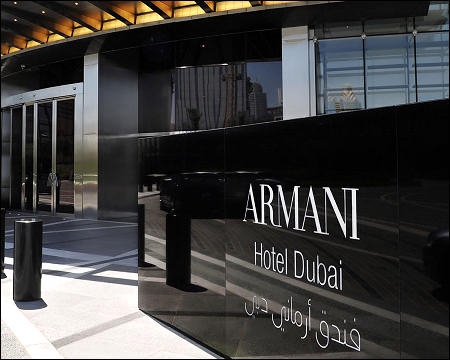
The decline forced some luxury resorts to shut down temporarily for renovations while others slashed prices by half, trying to attract local residents for weekend getaways instead of international visitors.
The situation has been complicated by the makeup of the UAE itself. Of its roughly 11.8 million residents, nearly 10.4 million are foreign nationals.
This diverse population ranges from wealthy business owners who benefit from the country’s generous tax-free policies to low-wage workers employed in construction and hospitality, many of whom send their earnings home to families overseas.
When Iranian missiles flew overhead, many affluent expats departed, concerned for their safety.
To lure them back once fighting subsides, the UAE announced it would loosen residency rules, allowing people to spend more time abroad without losing their favorable tax status.
Meanwhile, lower-income foreign workers faced a different crisis entirely. According to The New York Times, some workers in tourism and hospitality were seen going door-to-door desperately seeking employment.”
The government launched a rescue package worth around $680 million to help struggling sectors.
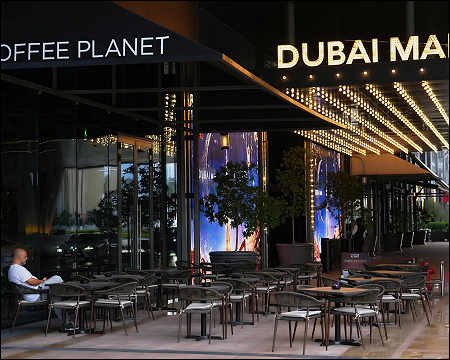
Hotels, restaurants, and certain private schools received relief through exemptions from local fees and delayed licensing payments. These moves seemed designed to prevent economic collapse in key industries.
Yet other warning signs have emerged that suggest deeper problems. Experts predict foreign investment across the Gulf region will drop significantly and that economic growth could turn negative for the first time since the coronavirus pandemic.
Employers announced plans to eliminate jobs rather than hire new workers. Shipping disruptions caused price increases for everything from raw materials to imported goods. Real estate values declined as buyers pulled back from the market.
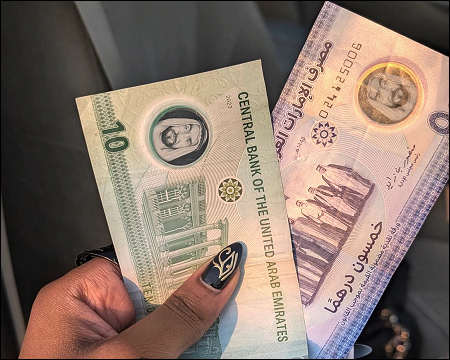
This contradictory picture became even clearer when the UAE’s central bank requested a currency swap arrangement with the United States.
Such agreements allow countries to exchange their currency directly, bypassing normal foreign markets.
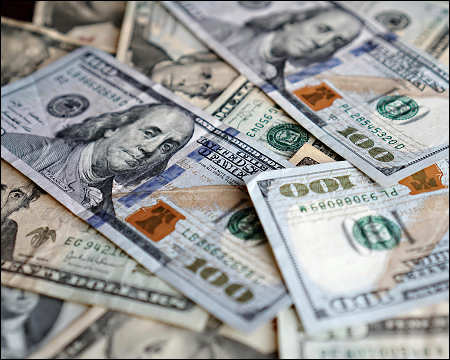
They’re typically used to maintain financial stability during uncertain times. US Treasury Secretary Scott Bessent said the arrangement was meant to help the UAE weather the economic fallout from regional fighting.
But here’s where the messaging got strange. The UAE’s ambassador to the United States, Yousef Al Otaiba, quickly pushed back, posting on social media that suggesting the UAE needed outside financial help was wrong.
“The UAE is one of the world’s most financially resilient economies,” he declared. Similarly, the head of the UAE Banks Federation told reporters in May that the country faced no threat of capital flight or currency shortages.
Economists offered a different interpretation. Adam Holdstock from Oxford Economics, a research firm based in the UK, said the currency swap was likely a sensible precaution rather than a sign of crisis.
He pointed out that while the amount of money circulating in the UAE dropped by 8 percent in March, it has since stabilized. “The UAE’s underlying position is strong,” Holdstock said.
Steffen Hertog, a Gulf economics expert at the London School of Economics, suggested in a mid-July podcast interview that both government and business leaders were trying to project confidence. They’re portraying current difficulties as temporary.
But Hertog warned that people haven’t fully accepted that the region could remain stuck between war and peace for an extended period, creating what he called a “new normal” that would be harder to manage.
He also noted an important detail: July and August represent summer season in the UAE, when temperatures become oppressively hot and tourism naturally slows down anyway, a factor that could be distorting how people evaluate current conditions.
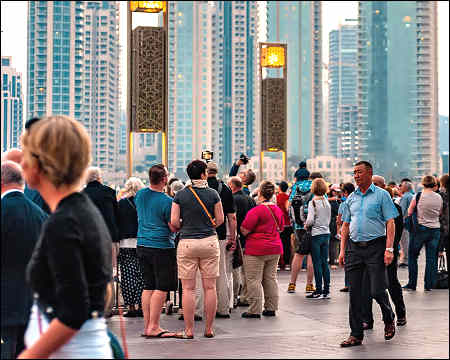
The most likely answer to whether the UAE is recovering or collapsing is: both statements contain some truth. The damage is concentrated in specific sectors.
Tourism, retail, and transportation have been hammered, with international visitors not expected to return to normal levels until 2028. But other industries tell a different story, according to DW’s analysis of economic data.
Financial services and government-backed businesses have partially offset losses in the struggling sectors, creating an overall economic picture that looks healthier than the tourism collapse alone would suggest.
“Most of the damage is concentrated in retail, transport and storage and tourism,” Holdstock explained, adding that this sectoral approach to understanding the economy reveals why the broader picture remains murkier than headlines might suggest.
Robert Mogielnicki, an economic consultant who advises Gulf clients, told reporters it’s too early to declare victory. “It is too early to speak of a genuine recovery because a sustainable end to hostilities has yet to emerge,” he said.
The region remains stuck in limbo, neither at war nor at peace, making it difficult to build lasting economic momentum.
Still, Mogielnicki and other analysts believe the UAE will ultimately recover once fighting ends.
Its business-friendly environment, position as an international aviation hub, and proven ability to attract investment and talent remain intact. “Assuming the war is resolved, we don’t expect lasting damage,” Holdstock concluded.
For now, the UAE faces a waiting game, holding steady while hoping for stability to return.
(With files from Deutsche Welle, dw.com)
Copyright © 2026 Dubai Diplomacy. All rights reserved.
 Your support matters! Consider buying us a coffee — every bit helps keep independent news alive.
Related posts:
 Dubai hotels close citing “renovations” amid falling tourism
 Dubai shows signs of life but tourism struggles run deep
 Why UAE Cannot Buy Loyalty It Refuses to Earn
 UAE crackdown cripples Iran’s IRGC cash networks in Dubai financial hub
 Don’t Die in UAE Without a Will: New Law Sends Heirless Expat Assets to Charity
 High-end Dubai hotels target residents as foreign tourists fall
 UAE extends visa on arrival to expatriates of six nationalities
 UAE Is Not Ready: What Must Be Built Before the Next Attack