DUBAI,— Iran’s semiofficial Fars news agency, seen as close to the Revolutionary Guard Corps, warned the United Arab Emirates on Saturday that continued strikes on Iranian civilian infrastructure would force the closure of key facilities.
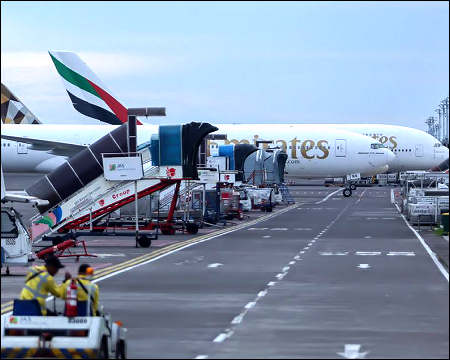
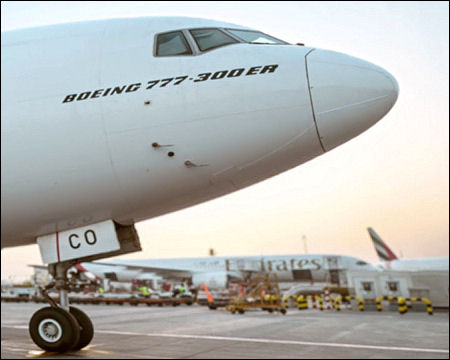
Citing an unnamed official, Fars said the airports in Dubai and Abu Dhabi, along with the ports of Fujairah and Jebel Ali, would need to be evacuated immediately.
The UAE’s Foreign Ministry responded with a statement urging all sides to show restraint to prevent the conflict from spreading into new levels of violence and instability in the region.
The ministry said attacks on civilian infrastructure and facilities break international law rules and can never be excused or accepted under any condition.
Officials said both the UAE and Saudi Arabia launched retaliatory strikes on Tehran during the Iran war after their own territories came under fire.
Jasem Mohamed al-Budaiwi, secretary-general of the six-member Gulf Cooperation Council, accused Iran of committing war crimes through its strikes on infrastructure and civilian sites.
Since late June, when Iran resumed its attacks on Gulf nations, it has kept the UAE out of its target list. Some analysts believe this is linked to Abu Dhabi’s move to release billions of dollars to Iran.
Four sources told Reuters that the UAE agreed on June 13 to release a total of $20 billion to Iran, with more than $3 billion already delivered, a move that marked a major shift in policy after weeks of Iranian attacks on the wealthy Gulf state amid the wider war between the United States, Israel and Iran.
Meanwhile, Dubai’s royal family seemed relaxed and showed no concern over the tensions, according to analysts.
Dubai’s ruler arrived in the Scottish Highlands in July with a security convoy of about 60 vehicles as he celebrated his 77th birthday there. Observers say this is another sign that points to a hidden, behind the scenes deal with Iran.
On Sunday, U.S. forces struck Iran’s Revolutionary Guard in response to the killing of American troops in Jordan, deepening the exchange of attacks between the two countries after an interim truce deal fell apart.
The strikes mark part of a weeklong operation that started with a fight for control over the Strait of Hormuz and has expanded as Iran hit nations allied with the U.S. across the Middle East.
American forces have hit bridges, power stations and other sites inside Iran, while Tehran struck back by targeting power and water desalination plants in Kuwait, disrupting daily life in the small, oil-rich nation.
Iran has also increased threats to widen its strikes further, prompting a warning overnight from the UAE.
Kuwait and Bahrain switched on air defense systems again Sunday morning after warning of incoming Iranian drones and missiles.
The wider campaign comes as the Strait of Hormuz remains central to the fighting. President Trump has threatened to strike Iran’s power plants and bridges to push Tehran into loosening its grip on the strait.
Recent strikes suggest the U.S. military has begun carrying out this plan, starting with Iran’s coastal areas along the waterway.
Over the past week, the U.S. also reinstated a naval blockade on Iranian ports to stop oil shipments. The military said Saturday it had redirected five vessels and disabled a sixth since the blockade began.
Iran’s Supreme Leader Mojtaba Khamenei warned in a Saturday statement that the U.S. would face “unforgettable lessons” if it continued its attacks on the Islamic Republic.
An Iranian negotiator said Tehran was suspending its commitments under the interim deal reached about a month earlier that aimed to end the fighting permanently.
Iran’s joint military command said any American “covetousness, bullying, totalitarianism or brutality” would be met with a “devastating response.”
(With files from AP, Reuters, Agencies)
Copyright © 2026 Dubai Diplomacy. All rights reserved.
 Your support matters! Consider buying us a coffee — every bit helps keep independent news alive.
Related posts:
 Gulf states press Trump to continue war until Iran is fully weakened
 Gulf states say ending Iran war not enough, degrade its capabilities
 Could UAE Face Dirty Bomb Risk If Iran Falls?
 Is a Gulf NATO Really Possible?
 UAE agrees to release $10 billion to Iran to halt attacks: report
 UAE crackdown cripples Iran’s IRGC cash networks in Dubai financial hub
 Iran Now Sees the Strait of Hormuz as a Cash Cow
 Iran builds covert Iraqi networks to strike UAE, Gulf states: Reuters