DUBAI,— A drone strike caused a fire at a nuclear power plant in the United Arab Emirates, officials in Abu Dhabi said Sunday, as efforts to end the U.S.-Israeli war with Iran and restore shipping in the Gulf showed little progress.
Authorities in the UAE said they were investigating the source of the attack and stated that the country reserved the right to respond to what they described as terrorist attacks.
The UAE has previously accused Iran of striking energy targets in the Gulf state in what officials called a regional escalation.
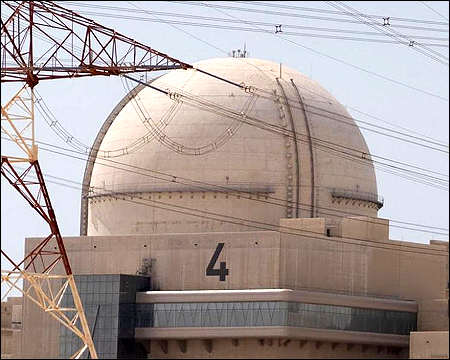
The Abu Dhabi Media Office said the drone struck an electrical generator outside the inner perimeter of the Barakah Nuclear Power Plant.
Officials said radiological safety levels were unaffected and no injuries were reported.
The International Atomic Energy Agency said emergency diesel generators were supplying power to the plant’s unit 3. The agency called for maximum military restraint around nuclear facilities and said it was monitoring developments closely.
The UAE defence ministry said two additional drones had been successfully intercepted. Officials said the drones had been launched from the western border but did not provide further details.
The UAE said Tuesday that the drone that struck the Barakah Nuclear Power Plant had been launched from Iraq.
During the war that began after U.S. and Israeli strikes against Iran on Feb. 28, Iran has targeted the UAE and other Gulf countries hosting U.S. military bases. The attacks hit civilian and energy infrastructure.
Iran increased attacks on the UAE earlier this month after U.S. President Donald Trump announced a naval mission to reopen the Strait of Hormuz. Trump later suspended the mission after 48 hours.
More than five weeks after a ceasefire took effect, the United States and Iran remain divided despite diplomatic efforts aimed at ending the war and reopening the strait, a key shipping route for oil and gas supplies.
Washington has demanded that Tehran dismantle its nuclear program and end its control over the strait.
Iran has called for compensation for war damage, the lifting of a U.S. blockade on Iranian ports and an end to fighting on all fronts, including in Lebanon, where Israel is fighting Iran-backed Hezbollah.
Trump held talks this week with Chinese President Xi Jinping but did not secure Chinese support for resolving the conflict. Trump has threatened to resume attacks if Iran does not accept an agreement.
Iranian armed forces spokesperson Abolfazl Shekarchi said Sunday that if Trump carried out those threats, the United States would face “new, aggressive, and surprise scenarios” and would “sink into a self-made quagmire.”
Iranian foreign ministry spokesperson Esmaeil Baqaei accused the United States and Israel of attempting to shift blame for instability in energy markets following what he described as unprovoked military aggression against Iran.
Disruption to shipping through the Strait of Hormuz has contributed to an oil supply crisis and higher prices. The United States said Sunday that it had redirected 81 commercial vessels and disabled four vessels to enforce compliance with its blockade of Iranian ports.
Ebrahim Azizi, head of the Iranian parliament’s national security committee, said Saturday that Tehran had prepared a mechanism to manage traffic through the strait along a designated route that would be announced.
(With files from Reuters)
Copyright © 2026 Dubai Diplomacy. All rights reserved.
 Your support matters! Consider buying us a coffee — every bit helps keep independent news alive.
Related posts:
 IAEA warns UAE’s Barakah nuclear plant attack risks radioactive release
 Gulf states press Trump to continue war until Iran is fully weakened
 Drone that hit UAE nuclear plant was launched from Iraq: ministry
 Could UAE Face Dirty Bomb Risk If Iran Falls?
 Gulf states say ending Iran war not enough, degrade its capabilities
 The Strait of Hormuz will be closed as soon as the U.S. navy leaves
 UAE urges guaranteed access to Strait of Hormuz in US-Iran deal
 How vulnerable are UAE, the Gulf to desalination plant attacks?