DUBAI,— Economic conditions across Gulf Cooperation Council countries are deteriorating, marking what could become the most severe downturn since the pandemic, as the impact of the US, Israel conflict with Iran spreads through the region, Reuters reported.
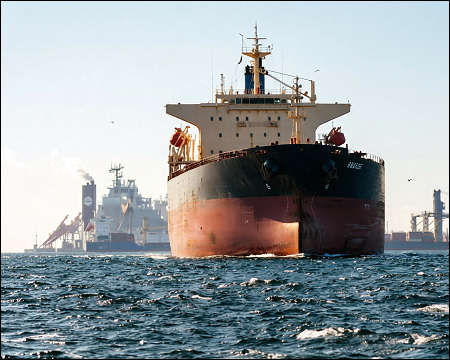
The crisis has shaken energy markets, which are central to Gulf economies, sending oil prices sharply higher and creating a supply disruption compared by analysts to shocks seen in the 1970s.
Economists reduced their 2026 growth outlooks in a Reuters survey carried out between April 8 and April 24.
Several economies that were expected to expand are now projected to contract, though a limited recovery is anticipated in 2027.
Historically, rising oil prices have boosted economic performance in the region, where countries rely heavily on energy exports.
However, the almost complete shutdown of the Strait of Hormuz, which carries about one fifth of global energy supplies, combined with damage to refineries and gas infrastructure in Saudi Arabia, the United Arab Emirates, Kuwait and Qatar, has placed severe pressure on economic activity.
Even with oil prices about 40% above pre conflict levels from nearly two months ago, Qatar, Kuwait and Bahrain are now expected to see their economies shrink by 6.0%, 4.4% and 2.9% this year.
This marks a sharp shift from January estimates, which projected growth of 4.9%, 3.4% and 2.9%.
The United Arab Emirates is now expected to record flat growth, compared with an earlier forecast of 5.0% expansion.
Ralf Wiegert of S&P Global Market Intelligence said a return to pre war growth levels is unlikely.
He added that economic output will remain lower for years after the conflict, with rebuilding efforts and restoration of supply networks expected to take until the second half of 2026.
Saudi Arabia and Oman are projected to show more resilience, with expected growth of 2.6% and 2.2%, according to a poll of 18 economists, though both figures are below earlier forecasts.
Lluis Dalmau Taules, an economist at Allianz, said the impact extends beyond oil, affecting sectors such as tourism, retail and other services.
Looking ahead, economists expect stronger growth in 2027 if the conflict ends soon. Qatar, the United Arab Emirates and Kuwait are forecast to expand by 7.8%, 5.4% and 5.0%.
Saudi Arabia, Bahrain and Oman are projected to grow 4.5%, 4.3% and 2.8%.
These forecasts are broadly in line with expectations from the International Monetary Fund that energy output and transport will stabilize in the coming months.
Goldman Sachs economists said delays in restoring full production will have uneven effects on economies and public finances in the region.
Over the longer term, they expect solid growth supported by government spending, higher hydrocarbon income and strong fiscal reserves.
Higher oil prices are also pushing up inflation globally, including in Gulf countries.
Inflation in Bahrain is projected to average 2.4% in 2026, compared with 1.4% estimated earlier.
(With files from Reuters)
Copyright © 2026 Dubai Diplomacy. All rights reserved.
 Your support matters! Consider buying us a coffee — every bit helps keep independent news alive.
Related posts:
 UAE property market faces test after Iran attacks; foreign buyers crucial
 Some travelers paid $232,000 for flights to escape Gulf countries, amid Iran conflict
 Dubai Real Estate Lost 34%, The Worst Could Still Be Ahead
 Dubai oil benchmark under stress amid Iran war
 Thousands struggle to leave Gulf countries amid Iran conflict
 Gulf states say ending Iran war not enough, degrade its capabilities
 Etihad Airways reports 22.4 million passengers in 2025
 Is a Gulf NATO Really Possible?