Grant Citizenship or Lose the Loyalty of the UAE’s Residents
Halima Younis – Exclusive to Dubai Diplomacy
A nation cannot expect loyalty from people it refuses to recognize as its own
Dubai’s skyline is one of the most photographed in the world, a monument to human ambition, engineering, and vision.
But behind every gleaming tower, every functioning hospital, every clean street and operational airport, stands a person who, regardless of how long they have lived there, will never legally belong to the place they helped build. This is the quiet contradiction at the heart of the United Arab Emirates, and it is one that its leadership can no longer afford to ignore.
A Nation of Guests
The numbers alone tell a story that demands attention. As of 2024, foreign nationals represent 88.5% of the UAE’s total population of approximately 11.35 million people, the third-highest proportion of expatriates relative to nationals anywhere on Earth, surpassed only by Qatar and the Vatican. Emirati citizens number roughly 1.44 million in their own country. Everyone else, the doctors, the engineers, the teachers, the construction workers, the cleaners, the researchers, the entrepreneurs, exists in a state of permanent, indefinite temporariness.
Many of these residents were not merely visitors who overstayed their welcome. They were born on UAE soil. They attended UAE schools. They married, raised children, buried parents, and built businesses, all within the borders of a country that still considers them foreigners.
No amount of time, contribution, or generational connection changes that status. Under current law, birth in the UAE confers nothing. Decades of residence confer nothing. You may give your entire life to this country, and it will hand you a residency renewal form in return.
This is not just an administrative quirk. It is a policy with profound consequences.
The Beating Heart of a Nation That Doesn’t Claim It
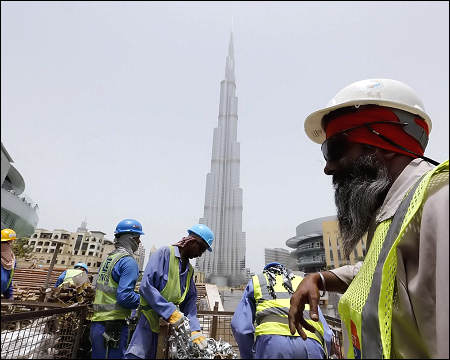
Let us be honest about what the UAE actually runs on. Expatriates do not merely supplement the Emirati workforce, they are the workforce, in the most fundamental sense. They build the infrastructure, staff the hospitals, conduct the scientific research, operate the ports, drive the taxis, maintain the electricity grids, and keep the streets clean.
The services that make modern UAE life possible, from world-class healthcare to functioning sewage systems, depend overwhelmingly on foreign expertise and foreign labor.
This is not a criticism. It is, in fact, a testament to the extraordinary openness the UAE showed in welcoming talent and workers from around the world. But it creates a structural vulnerability that recent events have made impossible to dismiss.
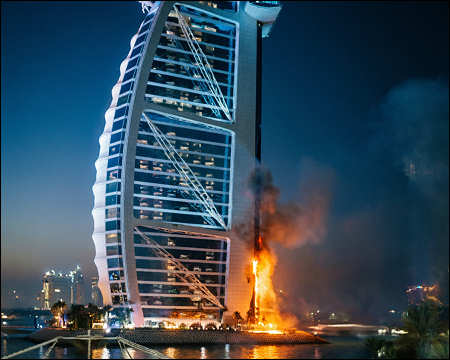
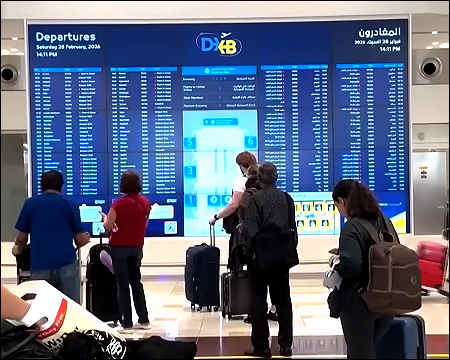
When the specter of regional conflict arises, when missiles and drones fill the skies and alarm spreads through a city that was never promised to its residents, people leave. They leave because they have no reason to stay and fight for a place that never claimed them.
They book flights, liquidate assets, and take their capital with them, because rational people do not sacrifice for institutions that offer them no stake in the outcome. The economic disruption that follows is not a betrayal, it is the entirely predictable consequence of a system designed to keep people permanently on the outside.
Ask the question plainly: if every expatriate left the UAE tomorrow, what would remain? Roughly 1.44 million people, many of whom, by their own social and economic position, would not fill the roles that keep the country operational.

The UAE Armed Forces, impressive as they are, earning the nickname “Little Sparta” from former US Secretary of Defense James Mattis for their effectiveness relative to their size, number between 63,000 and 65,000 personnel. A nation of guests is a nation with a ceiling on how many people will defend it.
The Loyalty Equation – Born Here, Belong Nowhere
Patriotism is not a feeling that can be demanded. It is one that must be cultivated, and it grows from belonging.
A child born in Dubai, who grows up speaking Arabic and English on its streets, who knows no other home, who has never seen the country on his parents’ passport, that child has every emotional reason to love the UAE.
But the UAE’s current framework ensures that this love is never formally reciprocated. The child remains a guest, like his parents before him. And when guests are treated as guests, indefinitely, regardless of their roots, they eventually start behaving like guests. They keep one eye on the door.
The contrast in material conditions between citizens and long-term residents deepens this wound. UAE nationals enjoy free education, free healthcare, housing assistance, marriage grants, early retirement after twenty years of service, full property ownership rights across the country, utility subsidies, interest-free housing loans, and salaries that, for the same job title, run two to three times higher than those of their expatriate colleagues.
These are not minor differences in treatment. They are the difference between being a stakeholder in a society and being a resource it consumes.
No one is suggesting these benefits be stripped from Emirati nationals. The question is whether someone who has spent thirty years contributing to this country, whose children were born here, whose grandchildren are growing up here, should remain permanently ineligible for any form of belonging, purely by accident of ancestry.
A Path Forward
The UAE has, in recent years, shown genuine willingness to evolve. The introduction of ten-year Golden Visas for investors, skilled professionals, and exceptional students was a meaningful step, an acknowledgment that long-term residents have long-term value. But a visa, however golden, is not citizenship. It does not confer identity. It does not create patriots.
What the UAE needs is a structured, merit-based pathway to citizenship for long-term residents, particularly those who were born in the country or have lived there for a defined threshold of years, who speak the language, who have demonstrated economic contribution, who have no criminal record, and who wish to formally commit to the nation. This need not be unconditional or unlimited. Many countries with strong national identities, France, Germany, Canada, Singapore, have naturalization frameworks that balance openness with standards. The UAE can design its own.
The benefits would be substantial. A larger citizen body means a larger pool of people with a genuine stake in national security, economic stability, and social cohesion. It means children growing up with an emotional bond to UAE that is backed by legal recognition. It means that when the next crisis tests the region, there are more people with a reason to stand their ground.
Conclusion
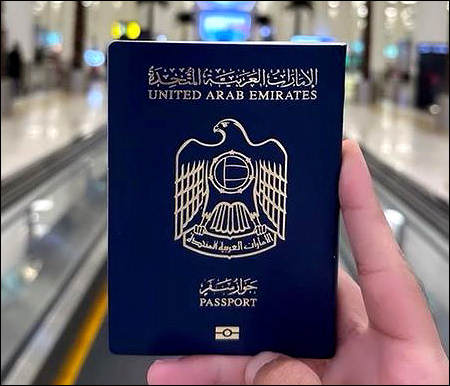
A nation is more than its passport holders. But passports matter, because they signal to the people who carry them that they are seen, valued, and trusted. The UAE has built one of the most remarkable countries in modern history in an extraordinarily short time. It has done so, in no small part, on the backs of millions of people who chose to make it their home.
The question now is whether the UAE will choose them back.
Ninety percent of a population living without citizenship is not a demographic footnote. It is a national strategy question, one whose answer will determine whether the UAE’s next fifty years are built on the loyalty of a people, or merely on the availability of labor.
The UAE’s rulers have shown they can build the impossible. Extending belonging to those who have already made this country their life is not impossible. It is, in fact, the most logical next step.
Halima Younis, political analyst.
All views expressed herein are solely those of the author and do not necessarily represent the opinions or policies of DubaiDiplomacy or its editors.
Copyright © 2026 Dubai Diplomacy. All rights reserved.
 Your support matters! Consider buying us a coffee — every bit helps keep independent news alive.
Related posts:
 Dubai Takes Your Money, Then Your Freedom: British family case
 UAE lets residents return home even if their visa expired
 Travelers to Dubai risk arrest over social media posts and debt: advocates
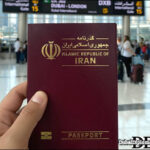 UAE denies entry ban reports, says Iranians are valued
 Is a Gulf NATO Really Possible?
 30,000 Britons left UAE since Iran war: FT
 Are rumors of Dubai’s demise silly?
 Why the UAE lets Iran keep its islands: Abu Musa and the Tonbs